
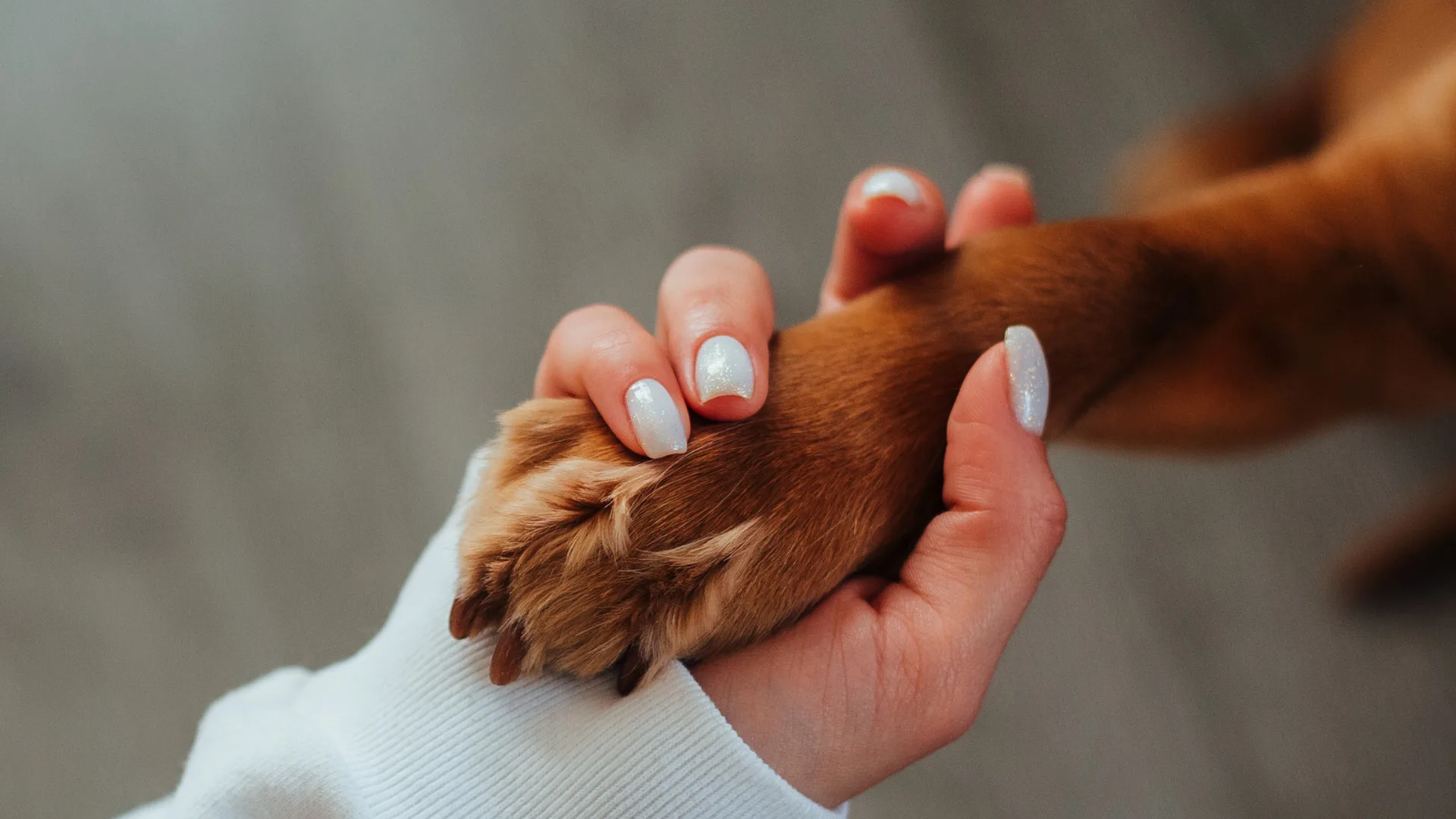
Making the decision to say goodbye to a much loved dog is one of the hardest choices any pet carer will ever face. When a pet is living with pain, serious illness or a poor quality of life that can no longer be managed, euthanasia may be the kindest and most compassionate option.
It’s human nature to hope that our dog might pass peacefully, at home in their sleep at a ripe old age, having lived a lovely life. However, this doesn’t usually happen and in many cases, a carefully planned euthanasia allows your dog to pass away calmly, comfortably and without unnecessary suffering.
No matter the circumstances, making this decision is never easy but you don’t have to do it alone, as your veterinary team is there to guide and support you every step of the way.
On this page
- Recognising when your dog’s quality of life is changing
- Knowing when it may be time
- Questions to ask your vet
- Preparing for the appointment
Recognising When Your Dog’s Quality of Life is Changing
Dogs can hide pain or discomfort, making it difficult to know how they are truly feeling. Changes are often gradual, so it is important to watch for patterns rather than focusing on a single day.
Signs that your pet’s quality of life may be declining include:
- Becoming unusually quiet, withdrawn or less interested in family life
- Restlessness or difficulty settling into a comfortable position
- Avoiding touch or interaction
- Persistent panting, trembling or signs of discomfort
- Crying, whining or vocalising unexpectedly
- Difficulty breathing
- Confusion, disorientation or appearing lost in familiar surroundings
- Losing interest in walks, play or favourite activities
- Reduced appetite or reluctance to drink
- Ongoing vomiting or digestive problems
- Changes in toileting habits, including accidents indoors or incontinence
- Difficulty standing, walking or moving around comfortably
These signs do not always mean euthanasia is necessary. Many age-related conditions, such as arthritis or chronic pain, can often be successfully managed with medication, physiotherapy, dietary changes or other treatments. So, if you notice any concerning changes, please arrange a veterinary examination as soon as possible.
Knowing When it May Be Time
There is rarely one single moment that tells you it is time to say goodbye. Instead, many families notice that their pet is experiencing more difficult days than comfortable ones.
Your vet will assess your pet’s condition, discuss treatment options and help you consider whether your pet is still enjoying a good quality of life. Sometimes medication or supportive care can restore comfort for weeks, months or even years. However, if treatment is no longer relieving pain or your pet’s condition continues to worsen, euthanasia will likely be the compassionate choice.
Many owners worry about making the decision too early or waiting too long but these feelings are completely normal. Choosing euthanasia out of kindness, to prevent unnecessary suffering, is one of the greatest acts of love we can give our pets. While it is incredibly difficult, remember that you are putting their needs above your own and showing them the same unconditional love they have given you.

Questions to Ask Your Vet
Having an open conversation with your veterinary team can help you feel more confident in your decision. Please don’t ever feel afraid of being judged for bringing the subject up. You know your pet like no-one else so if you are worried about them, here are some questions that can help you make an informed decision:
- Is my pet in pain or experiencing distress?
- Are there any treatments that could still improve their comfort or quality of life?
- How will I know if their condition is getting worse?
- What does the euthanasia procedure involve?
- Can I stay with my pet during the procedure?
- What options are available for cremation or aftercare?
- How can I support other pets or children in the family afterwards?
- Is a home visit* available if I would prefer my pet to remain in familiar surroundings?
*Please note that due to our limited staffing resources, this is not a service The Irish Blue Cross can provide.
Your vet understands how emotional this decision can be and wants to ensure you have all the information you need.
Preparing for the Appointment
Once the decision has been made, it is natural to feel overwhelmed and where appropriate for your pet, planning ahead can make the experience a little less stressful.
You may find it helpful to:
- Arrange the appointment for a quieter time of day if possible
- Tell the veterinary practice when booking that the appointment is for euthanasia so they can offer additional support
- Bring a trusted family member or friend with you (even if they wait outside to drive you home)
- Consider taking some time away from work or other commitments afterwards
- Bring your pet’s favourite blanket or toy for comfort
- Ask for your dog’s collar and some of their fur as keepsakes
All family’s wishes are different, and your veterinary team will do their best to make the experience as peaceful and dignified as possible.
There is no perfect time to say goodbye. The decision is deeply personal and is made out of love, compassion and a desire to prevent suffering.
By working closely with your veterinary team, you can make an informed decision that places your pet’s comfort and welfare first, giving them the peaceful farewell they deserve.
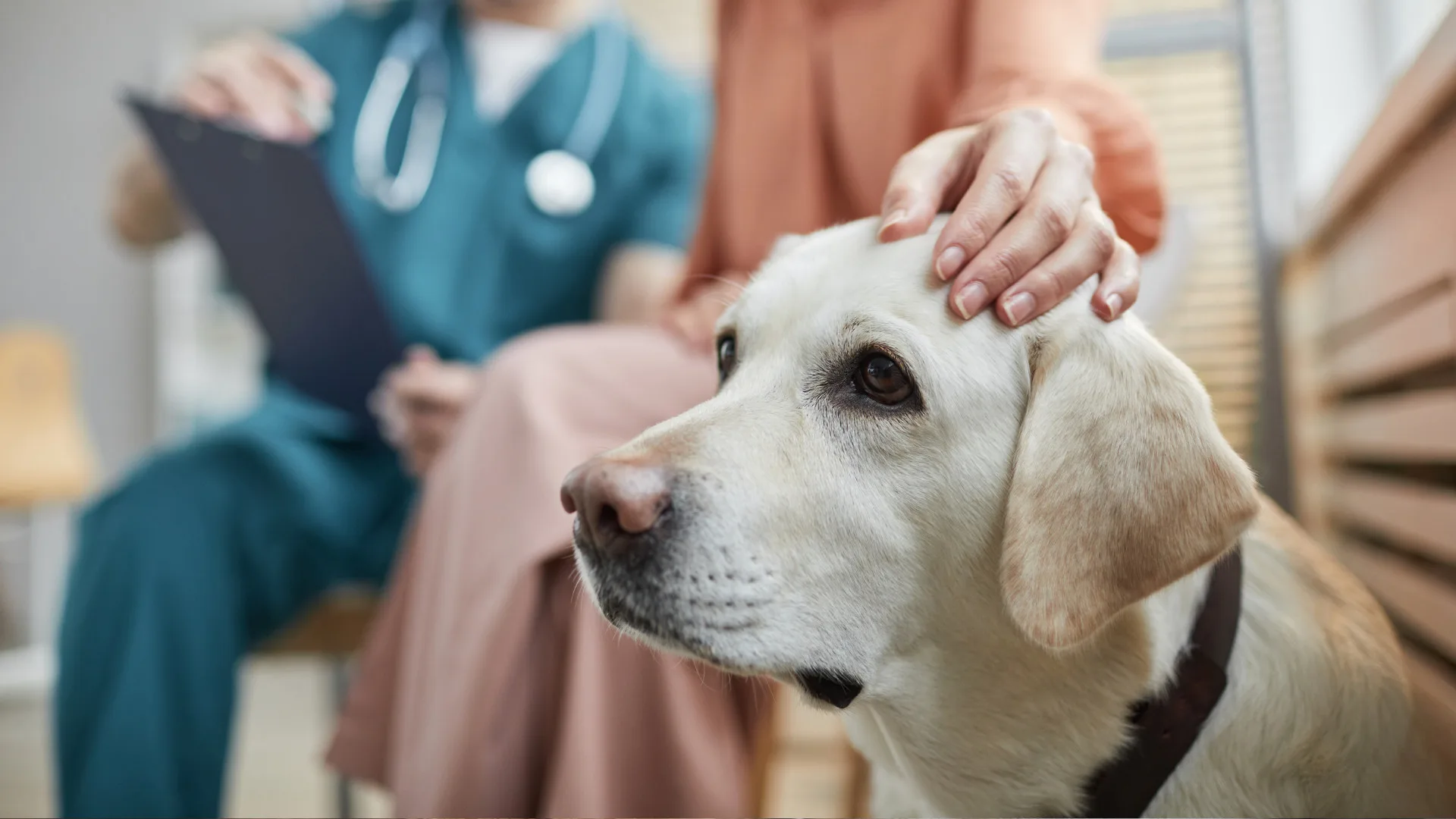
Choosing to say goodbye to your dog is one of the most difficult decisions you will ever make. It is never an easy choice, but when a dog’s quality of life has declined and they can no longer be kept comfortable, euthanasia can be the final act of kindness we give them.
Knowing what will happen can make an emotional day feel a little less overwhelming. Every veterinary practice will do everything possible to ensure that both you and your dog are treated with compassion, dignity and respect throughout the appointment.
On this page
Where will euthanasia take place?
What happens before the procedure?
What happens during euthanasia?
What might I notice afterwards?
Should I stay with my dog?
Can family members or other pets be there?
What happens after my dog dies?
Where Will Euthanasia Take Place?
Most euthanasia appointments take place at your veterinary practice, in a quiet consultation room, where you can spend time with your dog before and afterwards.
In some circumstances, your vet may be able to visit your home if you feel your dog would be more comfortable in familiar surroundings. Home visits are not available through every practice, so it’s worth discussing this option with your veterinary team in advance if it’s something you would prefer.
Sometimes a pet is already in the vet’s receiving treatment or is under a general anaesthetic. If recovery would only prolong suffering, your vet may recommend euthanasia while they remain asleep. Although this can be an incredibly difficult decision, it can also be the gentlest option for your dog. Your vet will talk you through the situation and answer any questions you may have.
Before the Procedure
Before euthanasia takes place, your vet will explain the process, answer any questions and ask you to sign a consent form.
Some pets become anxious when visiting the veterinary practice, so if needed, your vet may recommend a light sedative beforehand to help them feel calmer and more relaxed.
Many families find it helpful to discuss practical matters, such as cremation or burial arrangements, before the appointment. This allows you to focus entirely on spending precious final moments with your pet.
Take as much time as you need to say goodbye. There is no right or wrong way to do this.

What Happens During Euthanasia?
Euthanasia is a peaceful medical procedure carried out using an overdose of anaesthetic medication.
Usually, a veterinary nurse will gently hold your dog while a small area of fur is clipped from one of their front legs, so the vet can access a vein. Sometimes a small intravenous catheter may be placed first, to make the injection smoother. In certain situations, the medication may be given in another suitable location if accessing a vein is difficult.
Your dog may feel a brief scratch as the needle is placed, but the medication itself is not painful.
As the anaesthetic begins to work, your dog may briefly seem sleepy or slightly unsteady. Some dogs may make a small vocalisation as they become drowsy, but this is a normal response rather than a sign of pain.
Within a matter of seconds, they become unconscious. Once they are asleep, they are no longer aware of what is happening or able to feel pain or distress.
Their breathing gradually slows before their heart gently stops beating. Your vet will listen carefully with a stethoscope to confirm that they have passed away peacefully.
For dogs with poor circulation or severe illness, the medication may take a little longer to work, but throughout the process your pet remains unconscious and comfortable.
What You May Notice Afterwards
Although your pet has passed away peacefully, there are a few natural physical changes that can happen afterwards. Knowing about these in advance can make them less unexpected.
You may notice:
- Small muscle twitches or gentle movements
- A few deep breaths or gasping movements
- Their eyes remaining open
- Relaxation of the bladder or bowels
- Their body gradually becoming still as the muscles relax
These are normal reflexes that can occur after death. They are not signs that your pet is awake, aware or in pain.
Your veterinary team will explain anything you see and will ensure your pet is treated with dignity.

Should I Stay with My Dog?
Only you can decide what feels right for you and your dog.
Many owners find comfort in being with their dog until the very end, talking softly, petting them or simply sitting quietly beside them. For many pets, having a familiar voice and gentle touch can be reassuring.
Others feel that witnessing the procedure would simply be too upsetting, and that is equally understandable.
Some people choose to stay while their dog falls asleep and then step outside before the final moments. Others prefer to say goodbye beforehand and spend time with their dog afterwards.
There is no right or wrong decision, and you should never feel guilty whichever choice you make. Your veterinary team will care for your dog with kindness and compassion, whether you stay or not, so your dog won’t be alone.
Can Family Members or Other Pets Be There?
Many people find comfort in having a trusted friend or family member with them for support.
Older children may also wish to say goodbye, while younger children may prefer to remember their dog in other ways. Every family is different, and you know your child best.
Some owners also choose to allow another household pet to see their companion after they have passed away. While we cannot know exactly how animals understand death, some families feel this helps provide closure for both pets.
Please speak with your veterinary team if this is something you are considering.
What Happens Afterwards?
When you’re ready, your veterinary team will discuss the options available for your dog’s aftercare, which may include:
Individual Cremation
Your dog is cremated individually and their ashes are returned to you (via your vet, or in some cases you can collect the ashes directly from the crematorim), usually in a casket or urn of your choice. Some crematoria also offer memorial keepsakes.
Communal Cremation
Your dog is cremated at a crematorium, alongside other pets. In this case, the ashes are not returned to you.
Home Burial
Some families choose to bury their dog at home or in a dedicated pet cemetery.
If you are considering home burial, it’s important to discuss this with your vet and check with your local authority. Depending on where you live, there may be legal requirements or restrictions to consider, and home burial may not be suitable in every situation, particularly if your dog had certain infectious diseases or recent medical treatments.
If you are unsure what feels right, let your veterinary team know, as they may be able to keep your dog in their care for a short period while you take time to make your decision.
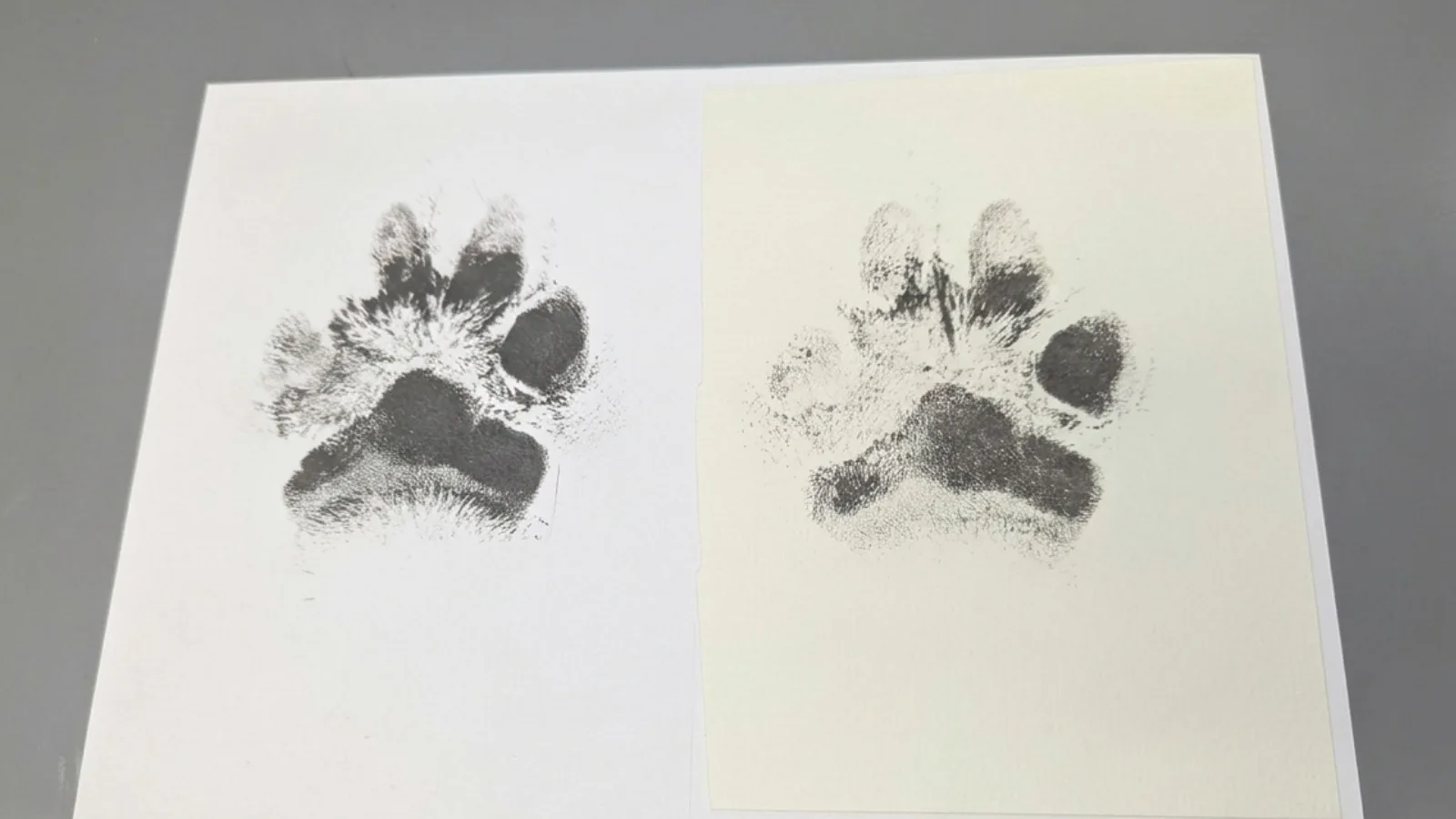
You may also wish to ask about keepsakes, such as a clipping of your dog’s fur or a paw print, as many owners take great comfort from these after their pet’s passing.
Planning Your Journey Home
Some people are surprised by how emotionally overwhelming the appointment can feel, so if possible, please consider asking someone you trust to come with you. They can offer support, help remember any information discussed, and drive you home afterwards.
If you do attend alone, please take a few moments before leaving the practice. Sit quietly, have a drink of water and don’t feel rushed. If you’re very upset or finding it difficult to concentrate, it may be safer to wait until you feel ready before driving.
There is no shame in asking for help. Friends, family and your veterinary team understand how significant this day is and will want to support you however they can.
A Final Act of Love
Saying goodbye is never easy, and every family experiences grief differently. There is no perfect way to navigate such a difficult day.
What matters most is that your decision has been made out of love and compassion for your pet.
By choosing to prevent unnecessary suffering, you are giving them the peaceful and dignified goodbye they deserve.
Be gentle with yourself in the days that follow. Grief is the price we pay for loving so deeply, and you do not have to face it alone.
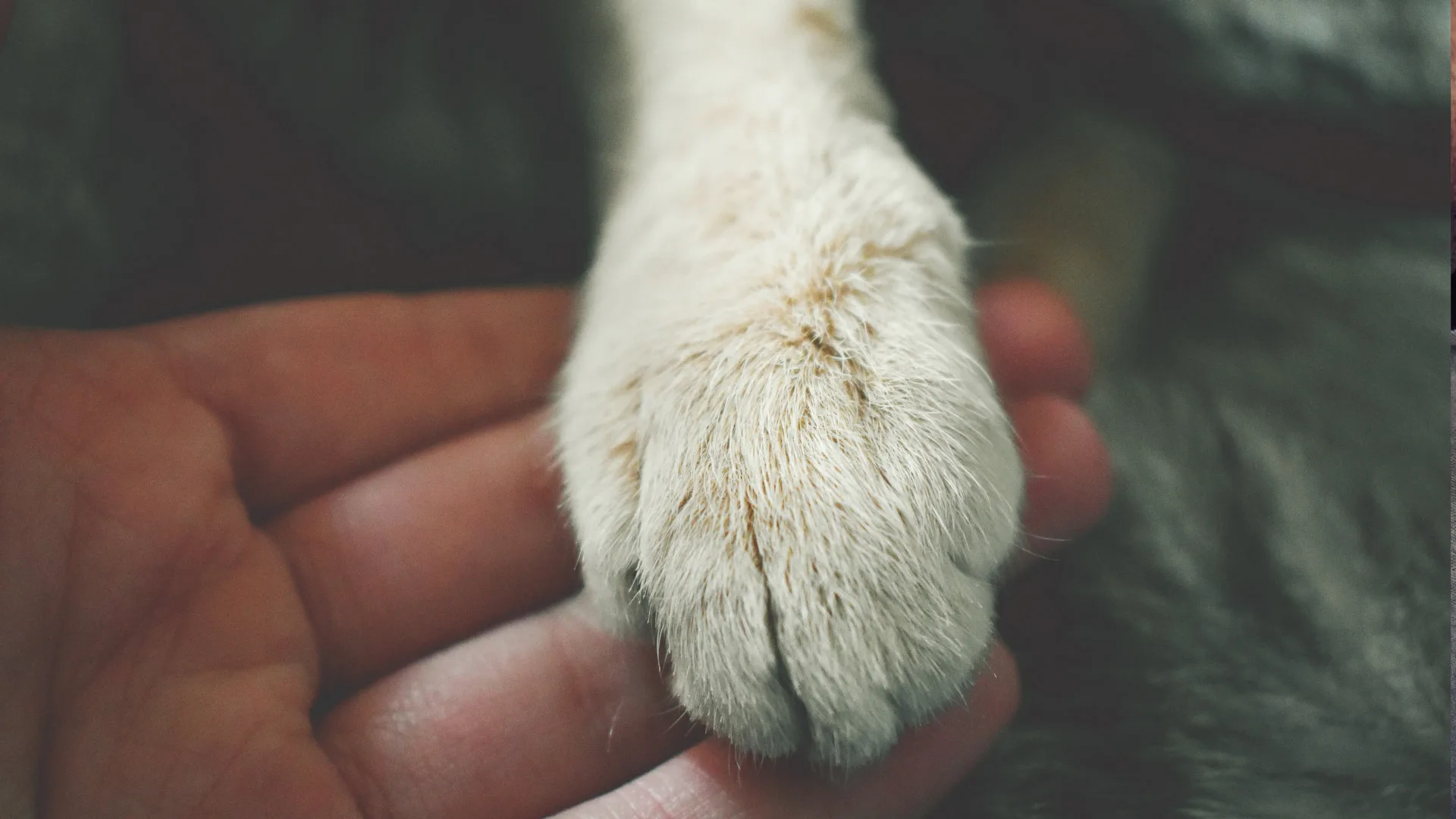
Making the decision to say goodbye to a beloved cat is one of the hardest choices any pet carer will ever face. When a cat is living with pain, serious illness or a poor quality of life that can no longer be managed, euthanasia may be the kindest and most compassionate option.
It’s human nature to hope that our pets will pass peacefully, at home in their sleep at a ripe old age, having lived a lovely life. However, this doesn’t usually happen and in many cases, a carefully planned euthanasia allows your pet to pass away calmly, comfortably and without unnecessary suffering.
No matter the circumstances, making this decision is never easy but you don’t have to do it alone as your veterinary team is there to guide and support you every step of the way.
On this page
- Recognising when your cat’s quality of life is changing
- Knowing when it may be time
- Questions to ask your vet
- Preparing for the appointment
Recognising When Your Cat’s Quality of Life is Changing
Cats are very good at hiding pain and discomfort, making it difficult to know how they are truly feeling. Changes are often gradual, so it is important to watch for patterns rather than focusing on a single day.
Signs that your cat’s quality of life may be declining include:
- Becoming withdrawn or hiding more than usual
- Avoiding being handled or stroked
- Toileting outside the litter tray or spraying indoors
- Reduced interest in play, interaction or going outdoors
- Low energy, reduced appetite or seeming depressed
- Changes in grooming, such as neglecting it or over-grooming one area
- Hesitation or refusal to jump or climb onto favourite spots
- Increased irritability or aggression (hissing, growling or swiping)
- Excessive or unusual vocalisation
These signs do not always mean euthanasia is necessary. Many age-related conditions, such as arthritis or chronic pain, can often be successfully managed with medication, physiotherapy, dietary changes or other treatments. So, if you notice any concerning changes, please arrange a veterinary examination as soon as possible.
Knowing When it May Be Time
There is rarely one single moment that tells you it is time to say goodbye. Instead, many families notice that their cat is experiencing more difficult days than comfortable ones.
Your vet will assess your cat’s condition, discuss treatment options and help you consider whether your cat is still enjoying a good quality of life. Sometimes medication or supportive care can restore comfort for weeks, months or even years. However, if treatment is no longer relieving pain or your cat’s condition continues to worsen, euthanasia will likely be the compassionate choice.
Many owners worry about making the decision too early or waiting too long but these feelings are completely normal. Choosing euthanasia out of kindness, to prevent unnecessary suffering, is one of the greatest acts of love we can give our pets. While it is incredibly difficult, remember that you are putting their needs above your own and showing them the same unconditional love they have given you.

Questions to Ask Your Vet
Having an open conversation with your veterinary team can help you feel more confident in your decision. Please don’t ever feel afraid of being judged for bringing the subject up. You know your pet like no-one else so if you are worried about them, here are some questions that can help you make an informed decision:
- Is my cat in pain or experiencing distress?
- Are there any treatments that could still improve their comfort or quality of life?
- How will I know if their condition is getting worse?
- What does the euthanasia procedure involve?
- Can I stay with my cat during the procedure?
- What options are available for cremation or aftercare?
- Is a home visit* available if I would prefer my pet to remain in familiar surroundings?
*Please note that due to our limited staffing resources, this is not a service The Irish Blue Cross can provide.
Your vet understands how emotional this decision can be and wants to ensure you have all the information you need.
Preparing for the Appointment
Once the decision has been made, it is natural to feel overwhelmed and where appropriate for your pet, planning ahead can make the experience a little less stressful.
You may find it helpful to:
- Arrange the appointment for a quieter time of day if possible
- Tell the veterinary practice when booking that the appointment is for euthanasia so they can offer additional support
- Bring a trusted family member or friend with you (even if they wait outside to drive you home)
- Consider taking some time away from work or other commitments afterwards
- Bring your cat’s favourite blanket or toy for comfort
- Ask for some of your cat’s fur to have as a keepsake
Your veterinary team will do their best to make the experience as peaceful and dignified as possible.
There is no perfect time to say goodbye. The decision is deeply personal and is made out of love, compassion and a desire to prevent suffering.
By working closely with your veterinary team, you can make an informed decision that places your cat’s comfort and welfare first, giving them the peaceful farewell they deserve.
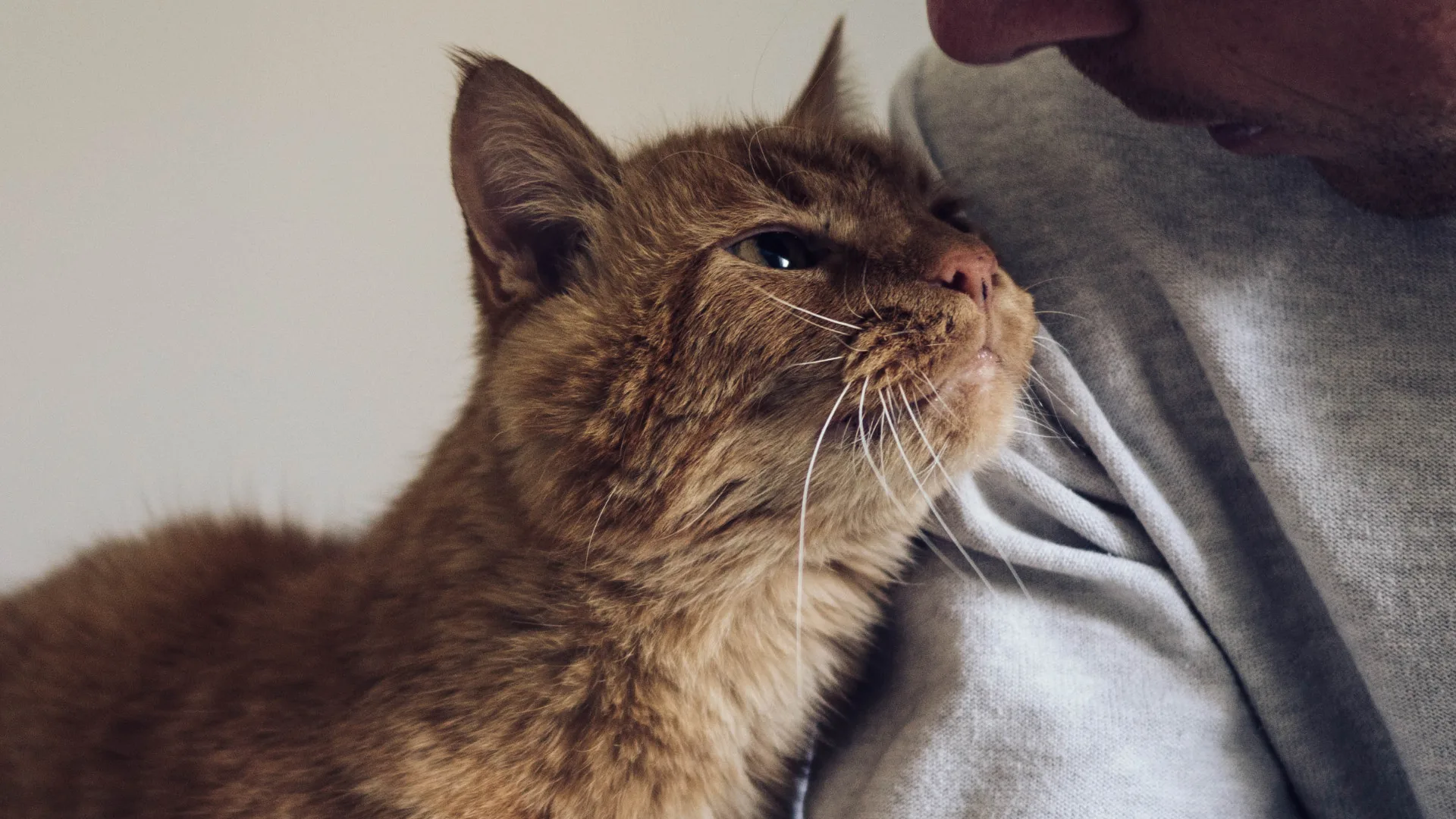
Making the decision to say goodbye to a much-loved cat is one of the hardest choices any owner will ever face. It is never a decision made lightly, but when a cat’s quality of life has declined and they can no longer be kept comfortable, euthanasia can be the kindest and most compassionate gift we can give them.
Knowing what to expect can help ease some of the uncertainty during an emotional time. Your veterinary team understands how difficult this day is and will do everything they can to ensure that both you and your cat are treated with kindness, dignity and respect.
On this page
Where will euthanasia take place?
What happens before the procedure?
What happens during euthanasia?
What might I notice afterwards?
Should I stay with my cat?
Can family members or other pets be there?
What happens after my cat dies?
Where Will Euthanasia Take Place?
Most euthanasia appointments take place in a quiet room at your veterinary practice, allowing you to spend time with your cat before and after the procedure.
Some veterinary practices also offer home visits, allowing your cat to remain in the comfort of familiar surroundings. Not all practices provide this service, so it’s worth asking your vet if this is something you would prefer.
Sometimes, a cat is already in hospital receiving treatment or is under a general anaesthetic. If recovery would only prolong suffering, your vet may recommend euthanasia while they remain asleep. Although this can be an incredibly difficult decision, it may also be the gentlest option. Your veterinary team will explain everything carefully and help you make the decision that’s right for your cat.
Before the Procedure
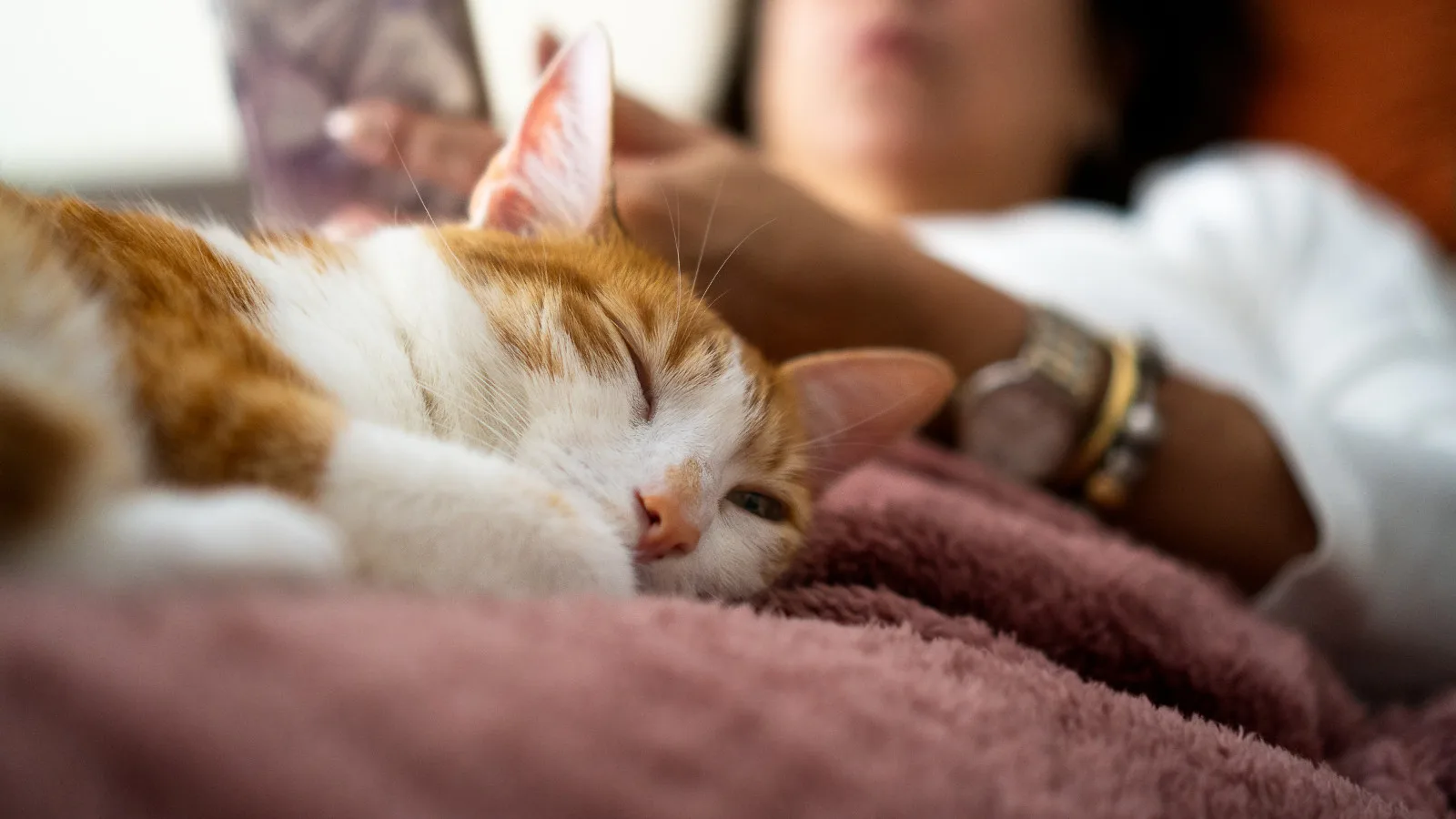
Before the appointment begins, your vet will explain the procedure, answer any questions you may have and ask you to sign a consent form.
Some cats can become anxious when travelling or visiting the veterinary practice. If needed, your vet may suggest giving a light sedative beforehand to help your cat feel calm and relaxed.
Many owners also choose to discuss practical arrangements, such as cremation or burial, before the procedure. This allows you to focus on spending your remaining time with your cat without having to make difficult decisions afterwards.
Take whatever time you need to say goodbye. There is no right or wrong way to do this.
What Happens During Euthanasia?
Euthanasia is a peaceful medical procedure carried out using an overdose of anaesthetic medication.
Usually, a veterinary nurse will gently hold your cat while a small patch of fur is clipped from one of their front legs so the vet can access a vein. In some cases, a small catheter may be placed first to make the injection as smooth as possible. If accessing a vein is difficult, the medication may be given in another suitable location.
Your cat may feel a brief scratch as the needle is placed, but the medication itself is not painful.
As the anaesthetic takes effect, your cat will quickly become sleepy and relaxed. Occasionally, a cat may briefly vocalise or appear momentarily unsettled as they become drowsy, but this is a normal response and not a sign of pain.
Within seconds, they will lose consciousness. From this point onwards, they are unaware of what is happening and cannot feel pain or distress.
Their breathing will gently slow before their heart peacefully stops beating. Your vet will carefully listen with a stethoscope to confirm that they have passed away.
For cats that are very ill or have poor circulation, the process may take slightly longer, but your cat will remain unconscious and comfortable throughout.
What You May Notice Afterwards
After your cat has passed away, there are some natural physical changes that can occur. While these can be upsetting if you’re not expecting them, they are completely normal.
You may notice:
- Small muscle twitches or gentle movements
- A few deep breaths or gasping movements
- Their eyes remaining open
- Relaxation of the bladder or bowels
- Their body gradually becoming still as the muscles relax
These are normal reflexes that can happen after death. They are not signs that your cat is still alive or experiencing pain.
Your veterinary team will explain anything you notice and will continue to treat your cat with dignity and care.
Should I Stay with My Cat?
Only you can decide what feels right for you and your cat.
Many owners find comfort in staying with their cat, speaking softly, stroking them or simply sitting quietly beside them until the end. For some cats, the reassuring presence of a familiar person can be calming.
Others feel that witnessing the procedure would be too distressing, and that is completely understandable.
Some people choose to remain while their cat falls asleep before stepping outside, while others prefer to say goodbye beforehand and spend some quiet time with their cat afterwards.
Whatever you decide, you should never feel guilty. Your veterinary team will ensure your cat is cared for with compassion and gentleness throughout the procedure.
Can Family Members or Other Pets Be There?
You may wish to bring a trusted family member or friend for support, and many people find this comforting.
Older children may also want the opportunity to say goodbye, while younger children may prefer to remember their cat in different ways. Every family is unique, and you know your child best.
Some owners choose to allow another household pet to spend a few moments with their companion after they have passed away. While we cannot know exactly how animals understand death, some families feel this helps provide reassurance or closure.
If this is something you are considering, please speak with your veterinary team beforehand.
What Happens Afterwards?
When you’re ready, your veterinary team will discuss the options available for your cat’s aftercare, which may include:
Individual Cremation
Your cat is cremated separately, and their ashes are returned to you in a casket, urn or keepsake container of your choice.
Communal Cremation
Your cat is cremated alongside other much-loved pets. Their ashes are not returned, but they are treated with care and respect by the crematorium.
Home Burial
Some families choose to bury their cat at home or in a dedicated pet cemetery.
If you are considering home burial, speak with your local authority first. There may be legal requirements depending on where you live, and in some circumstances, such as certain infectious diseases or recent medical treatments, home burial may not be appropriate.
If you’re unsure which option is right for you, your veterinary practice may be able to care for your cat for a short time while you make your decision.
You may also wish to ask about keepsakes, such as a clipping of fur or a paw print, as many pet owners take great comfort from these after their cat’s passing.
Planning Your Journey Home
Many people underestimate how emotional the appointment can be.
If possible, consider asking a family member or friend to come with you. Having someone beside you can provide comfort, help you remember important information and, if needed, drive you home afterwards.
If you attend the appointment on your own, don’t feel you have to leave immediately. Take a few quiet moments before setting off. If you’re feeling overwhelmed or unable to concentrate, please wait until you feel ready before driving.
Grief affects everyone differently, and it’s perfectly okay to ask for support.

A Gentle Goodbye
There is no easy way to say goodbye to a beloved cat, and there is no ‘right’ way to grieve.
What matters most is that your decision has been made with love, compassion and your cat’s welfare at heart. By choosing to prevent further pain or suffering, you are giving them the peaceful and dignified farewell they deserve.
In the days and weeks ahead, be kind to yourself. Grief takes time, and every person’s journey is different. Remember that the love you shared with your cat will always remain part of your life.

For many children, the death of a pet is their first experience of bereavement.
Pets can be extremely important figures in children’s lives, providing companionship, comfort, security and a non-judgmental relationship. Research suggests that the death of a pet during childhood can therefore have a significant emotional impact.[1]
Adults naturally want to protect children from distress, but clear and truthful explanations are generally less frightening than leaving a child to try to work out what has happened for themselves.
On this page
- Use Simple, Honest Language
- Explaining Euthanasia
- Should Children Be There When a Pet is Euthanised?
- Let Children See That Adults Can Be Sad Too
- Explaining Behavioural Euthanasia to Children
Use Simple, Honest Language
Where possible, use words such as ‘dead’ and ‘died’.
Expressions such as “we lost him”, “she has gone away” or particularly “we had to put him to sleep” can be confusing for young children. A child may wonder why somebody who is “lost” cannot be found or worry that going to sleep means they might die too. Child bereavement guidance therefore recommends using concrete, age-appropriate language.[2]
This can be particularly important for children who interpret language very literally, including some autistic children and children with additional communication needs.[3]
It can help to explain what death physically means:
“When someone dies, their body stops working. Their hearts stop beating and they don’t breathe anymore. They can’t feel pain, and they cannot come back to life.”
Families can, of course, then explain their own religious or spiritual beliefs about what they believe happens after death.
Explaining Euthanasia
If euthanasia is planned, children can usually be prepared beforehand.
An explanation might be:
“Bella is very poorly and her body can’t get better. The vet is going to give her some medicine that will help her die peacefully. She won’t feel frightened or hurt. Her heart will stop beating and she won’t wake up afterwards.”
It is usually better not to describe euthanasia simply as ‘putting a pet to sleep’. Although adults commonly use the phrase as a gentle euphemism, children may understand it literally.
Children do not need every medical detail, but they do need answers they can understand. It is also perfectly acceptable for an adult to say ‘I don’t know’ when there isn’t a simple answer.
Should Children Be There When a Pet is Euthanised?
There is no answer that is right for every child.
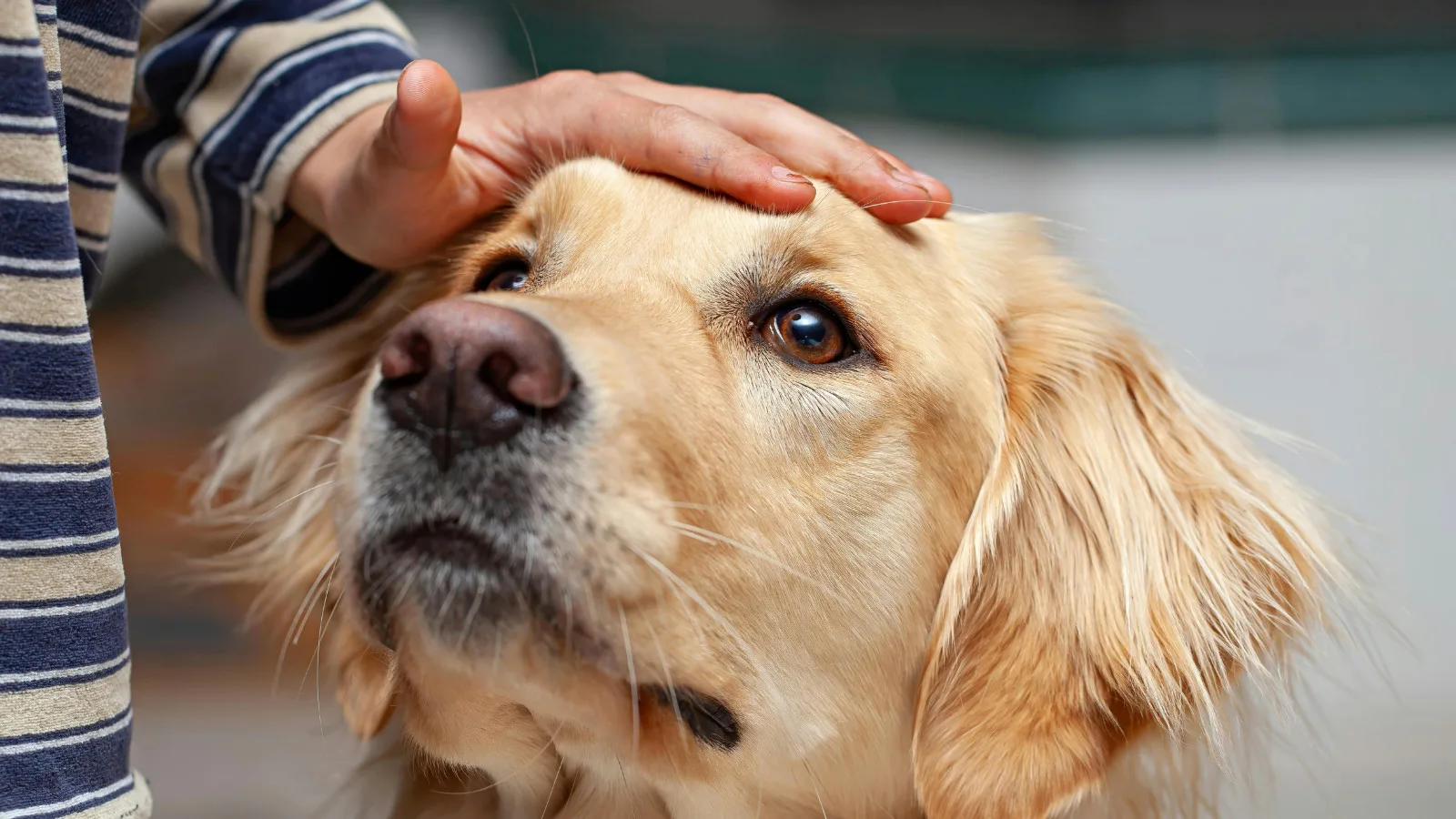
A child’s age, understanding, relationship with the animal, wishes and the circumstances of euthanasia all matter. If their attendance is being considered, explain beforehand what they are likely to see and give them a genuine choice wherever possible.
Children should never feel responsible for deciding whether their pet lives or dies.
Whether or not they are present, children can be given opportunities to say goodbye. They might want to:
- Stroke or sit beside their pet
- Draw a picture
- Write a letter
- Choose a favourite photograph
- Make a scrapbook or memory box
- Plant something in their pet’s memory
- Hold a small family ceremony
- Talk about funny or happy memories.
These activities can help children understand that although their pet has died, the relationship and memories remain important. Bereavement organisations recommend memory-making activities as one way of helping children process pet loss.[2]
Let Children See That Adults Can Be Sad Too
Adults do not need to hide all their grief.
Seeing a trusted adult cry can help a child understand that sadness is a normal response when somebody we love dies. What is important is that the child continues to feel safe and supported.
Children may move in and out of grief very quickly. A child can be deeply upset and then ask to play five minutes later. This does not mean that the pet did not matter to them.
There is no single correct way to grieve.
Explaining Behavioural Euthanasia to Children
Behavioural euthanasia can be especially difficult to explain when children are part of the family.
Avoid telling a child that an animal had to die because they were ‘bad’, ‘naughty’ or because they bit somebody.
This is particularly important if the animal has bitten or frightened the child. Children may otherwise believe that they caused their pet’s death.
Instead, the explanation can focus on how the animal was feeling and why adults had responsibility for keeping everyone safe.
For example: “Max’s brain was making him feel frightened and worried a lot of the time. Sometimes that made him behave in ways that weren’t safe. We and the vets tried to help him feel better, but we couldn’t make him feel safe enough. We decided that the kindest thing was for the vet to help him die peacefully.”
If a child was involved in an incident, they may need to hear explicitly:
“This was not your fault. You did not make this happen and you did not make the decision. The grown-ups made the decision because it is our job to keep you and Max safe.”
A child can love an animal who frightened or injured them. They may also feel angry with the animal, frightened of them, relieved that the danger has gone, or guilty for feeling relieved.
More than one feeling can be true at the same time.
The same is true for adults.
Sometimes the most compassionate way of understanding behavioural euthanasia is to recognise two difficult truths together:
A family can love an animal enormously, and it can still be unsafe or unkind for that animal’s life to continue.
References and Further Reading
- Crawford KM, Zhu Y, Davis KA, et al. The mental health effects of pet death during childhood: is it better to have loved and lost than never to have loved at all? European Child & Adolescent Psychiatry. 2021;30:1547–1558.
- Child Bereavement UK. How to help a child grieving the death of a pet. Guidance on clear language, supporting emotions and creating memories following pet loss.
- Child Bereavement UK. Supporting a bereaved autistic child. Guidance recommends simple, concrete language and avoiding euphemisms such as “lost” or “gone to sleep”.
Written by Dr. Claire Corridan, BVMS, PhD, MRCVS
Animals can form strong social relationships with one another. Research in both dogs and cats has found changes in behaviour following the death of another animal in the household, although we cannot know exactly how an animal experiences bereavement or whether it is identical to human grief. [1,2]
Following the death of an animal companion, some pets may:
- Become quieter or less interested in usual activities
- Seek more contact and reassurance from their caregivers
- Spend time looking or waiting for the animal who has died
- Become more vocal
- Sleep more or sleep in different places
- Eat differently
- Become more unsettled or anxious
- Change their play or social behaviour.
Other pets may show very little obvious change. There is no particular response that an animal ‘should’ have.

How Can You Help?
Try to keep everyday life as familiar and predictable as possible. Maintaining usual mealtimes, walks, bedtime routines and opportunities for rest can provide reassurance when something significant within the household has changed.
Allow your pet to choose how much interaction they want. Some animals seek increased physical contact; others may prefer more space. Gentle exercise, play, sniffing, food enrichment and other activities your pet normally enjoys can provide positive experiences without putting pressure on them.
It can be tempting to introduce another pet immediately because the remaining animal seems lonely. However, a new animal cannot simply replace an established social relationship. Introducing a new pet is a major change in its own right, so it is usually better to make this decision based on what is right for the family and the individual animal rather than as an immediate response to bereavement.
Behavioural changes should not automatically be assumed to be caused by grief. Loss of appetite, changes in sleep, withdrawal, restlessness and reduced activity can also occur with pain or physical illness. If your pet seems unwell, stops eating, or you are worried about a significant or persistent change in their behaviour, contact your veterinary team.
References and Further Reading
- Uccheddu S, Ronconi L, Albertini M, et al. Domestic dogs (Canis familiaris) grieve over the loss of a conspecific. Scientific Reports. 2022;12:1920. doi:10.1038/s41598-022-05669-y.
- Walker JK, Waran NK, Phillips CJC. Owners’ perceptions of their animal’s behavioural response to the loss of an animal companion. Animals. 2016;6(11):68. doi:10.3390/ani6110068.
Written by Dr. Claire Corridan, BVMS, PhD, MRCVS
Behavioural euthanasia describes euthanasia where serious behavioural difficulties are a primary or significant reason for ending an animal’s life rather than an immediately life-limiting physical disease.
It can be one of the most painful decisions a pet caregiver ever has to make.
Behavioural euthanasia is particularly difficult because an animal may appear physically healthy and may be affectionate, playful and much loved for much of the time.
However, physical health is only one part of animal welfare.
Severe or chronic fear, anxiety, frustration or other behavioural difficulties can significantly affect an animal’s quality of life. Behaviour can also create a serious risk of injury to people or other animals.
Research examining behavioural euthanasia in pet dogs found that human-directed aggression was the most reported behavioural reason, followed by aggression towards other animals. Fear, anxiety and stress-related behaviours were also commonly reported.[1]
On this page
- Before considering behavioural euthanasia
- When might behavioural euthanasia be considered?
- What about rehoming?
- Making the decision
- Grieving after behavioural euthanasia
Before Considering Behavioural Euthanasia
Wherever circumstances allow, significant behavioural changes should first be discussed with a veterinary surgeon.
Pain, neurological disease, endocrine disorders, cognitive change and other physical conditions can influence behaviour, so identifying and treating underlying medical problems is an important part of behavioural assessment.
Depending on the problem and the individual animal, treatment may include:
- Changes to the animal’s environment
- Avoiding or carefully managing situations that trigger the behaviour
- Behaviour modification
- Improving opportunities for rest, enrichment and appropriate social interaction
- Medication where clinically appropriate
- Support from a suitably qualified behaviour professional.
Unfortunately, it is not always possible to make an animal sufficiently well or sufficiently safe for an acceptable quality of life.

When Might Behavioural Euthanasia Be Considered?
There is no simple checklist or single behaviour that automatically means an animal should be euthanised.
Instead, the whole situation needs to be considered.
Questions may include:
How is the animal experiencing everyday life?
An animal who spends a large proportion of their life frightened, hypervigilant, frustrated or unable to cope may have significantly compromised welfare.
How serious is the risk?
The likelihood of an incident and the potential severity of injury to people or other animals both matters.
Can that risk realistically be managed?
A management plan that works theoretically may not be realistic in a particular household, especially where children, vulnerable adults or other animals are involved.
Is treatment likely to improve the situation sufficiently?
Behavioural problems vary enormously in their prognosis. The duration and severity of the problem, triggers involved, previous incidents, physical health and response to previous intervention all need to be considered.
What would lifelong management mean for the animal?
Preventing an incident at any cost is not necessarily the same as providing good welfare. If safety requires an animal to spend most of their life isolated, restricted or unable to engage in normal enjoyable activities, the welfare implications of that management also need to be considered.
What is happening to the people caring for the animal?
The wellbeing of caregivers matters too.
Research into living with companion animals with serious behavioural problems describes considerable emotional and practical burden on caregivers.[2] People may become exhausted, isolated or frightened, alter their home and social lives dramatically, or feel that they can never relax.
Acknowledging that burden is not a failure to love the animal.
What About Rehoming?
Rehoming may be appropriate in some situations, but it is not always possible, safe or kind.
A different environment may reduce a particular trigger, but changing homes does not automatically remove an established behavioural problem. For some animals, losing familiar people and moving into an unfamiliar environment may introduce additional stress.
Where there is a significant risk of injury, it is also essential to consider whether rehoming would simply transfer that risk to another person, household or organisation.
The question should therefore not simply be “Could somebody else take this animal?” but “Is there a realistic home in which this particular animal could live safely and experience a good quality of life?”
Making the Decision
Whenever possible, behavioural euthanasia decisions should involve open discussion between the caregiver and their veterinary surgeon, with input from an appropriately qualified behaviour professional where this is available.
The animal’s physical and emotional welfare, prognosis, previous treatment, ability to manage risk safely, circumstances of the household and welfare of other people and animals should all be considered.
There will not always be a perfect option.
Sometimes families are choosing between several difficult options rather than between a clearly ‘right’ and ‘wrong’ decision.

Grieving After Behavioural Euthanasia
Grief following behavioural euthanasia can be particularly complicated.
A caregiver may experience profound sadness while simultaneously feeling guilt, doubt, anger, relief or shame. Literature specifically addressing behavioural euthanasia describes this complicated mixture of emotions and the additional burden created by fear of judgement from other people.[3]
Someone may repeatedly wonder:
Did I do enough?
Should I have tried one more treatment?
Could somebody else have managed them?
What if I had done something differently?
These questions are understandable.
Research on pet bereavement more generally shows that the strength of the human–animal relationship, circumstances surrounding euthanasia, perceived social attitudes towards pet loss and support from veterinary professionals can all influence the grieving experience. [4,5]
Behavioural euthanasia can be especially difficult because other people may have known the animal only when they were relaxed or happy.
Comments such as “But they looked perfectly healthy”, “They were always lovely with me” or “Why didn’t you just rehome them?” can therefore be extremely painful.
A short interaction with an animal does not necessarily reflect the reality of living with a serious behavioural problem every day.
Behavioural euthanasia is not about punishing an animal for behaving badly.
Animals experiencing serious behavioural problems are not morally ‘good’ or ‘bad’. Behaviour occurs for a reason, even when that behaviour is dangerous or extremely difficult to live with.
In some circumstances, after careful consideration of the available options, euthanasia may be chosen because continuing life would involve unacceptable emotional suffering, unacceptable risk, or restrictions incompatible with an acceptable quality of life.
Families facing these decisions deserve support and compassion rather than judgement.
References and Further Reading
- Hitchcock M, Workman MK, Guthrie AP, Ruple A, Feuerbacher EN. Factors associated with behavioral euthanasia in pet dogs. Frontiers in Veterinary Science. 2024;11:1387076. doi:10.3389/fvets.2024.1387076.
- Buller K, Ballantyne KC. Living with and loving a pet with behavioral problems: Pet owners’ experiences. Journal of Veterinary Behavior. 2020;37:41–47. doi:10.1016/j.jveb.2020.04.003.
- Grigg EK, McCormick Donaldson T. Helping clients cope with grief associated with euthanasia for behavior problems. In: Kogan LR, Erdman P, eds. Pet Loss, Grief, and Therapeutic Interventions: Practitioners Navigating the Human-Animal Bond. Routledge; 2019:236–264. doi:10.4324/9780429505201-15.
- Cleary M, West S, Thapa DK, et al. Grieving the loss of a pet: A qualitative systematic review. Death Studies. 2022;46(9):2167–2178. doi:10.1080/07481187.2021.1901799. The review synthesised 19 qualitative papers examining the psychosocial impact of companion-animal bereavement.
- Adams CL, Bonnett BN, Meek AH. Predictors of owner response to companion animal death in 177 clients from 14 practices in Ontario. Journal of the American Veterinary Medical Association. 2000;217(9):1303–1309. doi:10.2460/javma.2000.217.1303.
A note on terminology
The scientific literature cited above predominantly uses the American spelling “behavior/behavioral” in article titles. The text of this resource uses the UK/Irish spelling “behaviour/behavioural”.
Written by Dr. Claire Corridan, BVMS, PhD, MRCVS

Losing a dog is one of the most heartbreaking experiences many of us will ever face.
Our dogs are so much more than pets; they provide a unique kind of love and adoration. They don’t care about the material things in life and are just happy to be by our side and involved in whatever we are doing. They share our daily routines, celebrate life’s happiest moments with us and quietly comfort us through the difficult ones. When they are no longer by our side, the emptiness they leave behind can feel overwhelming.
If you’ve recently lost your dog, please know that whatever you’re feeling is valid. There is no right or wrong way to grieve, and there is no timetable for healing.
On this page
- Is it normal to feel so upset?
- Grief can affect your body too
- There is no right way to grieve
- If you chose euthanasia
- Coping day by day
- When other people don’t understand
- Looking after yourself
- When should I seek extra support?
Is it Normal to Feel So Upset?
Yes. Absolutely. The bond between people and their dogs is incredibly special, so it is completely natural to experience profound sadness after their death.
Coming home to a quieter house, reaching for the lead out of habit, or expecting to hear familiar paws at the door are experiences many owners describe. Everyday routines can suddenly become painful reminders of the companion you’ve lost.
You may experience a range of emotions, including:
- Sadness
- Numbness
- Loneliness
- Shock or disbelief
- Anger
- Guilt
- Doubt
- Relief, particularly if your dog was very unwell
- Anxiety about adjusting to life without them
These emotions can come and go unexpectedly. Some days may feel manageable, while others may feel just as difficult as the day your dog died. This is a normal part of grief.

Grief Can Affect Your Body Too
Grief is not only emotional; it can affect your physical wellbeing as well.
You may notice changes such as:
- Difficulty sleeping or sleeping more than usual
- Changes in appetite
- Feeling tired or lacking energy
- Difficulty concentrating
- Feeling tearful or emotionally overwhelmed
- Aches, headaches or nausea
These reactions are common after the loss of someone you love. Be patient with yourself and allow yourself the time and space you need to adjust.
There is No Right Way to Grieve
Your grief is unique because your relationship with your dog was unique.
You may want to talk openly about your dog, while someone else may prefer quiet reflection. Some people find comfort in looking through photographs straight away, while others need more time before they can do so.
You may have heard of the ‘five stages of grief’, but grief rarely follows a neat pattern. Emotions don’t arrive in order, and you may experience several different feelings in the same day.
There is no checklist to complete and no deadline for feeling better.
If You Chose Euthanasia
Many owners struggle with feelings of guilt after making the decision to have their dog euthanised.
You may find yourself wondering whether you made the decision too soon, waited too long or could have done something differently.
These thoughts are incredibly common, but they do not mean you made the wrong decision.
Choosing euthanasia is one of the most compassionate decisions a pet owner can make when a dog’s quality of life has declined, and further treatment can no longer prevent suffering. The decision is made of love, with your dog’s welfare at its heart.
Try to be as kind to yourself as you would be to a friend facing the same situation.
Coping Day by Day
There is no quick way through grief, but small steps can help.
You might find comfort in:
- Talking with family members or trusted friends who understand your loss
- Looking through favourite photographs – when you feel ready
- Creating a memory box with your dog’s collar, lead, favourite toy or paw print
- Writing down happy memories or the funny little things that made your dog unique
- Keeping to a gentle daily routine, even if motivation feels difficult
- Spending time outdoors or taking a quiet walk in places you both enjoyed
- Reaching out for support if you feel you need someone to talk to.
Above all, allow yourself permission to grieve. Tears, laughter, moments of silence and even moments of happiness are all part of the healing process.
When Other People Don’t Understand
Sadly, not everyone appreciates how deeply the loss of a dog can affect us.
Comments such as ‘it was just a dog’ or ‘you can always get another one’ can feel hurtful, even when they are well intended.
Your grief is real because your relationship was real.
Many people find it helpful to speak with someone who understands the special bond we share with our pets. Whether that’s another pet owner, your veterinary team or a dedicated pet bereavement support service, you do not have to carry your grief alone.
Looking After Yourself
During the early days of grief, even simple tasks can feel exhausting.
Try to:
- Eat regular meals, even if your appetite is reduced
- Keep yourself hydrated
- Rest when you need to
- Accept offers of help from family and friends
- Be patient with yourself and avoid putting pressure on yourself to ‘move on’
Healing doesn’t mean forgetting. It means gradually learning to carry your memories alongside your grief.
When Should I Seek Extra Support?
For many people, grief gradually becomes easier to carry with time, even though the love for their dog never fades.
However, if your grief feels overwhelming, it affects your ability to cope with everyday life, or you’re finding it difficult to manage weeks or months after your loss, it’s important to seek support.
You may find it helpful to speak with:
- Your GP
- A bereavement counsellor
- A pet bereavement support service
Asking for help is not a sign of weakness. It’s a sign that you’re taking care of yourself.
You Are Not Alone
The love we share with our dogs doesn’t end when they die. They remain part of our stories, our families and our hearts.
In time, the sharpness of grief usually begins to soften. The tears become less frequent, and the happy memories start to bring more smiles than sadness.
Until then, take each day as it comes.
Be gentle with yourself, remember the wonderful life you shared together, and know that it is perfectly okay to miss your dog for as long as you need to.
Because love like that never truly leaves us.
Losing a beloved cat can leave an enormous space in your life.
Our cats may be independent by nature, but they become an important part of our families and our daily routines. From the gentle purr beside us to the familiar greeting at the door or the quiet companionship they offer, their presence brings comfort in countless ways. When they are no longer there, life can feel very different.
If you’ve recently lost your cat, please know that whatever you’re feeling is completely normal. Grief is a natural response to losing someone you love, and there is no right or wrong way to experience it.
On this page
- Is it normal to feel so upset?
- Grief can affect your physical wellbeing
- There is no right way to grieve
- If you chose euthanasia
- Finding ways to cope
- When other people don’t understand
- Looking after yourself
- When should I seek extra support?
Is it Normal to Feel So Upset?
Yes. It is entirely normal. The bond we share with our cats is unique, and the sadness that follows their loss can be just as profound as the loss of any other family member.
Many people describe their home feeling unusually quiet or empty after their cat has died. You may find yourself looking towards their favourite sleeping spot, expecting to hear them meow for breakfast or instinctively checking the windowsill where they loved to watch the world go by.
These small reminders can bring comfort one day and sadness the next.
You may experience many different emotions, including:
- Sadness
- Loneliness
- Shock or disbelief
- Anger
- Guilt
- Doubt
- Relief, particularly if your cat had been living with a serious illness
- Anxiety about adjusting to life without them
Some days may feel easier than others. Grief rarely follows a predictable path, and every emotion you experience is valid.
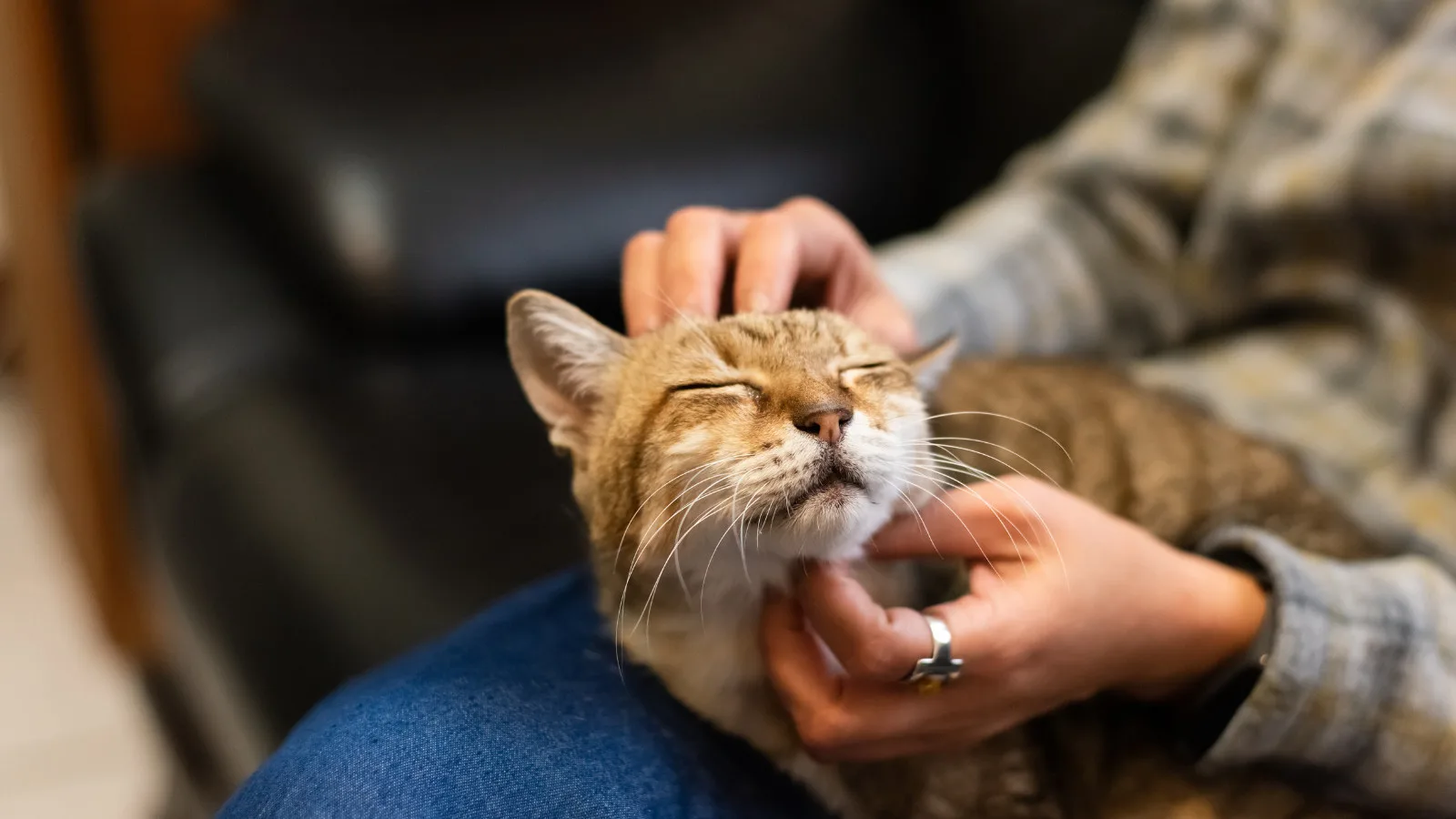
Grief Can Affect Your Physical Wellbeing
Grief isn’t only emotional; it can affect your body too.
You may notice:
- Difficulty sleeping or sleeping more than usual
- Changes in appetite
- Feeling exhausted or lacking energy
- Difficulty concentrating
- Becoming tearful unexpectedly
- Headaches, nausea or general aches
These are common responses to loss. Try to be patient with yourself and remember that healing takes time.
There is No Right Way to Grieve
Everyone grieves differently. Some people want to talk about their cat often, while others need quiet time to process their emotions. You may find comfort in looking through photographs straight away, or you may prefer to wait until you’re ready.
You may have heard about the ‘five stages of grief’, but grief doesn’t happen in neat stages or follow a fixed timeline. Emotions often come and go without warning, and you may experience several different feelings on the same day.
Your grief is as individual as the relationship you shared with your cat.
If You Chose Euthanasia
If you made the difficult decision to have your cat euthanised, you may find yourself questioning whether you made the right choice.
Many owners wonder if they acted too soon, waited too long or could have done something differently. These thoughts are a common part of grief.
Remember that euthanasia is only recommended when it is in a cat’s best interests and when their quality of life can no longer be maintained. Choosing to prevent further pain or suffering is an act of love and compassion.
Although feelings of guilt are understandable, try to remind yourself that every decision was made with your cat’s welfare at heart.
Finding Ways to Cope
There is no quick solution to grief, but taking each day as it comes can help.
You may find comfort in:
- Talking to family or friends who understand how much your cat meant to you
- Looking through photographs – when you feel ready
- Creating a memory box with favourite toys, photographs, a collar (if they wore one) or a paw print
- Writing down happy memories or the little habits that made your cat so special
- Keeping to a gentle daily routine
- Spending time in places where you enjoyed being together, such as the garden or a favourite sunny spot by the window
- Reaching out for support if you feel you need someone to listen
Some days you may smile as you remember your cat’s funny antics. Other days may bring tears. Both are part of grieving.
When Other People Don’t Understand
Unfortunately, not everyone understands how deeply the loss of a cat can affect someone.
Comments such as ‘it was just a cat’ can feel incredibly hurtful, even if they were never intended that way.
Your grief is real because your relationship was real.
If you feel those around you don’t understand, consider talking to someone who appreciates the special bond between people and their pets, such as a pet bereavement support service.
You do not have to face your grief alone.
Looking After Yourself
When you’re grieving, everyday tasks can sometimes feel surprisingly difficult.
Try to:
- Eat regular meals, even if you don’t feel particularly hungry
- Keep yourself hydrated
- Get plenty of rest
- Accept support from family and friends
- Give yourself permission to grieve without placing expectations on how quickly you should feel better
Healing doesn’t mean forgetting your cat. It means learning, little by little, to carry your love and your memories alongside your loss.
When Should I Seek Extra Support?
For many people, grief gradually becomes less overwhelming with time.
However, if your grief is affecting your daily life, feels impossible to manage, or you’re finding it difficult to cope weeks or months after your cat’s death, don’t hesitate to ask for help.
You may find support from:
- Your GP
- A bereavement counsellor
- A dedicated pet bereavement support service
Reaching out for support is a positive step, and you don’t have to go through this on your own.
Love Leaves a Lasting Paw Print
The love we share with our cats doesn’t end when they are gone.
Their favourite places around the house, the routines you shared and the quiet companionship they brought into your life become part of your memories forever.
With time, the sadness usually begins to soften. The memories that once brought tears may begin to bring smiles, and you’ll find yourself remembering your cat not only for the day you lost them, but for the wonderful life you shared together.
Until then, please be kind to yourself.
Take one day at a time, hold onto the memories that make you smile, and remember that it is perfectly natural to miss someone who meant so much.
A cat may leave your lap, but they never truly leave your heart.

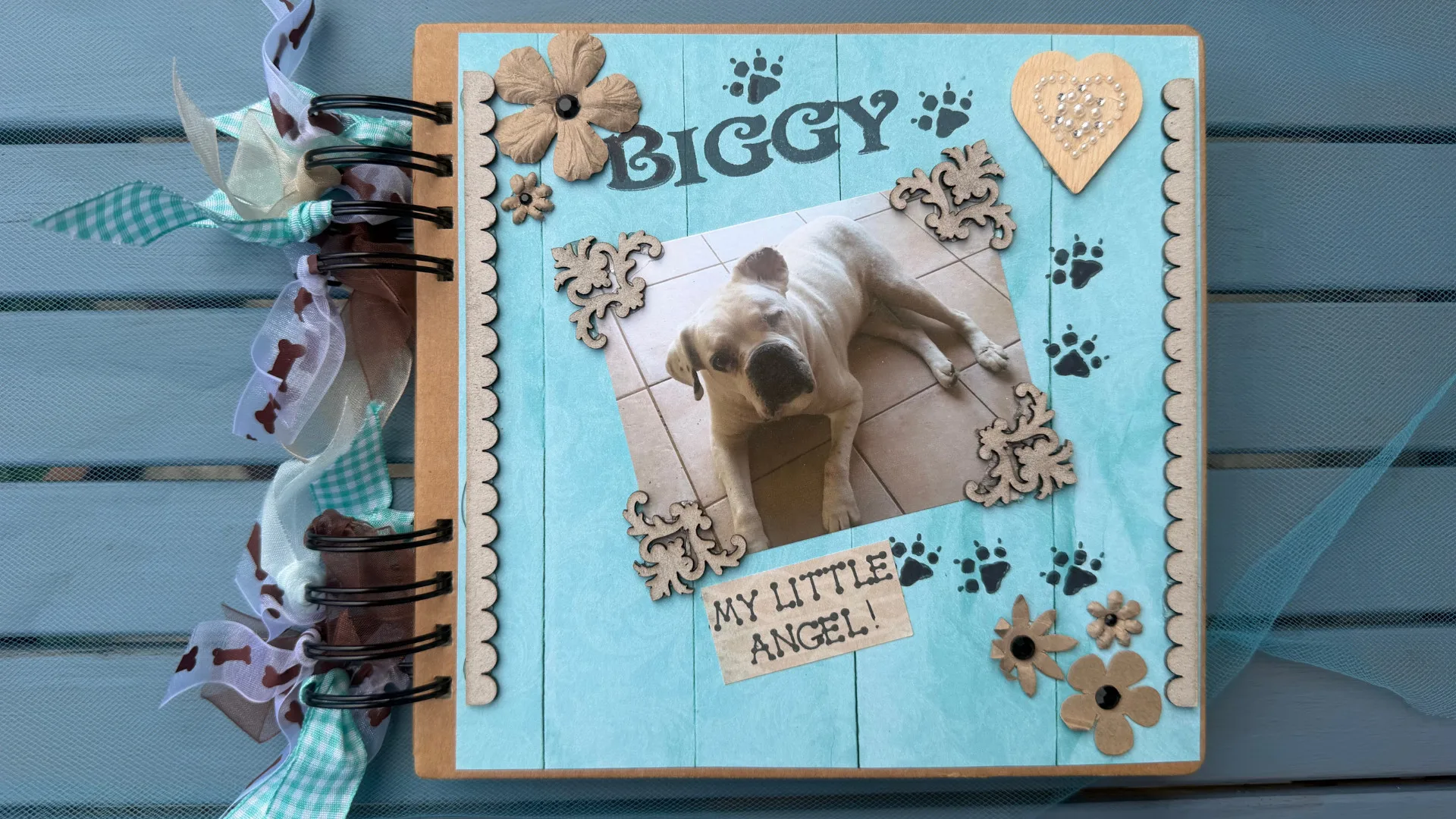
The love we share with our pets doesn’t end when they are gone.
Although the pain of loss can feel overwhelming at first, many people find comfort in finding meaningful ways to celebrate their pet’s life and the memories they shared together. There is no right or wrong way to remember your pet. What matters most is choosing something that feels special to you and reflects the unique bond you shared.
Whether you prefer a quiet moment of reflection or a lasting tribute, taking time to honour your pet can be an important part of the healing process.
On this page
- Say goodbye in your own way
- Create a memory box
- Display favourite photographs
- Write to your pet
- Plant a living tribute
- Create a special place of remembrance
- Honour their legacy
- Share your grief
Your Pet Memories
A place here on our website to share the memories, stories and photographs of the pets who made you lifes better simply by being in it.
Say Goodbye in Your Own Way
Many families find comfort in marking their pet’s passing with a personal farewell.
This might be a formal funeral or memorial, or simply a quiet moment shared with those who loved them.
You could choose to:
- Scatter your pet’s ashes in a meaningful place (where permitted)
- Hold a small remembrance ceremony with family and friends
- Say a prayer, read a favourite poem or play a meaningful piece of music
- Light a candle in their memory
- Spend time reflecting on happy memories together
There is no need for a grand occasion. Sometimes the simplest moments are the most meaningful.
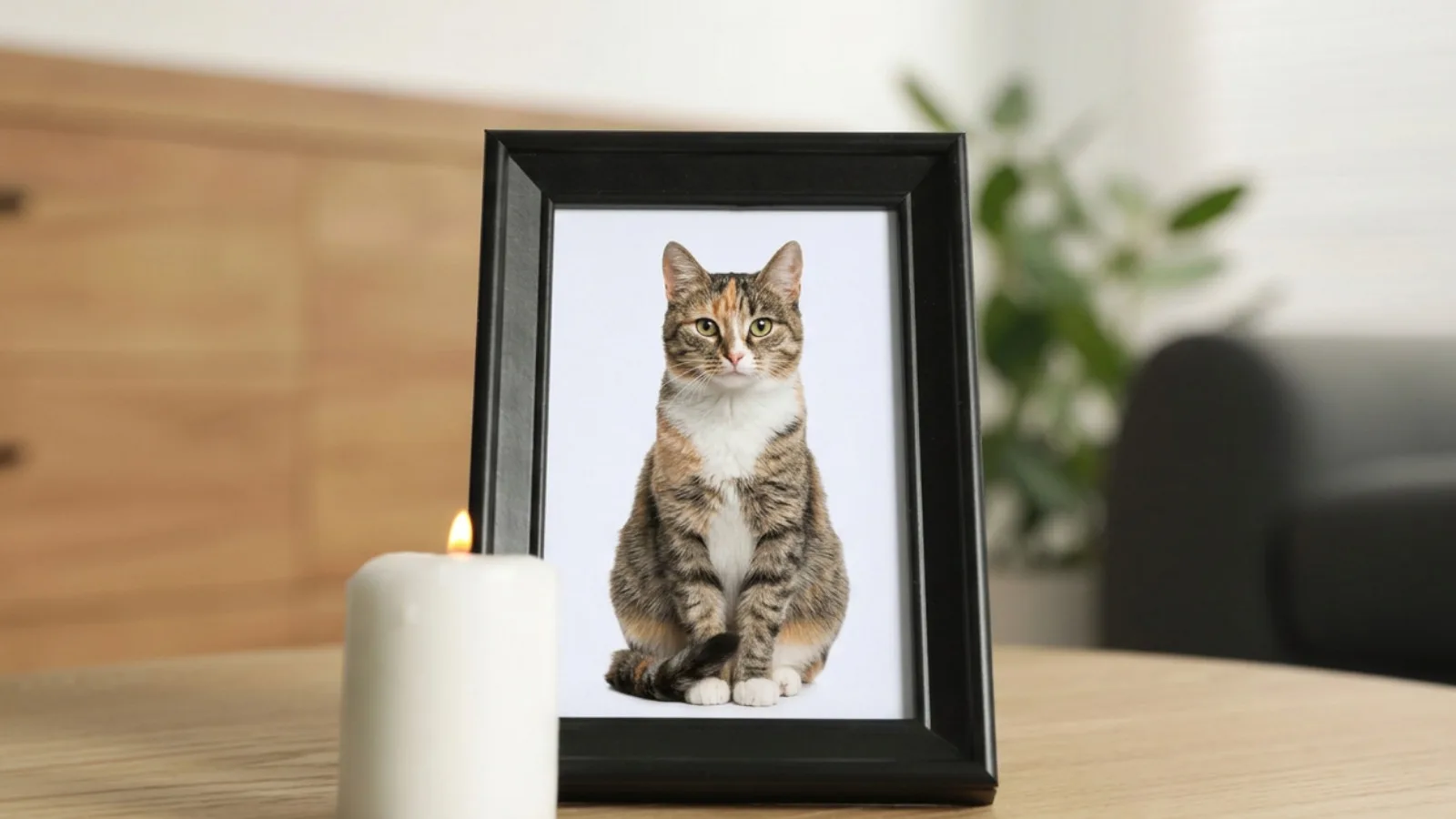
Create a Memory Box
Gather some of the items that remind you of your pet and keep them in a special memory box.
You might include:
- Their collar or lead
- A favourite toy
- Photographs
- Their name tag
- A blanket
- Sympathy cards
- A copy of their paw print
- A clipping of fur, if you have it
You don’t have to look through these keepsakes straight away. Many people simply find comfort in knowing they have them when the time feels right.
Display Favourite Photographs
Photographs help keep happy memories close.
You could create a framed photograph, a gallery wall, a photo album or a digital slideshow celebrating your pet’s life from puppyhood or kittenhood through to their senior years.
Looking back on joyful moments can gradually help shift the focus from the sadness of their loss to the happiness they brought into your life.
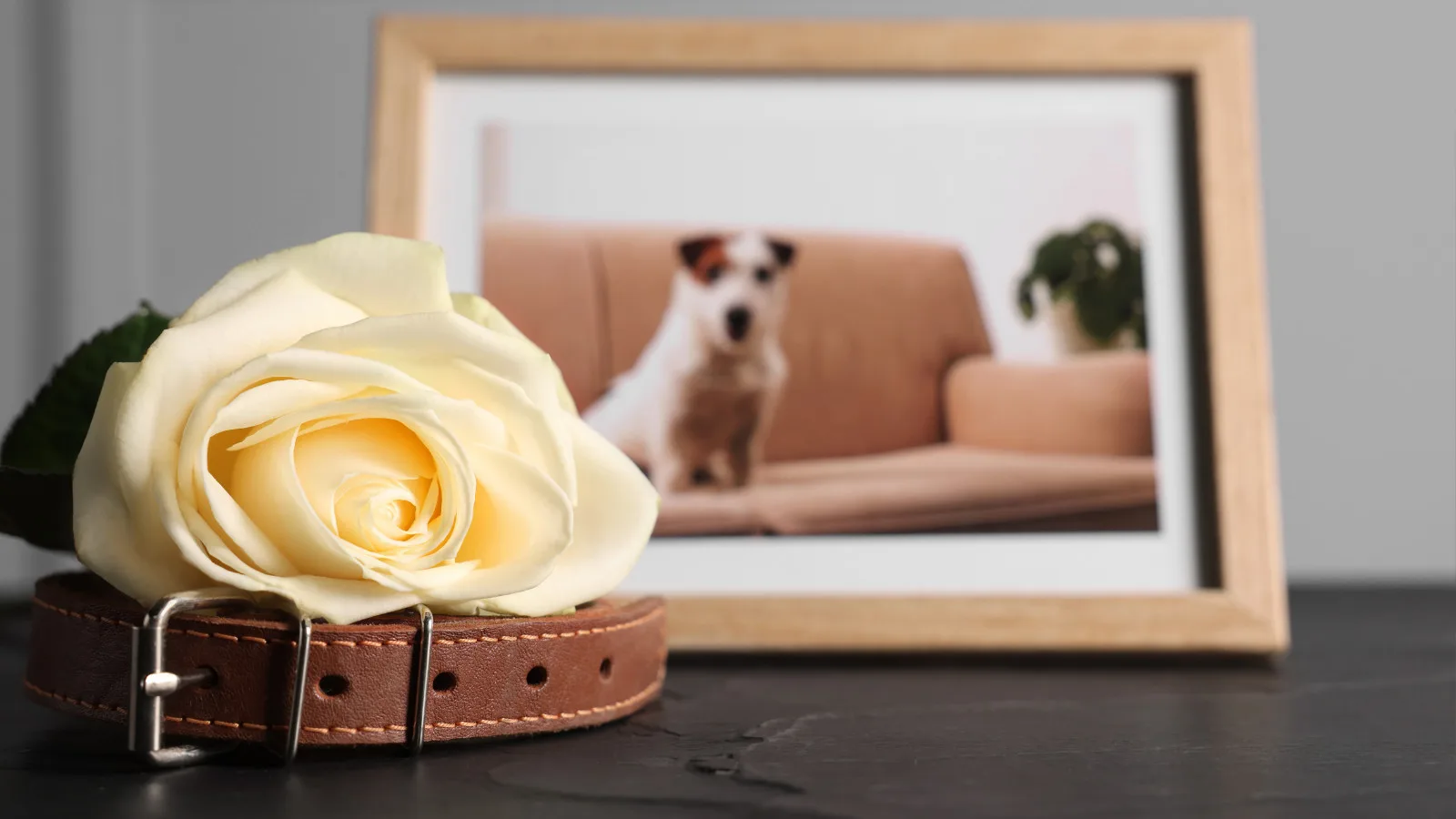
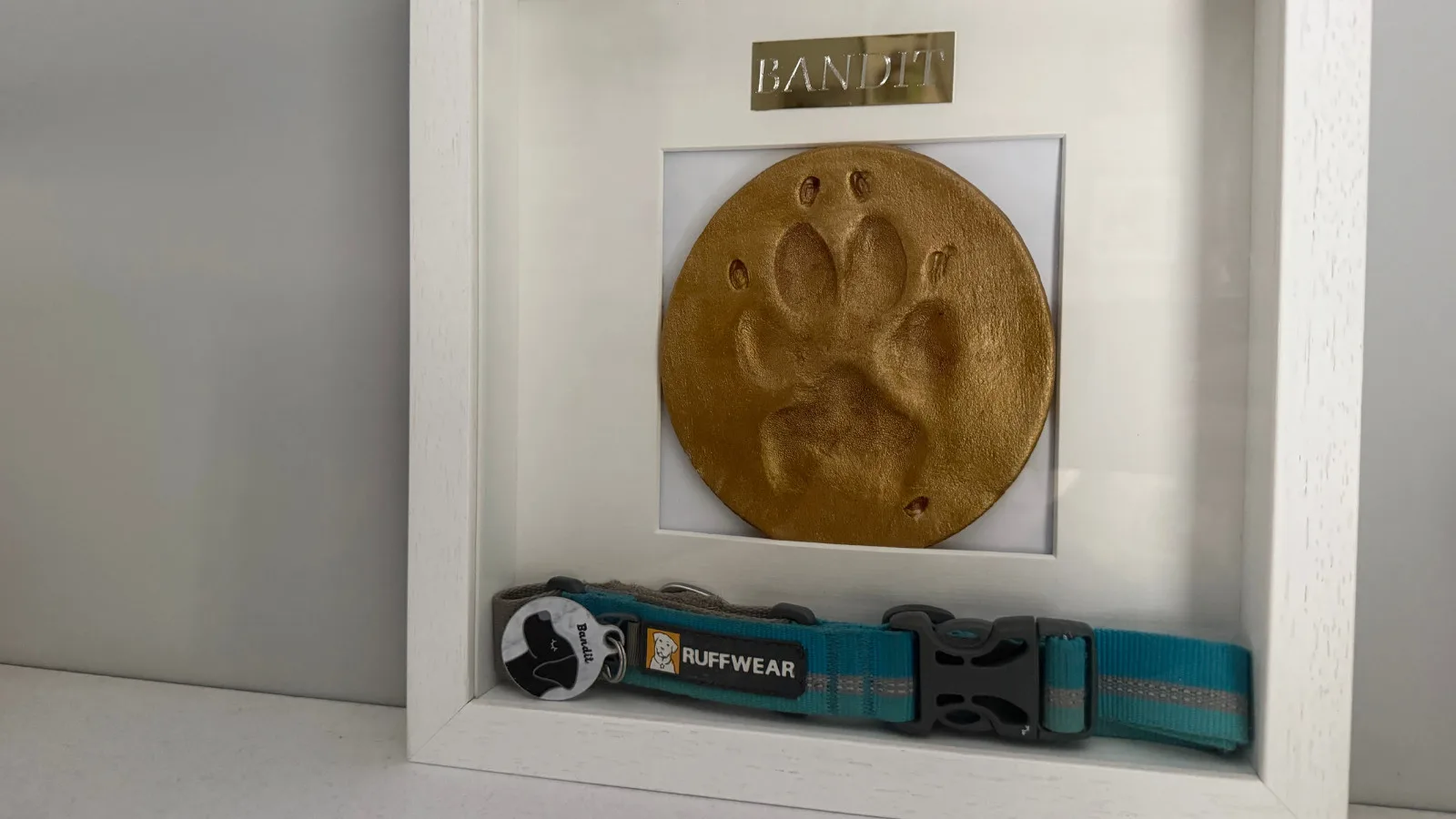
Ask for a Paw Print or Fur Clipping
Many veterinary practices and pet crematoria can provide keepsakes such as:
- A clay paw print.
- An ink paw print.
- A clipping of your pet’s fur.
Please don’t feel embarrassed about asking. Veterinary teams understand how meaningful these keepsakes can be and are often happy to help if it’s possible.
Write to Your Pet
Writing can be a powerful way to express emotions that are difficult to say aloud.
Some people choose to write:
- A goodbye letter
- A poem
- A story about their favourite memories
- A journal of the adventures they shared together
There are no rules. Write whatever is in your heart.
Some families choose to place their letter with their pet at burial or cremation, while others keep it somewhere special to read again in the future.
Plant a Living Tribute
Planting something in your pet’s memory can create a beautiful, lasting reminder of the life you shared.
Watching something grow can be a gentle reminder that love continues, even after loss.

Create a Special Place of Remembrance
Some people find comfort in having a dedicated place where they can quietly remember their pet.
This could be:
- A favourite photograph on a shelf
- Their collar beside a framed picture
- A memory box displayed in your home
- A candle lit on special occasions
- A garden bench or quiet corner outdoors
It doesn’t need to be elaborate, just meaningful to you.
Create Something Personal
If you enjoy creative projects, you could make something inspired by your pet, such as:
- A scrapbook or memory album
- A framed collage of photographs
- A piece of artwork or painting
- A personalised ornament
- A quilt made from favourite blankets or bandanas
- A piece of jewellery containing their name or paw print
These keepsakes can provide comfort for many years to come.
Honour Their Legacy
Many people find comfort in knowing their pet’s memory continues to make a difference.
You might choose to:
- Donate to an animal charity in their memory
- Fundraise to help other pets in need
- Volunteer with a local rescue or welfare organisation
Acts of kindness inspired by your pet can become a lasting tribute to the love they brought into your life.
Share Your Grief
You don’t have to keep your memories to yourself.
Talking about your pet with family, friends or others who understand pet loss can be incredibly comforting. Sharing stories, photographs and happy memories helps keep their spirit alive and reminds us that the love we shared doesn’t disappear.
If you find your grief feels overwhelming, remember that support is available. Speaking with a pet bereavement support service or someone who understands the unique bond between people and their pets can make a real difference.
Love Never Truly Leaves
Our pets may only be part of our lives for a short time, but to them, we are their whole world.
The paw prints they leave behind aren’t just on our floors or our clothes, they’re on our hearts.
As time passes, the sadness of saying goodbye is often gently replaced by gratitude for the years you shared together. Whether you choose to plant a tree, frame a photograph, light a candle or simply smile as you remember their funny little habits, every act of remembrance is a celebration of a life that was deeply loved.
Pets may leave our side, they never truly leave our hearts.


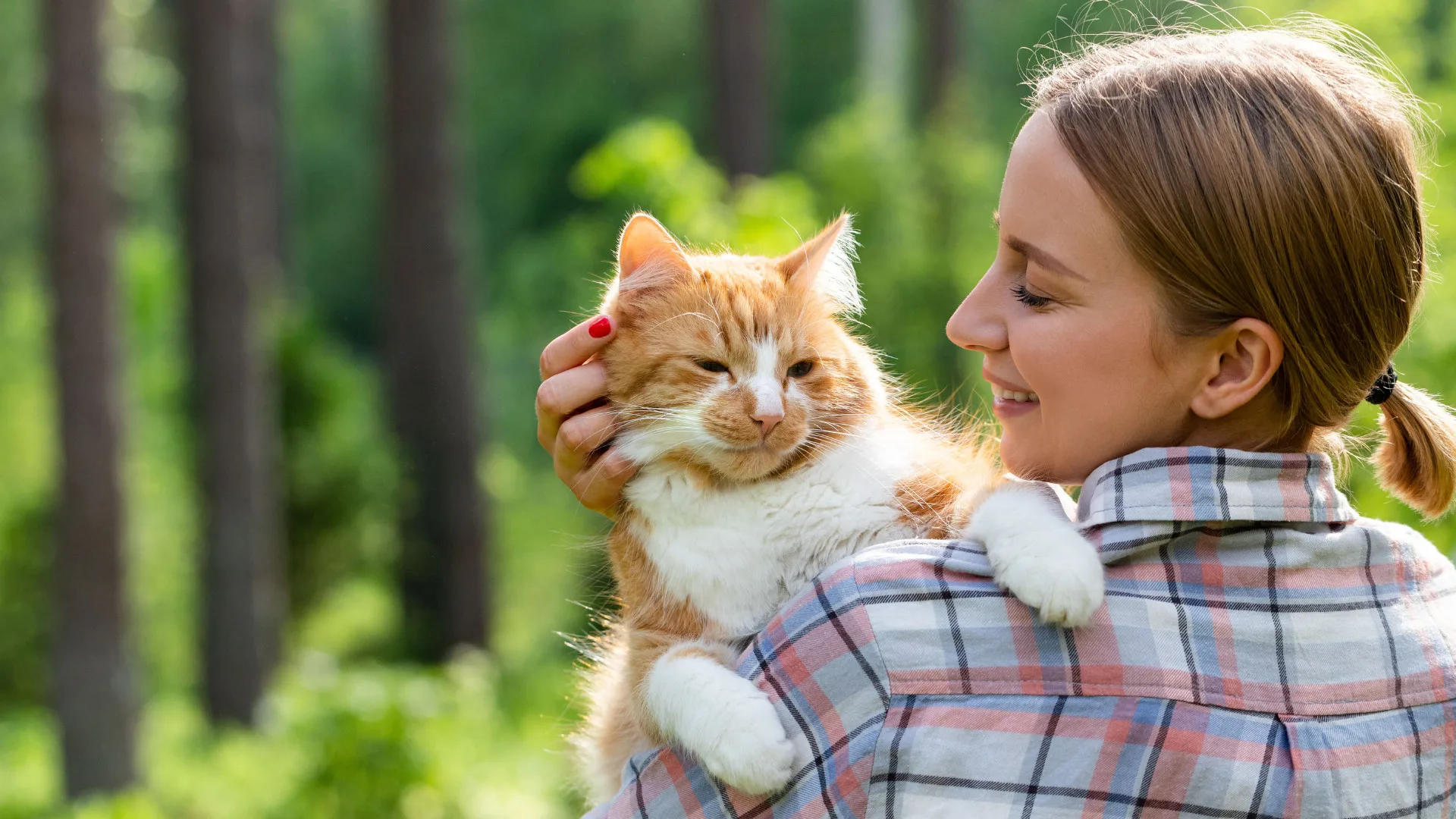
Life with a cat is made up of quiet moments, gentle routines and the little things that make them uniquely themselves.
While many people think about creating special memories when a cat becomes older or unwell, there’s no reason to wait. Whether your cat is a curious kitten, a confident adult or enjoying their senior years, every stage of life offers opportunities to strengthen your bond and celebrate the companionship you share.
The most meaningful memories are often the simplest ones; moments that your cat genuinely enjoys and chooses to share with you. By following their lead and respecting their individual personality, you’ll create memories that are just as special for them as they are for you.
On this page
- Spend time in their favourite spot
- Watch the sunrise or sunset together
- Capture every stage of their life
- Create a piece of art together
- Celebrate the things they love most
- Capture their unique personality
- Make a keepsake
- Enjoy gentle play together
Spend Time in Their Favourite Spot
Cats are creatures of habit and often have favourite places where they feel happiest and most secure.
It might be a sunny windowsill, a cosy chair, the garden, a favourite blanket or simply sitting beside you on the sofa. Join them there for a while, allowing them to relax in your company without expecting anything in return.
Sometimes, just being together is enough.
Watch the Sunrise or Sunset Together
If your cat enjoys sitting safely by a window or relaxing in a secure garden or enclosed outdoor space, spend some time together watching the day begin or come to an end.
Take a photograph or short video if you’d like or simply enjoy the peaceful moment. The quiet times often become the memories we hold closest.
Capture Every Stage of Their Life
While not every cat will be comfortable having professional photographs taken, for those that do, they are a beautiful way to celebrate your cat’s personality and the unique place they hold in your family.
Whether they’re climbing curtains as a kitten, curled up in their favourite chair as an adult or enjoying slower days in later life, each stage tells part of their story.
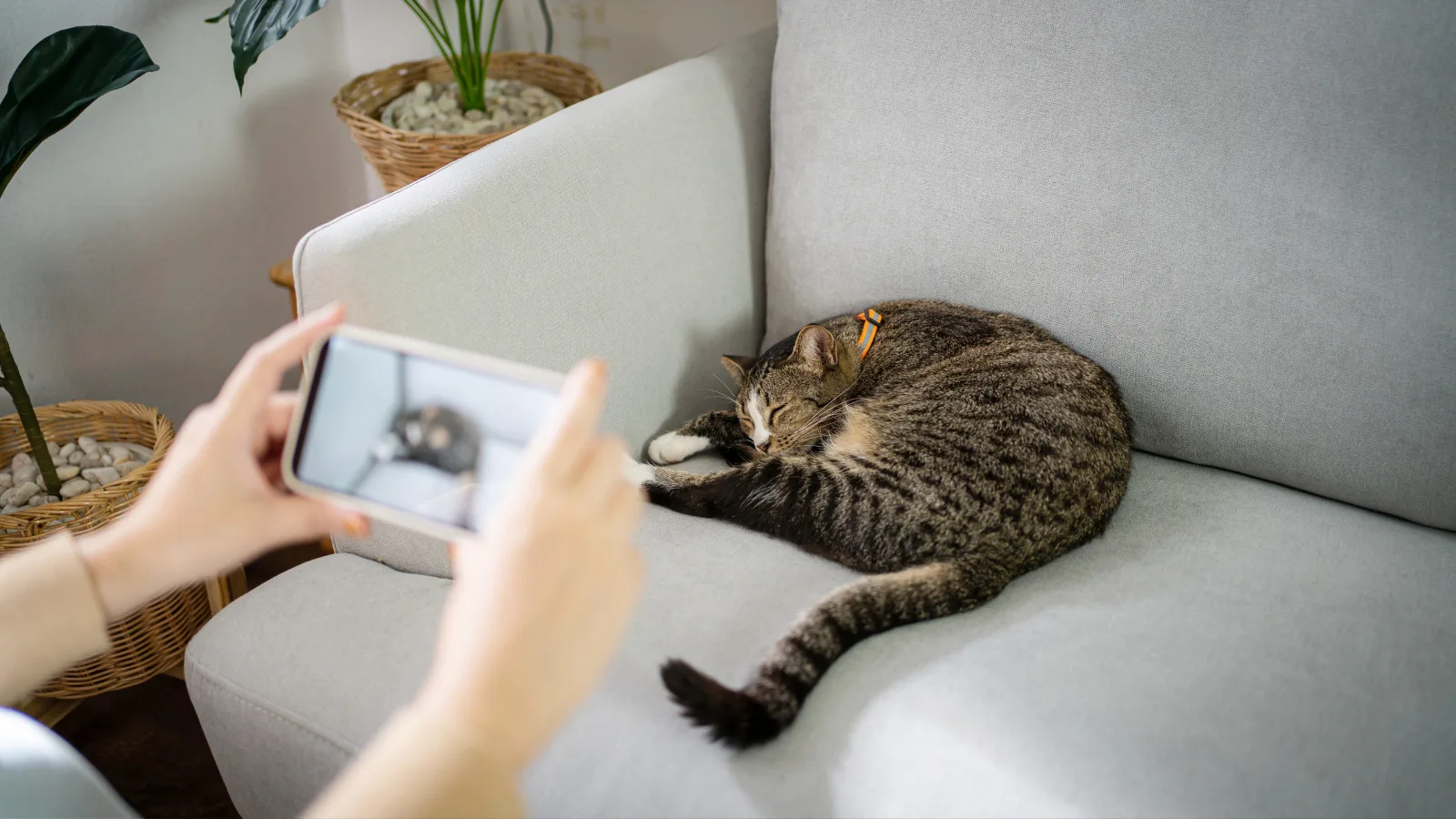
Alongside or instead of professional photographs, remember to take plenty of everyday pictures too. Their favourite sleeping position, curious expressions, playful moments and affectionate head bumps are often the memories that mean the most.
Create a Piece of Art Together
If your cat enjoys enrichment activities and food-based games, you could help them create their own artwork.
Place small blobs of pet-safe, non-toxic paint onto a canvas and cover it completely with cling film. Spread a little cat-safe soft food or a favourite lickable treat across the surface so your cat can investigate and lick it, moving the colours underneath to create a one-of-a-kind design.
Some cats may also create colourful patterns by walking across a protected canvas if they’re comfortable doing so.
Always supervise your cat, ensure the paint remains fully covered and stop the activity if they lose interest or seem unsure.
Celebrate the Things They Love Most
Every cat has their own favourite ways to spend the day.
That might include:
- Chasing a feather toy
- Exploring a secure garden or catio
- Watching birds from the window
- Enjoying a new climbing shelf or cosy bed
- Solving a food puzzle or enrichment game
- Sharing a favourite cat-safe treat
- Spending quiet time being brushed, if they enjoy grooming
The happiest memories come from doing the things your cat already loves.
Capture Their Unique Personality
Cats have wonderfully individual characters.
Record short videos of your cat kneading a blanket, stretching after a nap, chirping at birds, chasing a toy, purring contentedly or greeting you at the door.
If your cat purrs loudly, has a distinctive meow or a funny little routine, capture those sounds too. These small details often become the memories we miss most.
Make a Keepsake
A paw print in clay or ink, their favourite toy, collar (if they wear one), a favourite blanket or a collection of photographs can all become treasured reminders of the life you’ve shared.
You could even write down the little things that make your cat unique; their favourite sleeping place, funny habits or the nicknames only your family uses.
These simple keepsakes tell the story of a much-loved companion.
Enjoy Gentle Play Together
Even older cats often enjoy short bursts of play when the activity is suited to their age and abilities.
Spend a few minutes with a wand toy, soft ball or puzzle feeder, always allowing your cat to decide when they’ve had enough.
Keeping sessions relaxed and enjoyable helps build confidence and strengthens your bond.
Treasure the Quiet Moments
Cats often show their love in gentle, understated ways.
They may curl up beside you while you read, quietly follow you from room to room or settle nearby while you work and many a cat owner is familiar with a paw appearing under the bathroom door!
These peaceful moments are every bit as valuable as playful ones and often become the memories we treasure most.
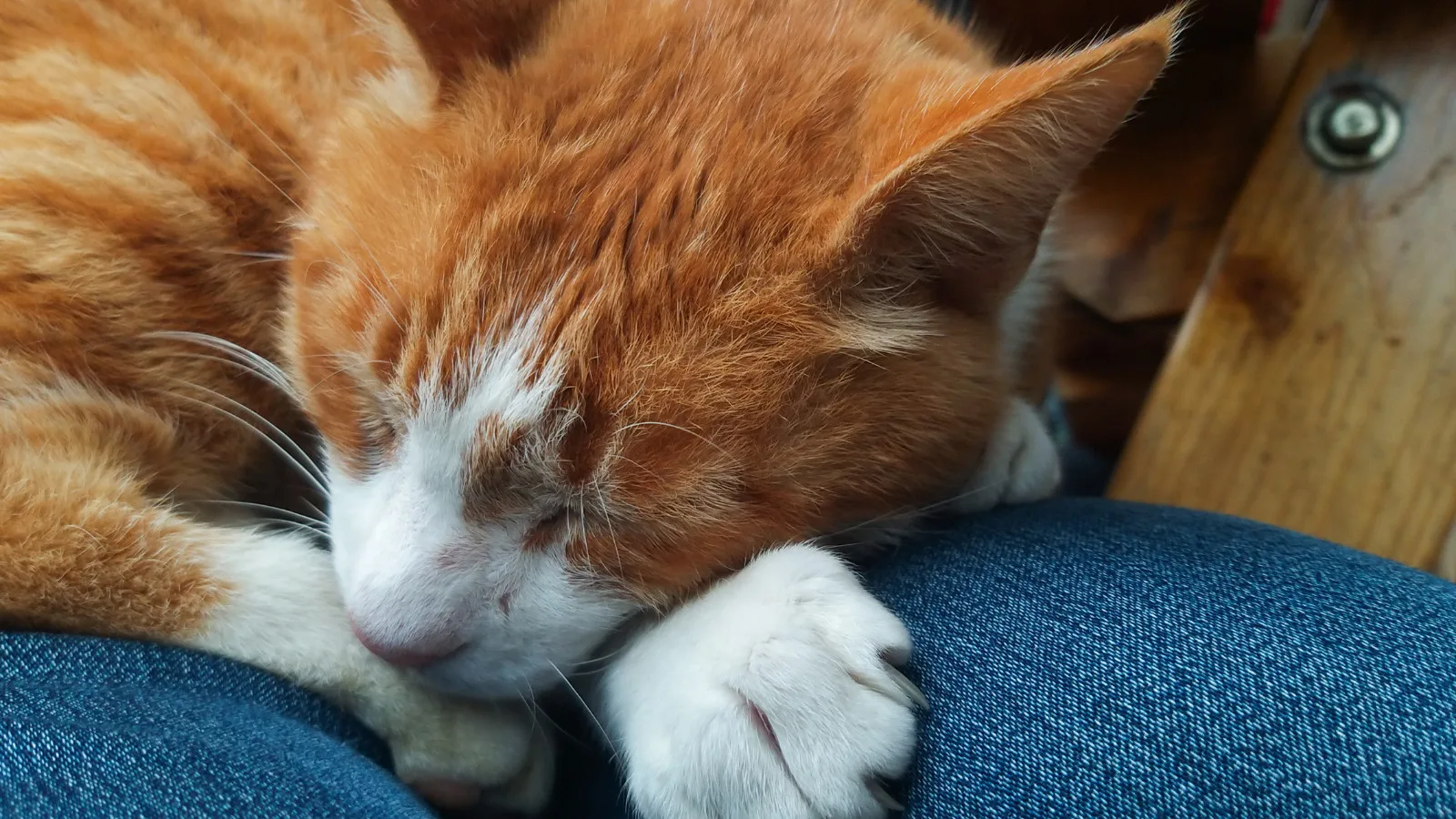
Include Them in Family Life
Celebrate birthdays or adoption anniversaries, include your cat in family photographs and enjoy simple traditions together.
Whether it’s opening a new toy on their gotcha day or sharing a quiet evening together every weekend, these rituals become part of your family’s story.
Let Your Cat Set the Pace
One of the greatest gifts you can give your cat is the freedom to choose how they spend time with you.
Some cats love cuddles, while others prefer sitting close by. Some enjoy energetic play, while others are happiest watching the world from a windowsill.
By respecting their choices and following their lead, you’re showing them love in the way they understand best.
Every Moment Matters
Cats don’t measure life by elaborate adventures. They find happiness in familiar places, trusted routines and feeling safe with the people they love.
The memories you’ll treasure are unlikely to be the perfectly posed photographs. They’ll be the gentle purr as they drift off to sleep beside you, the slow blink from across the room, the playful zoomies through the house and the comforting presence they’ve brought to your everyday life.
Whatever age your cat is, today is another opportunity to make a memory together. The ordinary moments often become the most special of all.


One of the questions many people ask after their pet’s passing is, “When is the right time to get another one?”
The honest answer is that there isn’t one.
Every family, every home and every grief journey is different. Some people feel ready to welcome another companion within a few weeks or months, while others may need much longer. There is no timetable to follow and no ‘right’ decision.
The most important thing is that your decision is made because you are ready to open your heart to a new pet; not because you feel pressured to replace the one you’ve lost.
On this page
- A new pet can never replace the one you’ve lost
- Give yourself time
- Making decisions during grief
- Could fostering be right for you?
- Think about your lifestyle
- If you already have other pets
- Consider adoption
- It’s okay to feel mixed emotions
A New Pet Can Never Replace the One You’ve Lost
Every pet is an individual with their own unique personality, quirks and place in your heart.
Welcoming another pet into your life doesn’t mean you’re replacing the companion you’ve lost or forgetting them. Instead, it’s about creating space for a new relationship and a new chapter when the time feels right.
The love you shared with your previous pet will always remain part of your life.

Give Yourself Time
Grief affects us all differently.
While some people find that caring for a new pet helps them begin to heal, others find they need time before they feel emotionally ready to take on the responsibility of another animal.
Ask yourself:
- Am I looking for a companion, or am I hoping to replace the pet I’ve lost?
- Do I have the emotional energy to care for a new pet?
- Am I ready to build a relationship with an animal who will have their own unique personality?
- Is everyone in my household ready for this decision?
There are no right or wrong answers; only what feels right for you.
Be Careful When Making Decisions During Grief
Grief can leave us feeling vulnerable, and it’s natural to want to fill the emptiness left by a much-loved pet.
Unfortunately, making decisions while emotions are still very raw can sometimes lead to choices that aren’t the best fit for you or the animal.
You may find yourself:
- Choosing a pet that doesn’t suit your lifestyle or experience.
- Feeling pressured to make a quick decision.
- Comparing every new pet to the one you’ve lost.
- Being more vulnerable to misleading advertisements or unscrupulous breeders and sellers.
Take your time.
A reputable breeder or rescue organisation will never pressure you into deciding quickly and will always want to ensure that both you and the pet are the right match for one another.
Could Fostering Be Right for You?
If you miss having an animal in your home but aren’t sure you’re ready to make a lifelong commitment, fostering may be a wonderful option.
By fostering, you can provide a temporary home for an animal in need while helping them prepare for their forever family.
Many people find that fostering offers companionship, purpose and comfort during their grief, while giving a deserving pet the care and love they need.
It can also help you discover whether you’re ready to welcome another pet permanently in the future.
Think About Your Lifestyle
Before bringing another pet home, take some time to consider whether your current circumstances are right.
Ask yourself:
- Do I have the time to meet a new pet’s physical and emotional needs?
- Has anything changed since I last welcomed a pet into my family?
- Can I meet the financial costs of caring for another animal, including food, veterinary care, insurance and unexpected expenses?
- Does the type of pet I’m considering suit my home and lifestyle?
Choosing a pet whose needs match your circumstances gives them the best possible start in their new home.
If You Already Have Other Pets
If you have other pets at home, remember that they may still be adjusting to the loss of their companion too.
Take time to consider how they are coping before introducing another animal. Every pet is different, and careful introductions are essential to help new relationships develop successfully.
A reputable rescue organisation can offer guidance on choosing a suitable companion and introducing them safely.
Consider Adoption
If you decide the time is right to welcome another pet into your family, adoption can be a wonderful way to offer a second chance to an animal in need.
Rescue organisations work hard to match pets with suitable homes based on their personalities, needs and your lifestyle, helping to give both you and your new companion the best possible start together.
Whether you choose to adopt or buy from a responsible breeder, take your time, ask plenty of questions and make sure you feel confident in your decision.
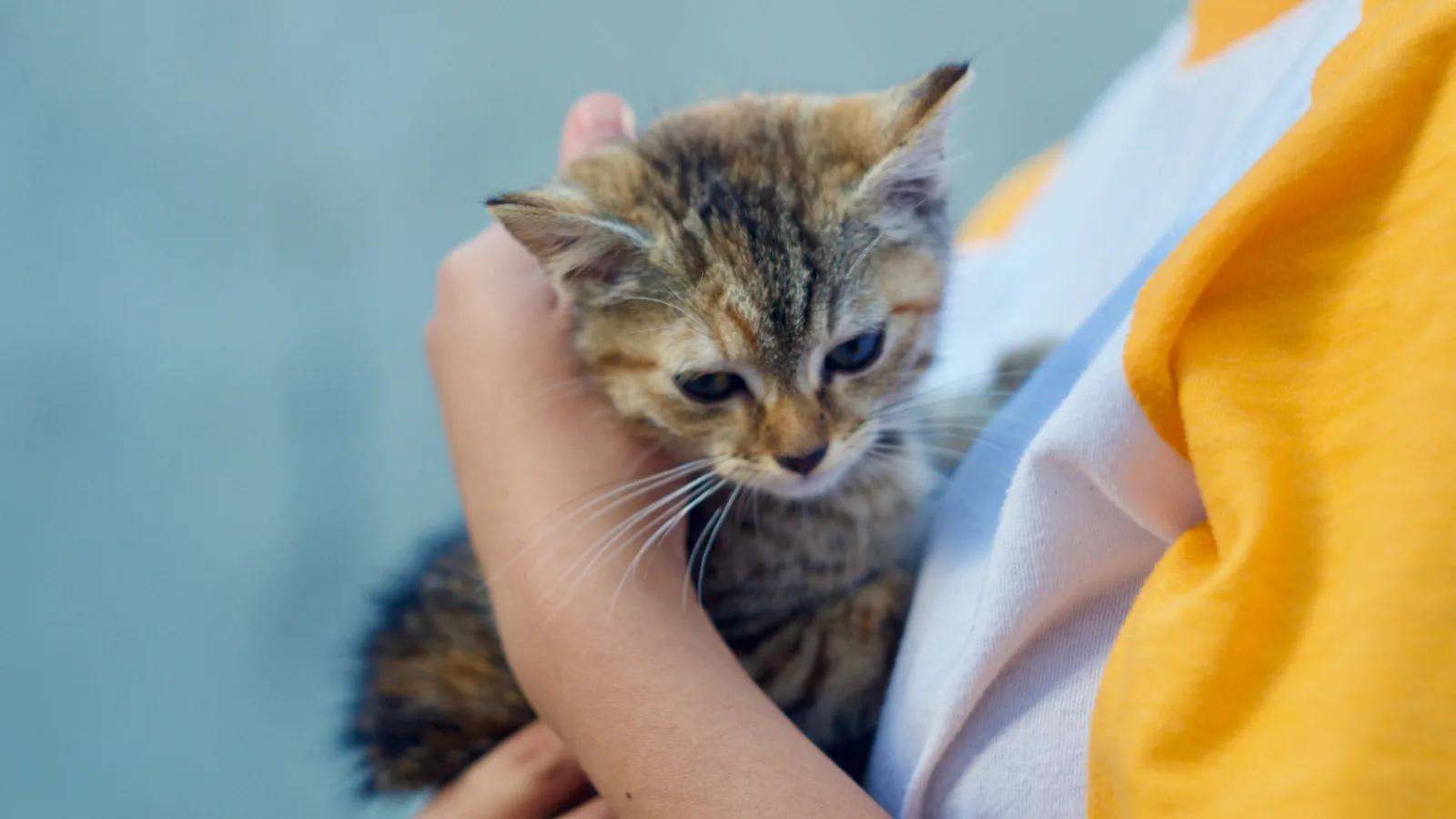
It’s Okay to Feel Mixed Emotions
Many people feel excited about welcoming a new pet while also feeling guilty for doing so.
These emotions often exist side by side.
Loving another pet doesn’t diminish the love you had for the one you’ve lost. Our hearts don’t have a limited amount of love to give.
A new companion won’t erase your grief, but in time they may bring new routines, fresh adventures and moments of joy back into your home.
Trust Yourself
Only you can decide when, or if, the time is right to welcome another pet into your life.
There is no rush, no expectation and no deadline.
Whether that day comes in a few months, several years or not at all, your decision should be based on what feels right for you, your family and the animal you hope to welcome.
When the time is right, you won’t be replacing the pet you’ve lost.
You’ll simply be opening your heart to another animal who needs a loving home, while carrying the memory of the one who came before with you always.
Halloween can be a terrifying time for many pets. Fireworks, trick-or-treaters at the door, unusual noises and disruptions to routine can all cause anxiety and fear. Taking a few simple precautions can help keep your pets safe, calm and comfortable.
Before Halloween
Check your pet’s identification details
- Ensure your pet is microchipped and that your contact details are up to date.
- Make sure dogs wear a collar and ID tag with current contact information.
- Check that fences, gates and garden boundaries are secure.
Plan ahead
- Walk dogs earlier in the day before fireworks are likely to begin.
- During the Halloween period, keep dogs on a lead outdoors as unexpected fireworks can cause even normally confident dogs to panic and run.
- If your cat usually goes outdoors, bring them inside before dark and prepare a litter tray for indoor use.
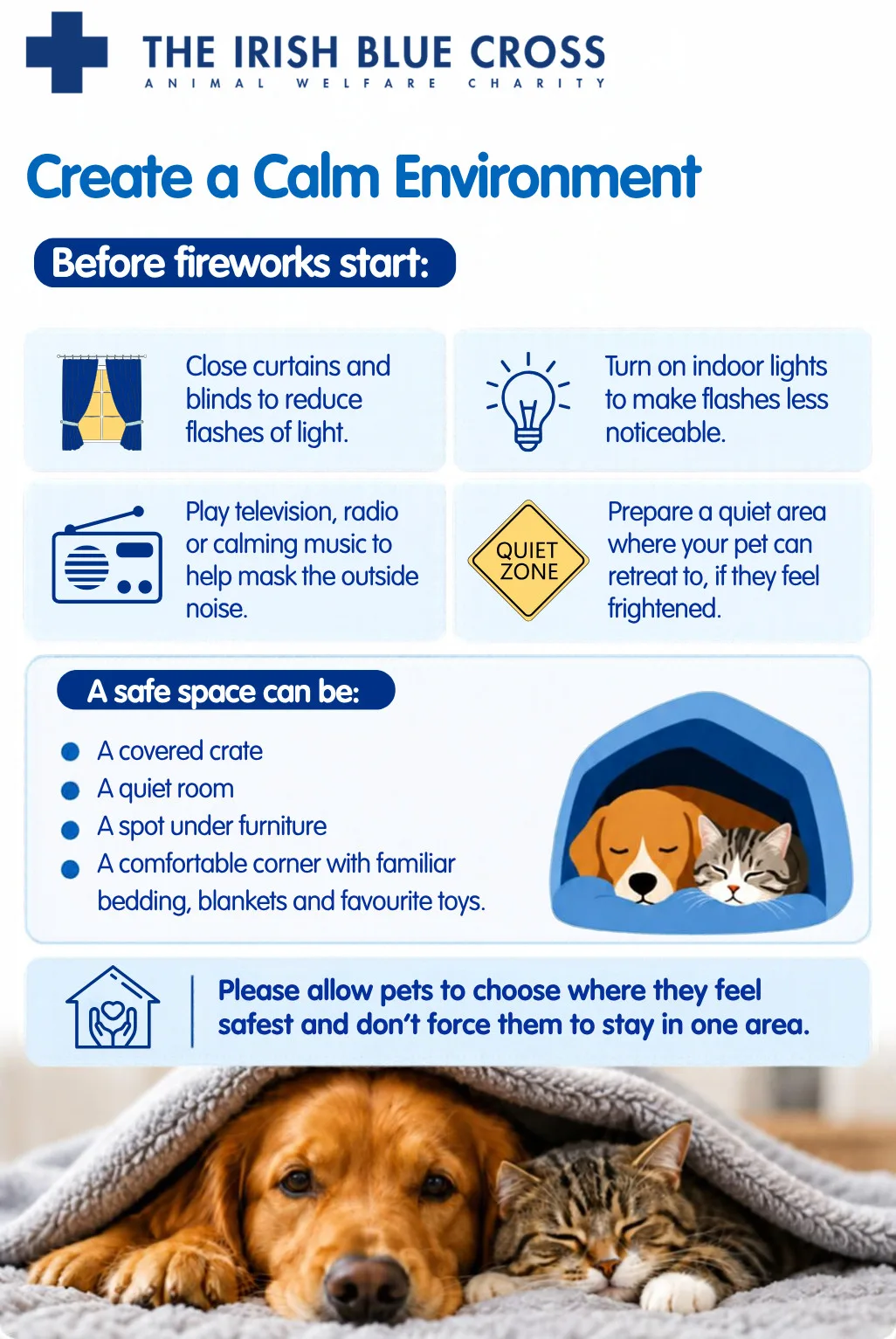
During Fireworks
Keep pets indoors
- Do not leave pets in gardens, cars or tied outside shops.
- Keep windows, doors and cat flaps closed.
- If your dog needs to go outside to toilet, accompany them and keep them on a lead.
Stay calm
- Pets often take cues from their owners. Try to remain relaxed and keep routines as normal as possible.
- If your pet seeks comfort, provide reassurance through gentle interaction and a calm voice.
- If they prefer to hide, let them do so.
Never punish fearful behaviour
Barking, pacing, hiding, shaking, house-soiling or clinginess are often signs of fear, so punishment will only increase anxiety.
For more information on dealing with fireworks for your dog, visit this page and for cats, visit this page.
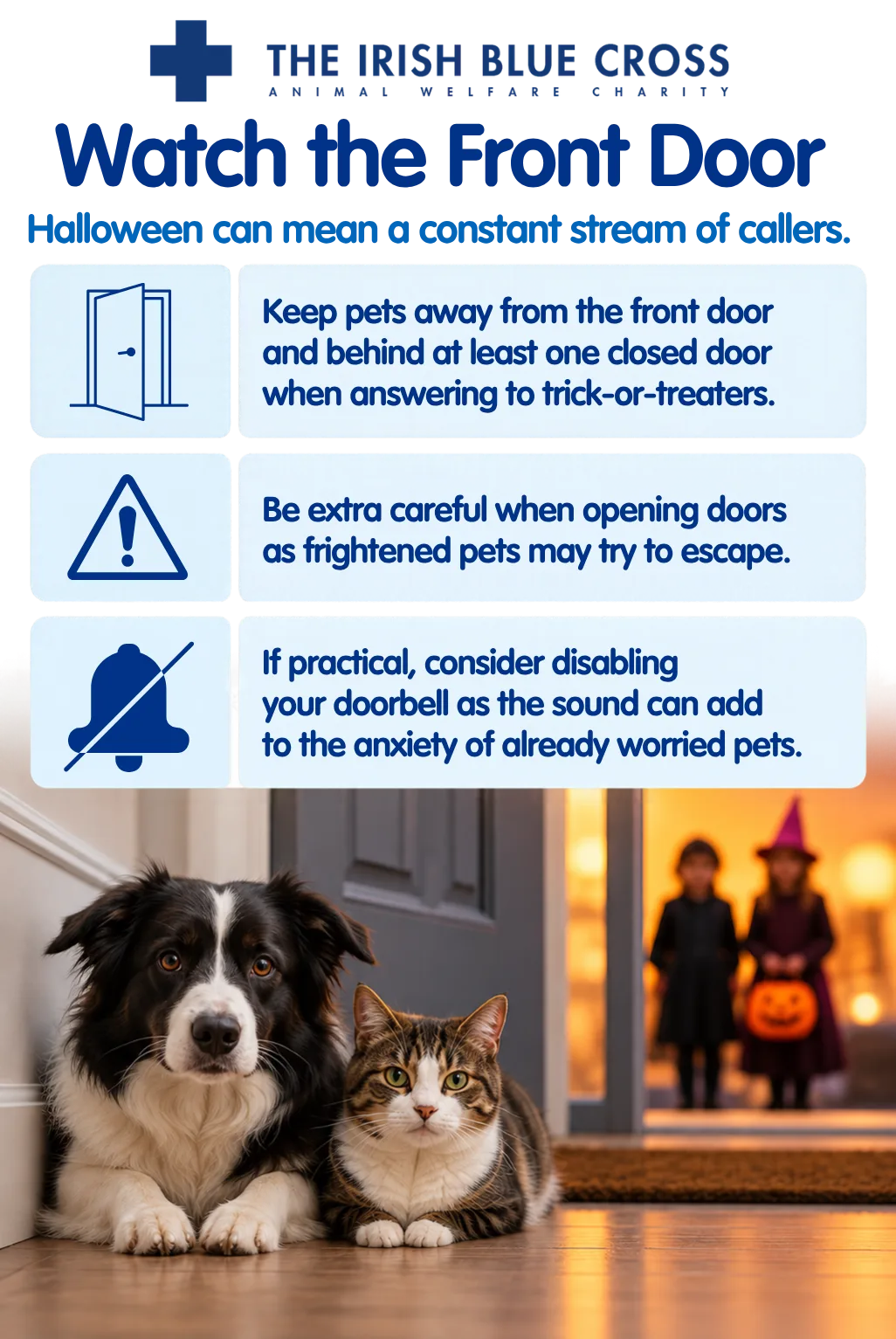
Keep Treats Out of Reach
Many Halloween treats are dangerous for pets.
Keep the following well out of reach:
- Chocolate
- Grapes
- Raisins
- Sweets and sugar-free products
- Any food containing xylitol
If you suspect your pet has eaten something toxic, contact a veterinary practice immediately.
Avoid Costumes
While costumes may seem harmless, many pets find them uncomfortable or stressful. Dressing up animals can:
- Increase anxiety
- Restrict movement
- Cause overheating
- Increase the risk of fear-related scratching or biting
If a pet shows any signs of distress, remove the costume immediately.
Additional Support for Nervous Pets
Some pets benefit from:
- Pheromone diffusers or sprays
- Calming supplements recommended by a vet
For pets with a history of severe firework fear, speak to your vet well in advance. Behavioural support or medication may be appropriate in some cases.
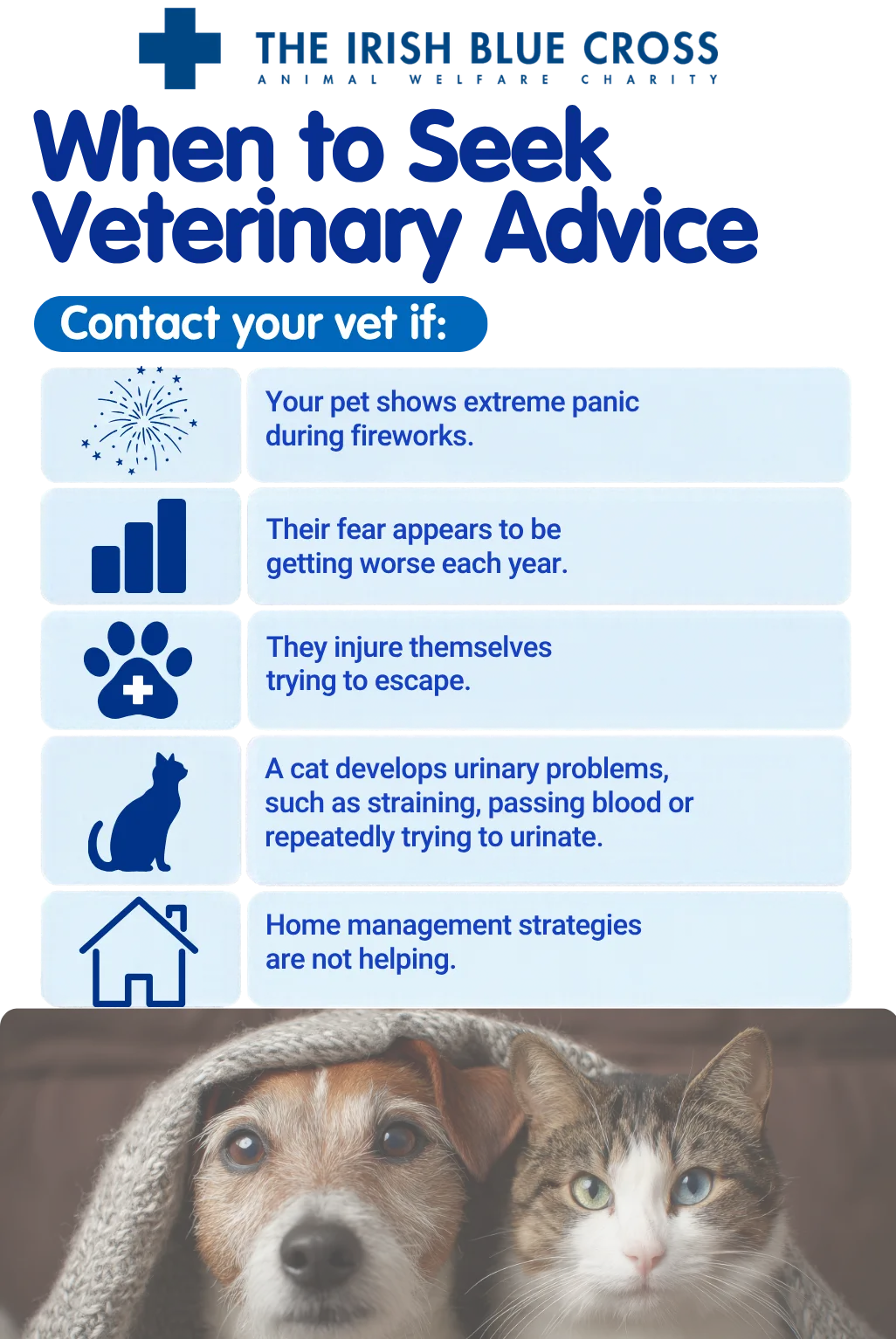
Summary
Halloween can be unpredictable, with fireworks occurring before, during and after 31st of October. A little preparation can make a significant difference. Keeping pets indoors, providing a safe space, maintaining normal routines and ensuring identification details are up to date are some of the most effective ways to protect pets during what can be a very stressful time.