
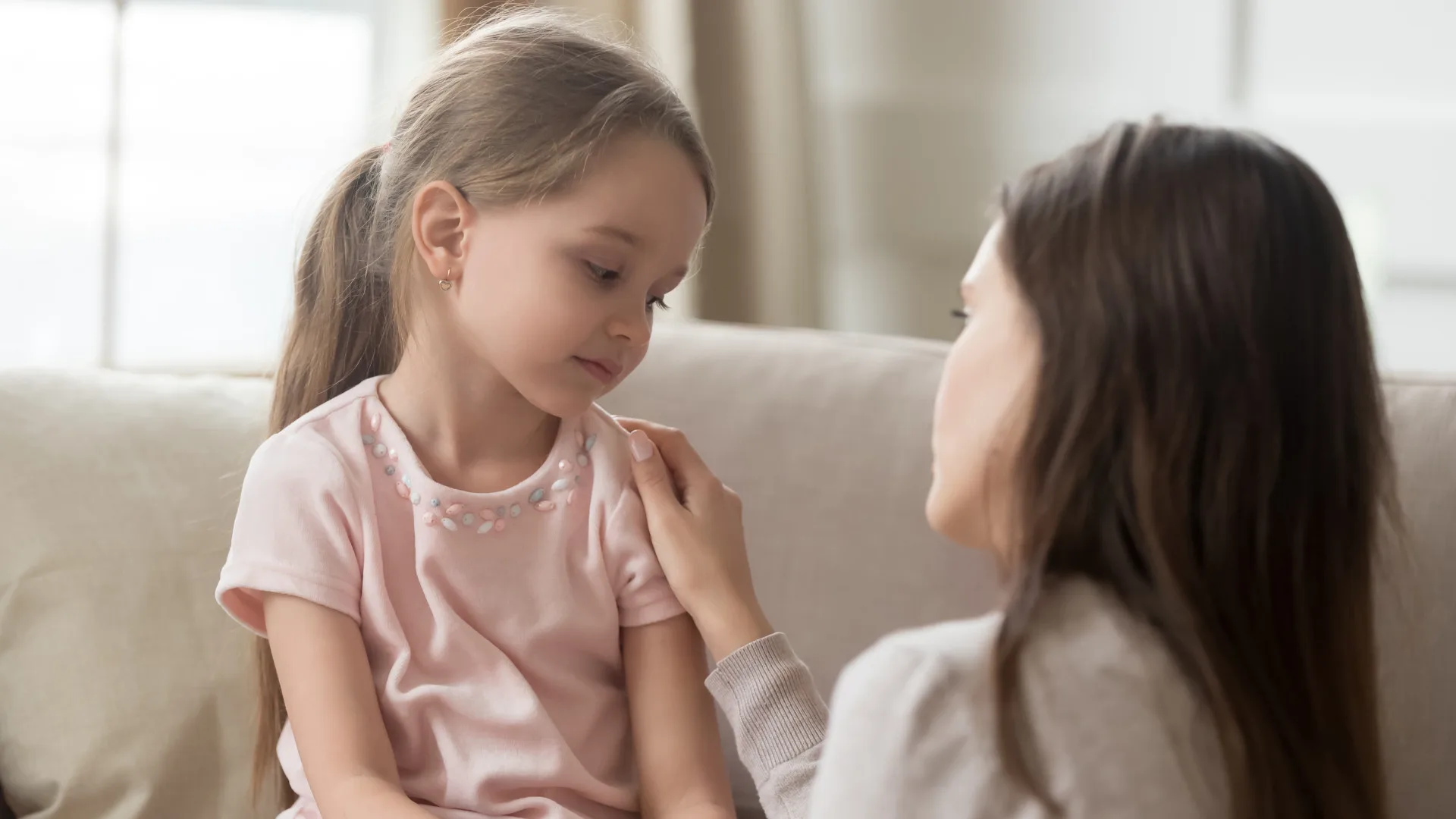
For many children, the death of a pet is their first experience of bereavement.
Pets can be extremely important figures in children’s lives, providing companionship, comfort, security and a non-judgmental relationship. Research suggests that the death of a pet during childhood can therefore have a significant emotional impact.[1]
Adults naturally want to protect children from distress, but clear and truthful explanations are generally less frightening than leaving a child to try to work out what has happened for themselves.
On this page
Where possible, use words such as ‘dead’ and ‘died’.
Expressions such as “we lost him”, “she has gone away” or particularly “we had to put him to sleep” can be confusing for young children. A child may wonder why somebody who is “lost” cannot be found or worry that going to sleep means they might die too. Child bereavement guidance therefore recommends using concrete, age-appropriate language.[2]
This can be particularly important for children who interpret language very literally, including some autistic children and children with additional communication needs.[3]
It can help to explain what death physically means:
“When someone dies, their body stops working. Their hearts stop beating and they don’t breathe anymore. They can’t feel pain, and they cannot come back to life.”
Families can, of course, then explain their own religious or spiritual beliefs about what they believe happens after death.
If euthanasia is planned, children can usually be prepared beforehand.
An explanation might be:
“Bella is very poorly and her body can’t get better. The vet is going to give her some medicine that will help her die peacefully. She won’t feel frightened or hurt. Her heart will stop beating and she won’t wake up afterwards.”
It is usually better not to describe euthanasia simply as ‘putting a pet to sleep’. Although adults commonly use the phrase as a gentle euphemism, children may understand it literally.
Children do not need every medical detail, but they do need answers they can understand. It is also perfectly acceptable for an adult to say ‘I don’t know’ when there isn’t a simple answer.

There is no answer that is right for every child.
A child’s age, understanding, relationship with the animal, wishes and the circumstances of euthanasia all matter. If their attendance is being considered, explain beforehand what they are likely to see and give them a genuine choice wherever possible.
Children should never feel responsible for deciding whether their pet lives or dies.
Whether or not they are present, children can be given opportunities to say goodbye. They might want to:
These activities can help children understand that although their pet has died, the relationship and memories remain important. Bereavement organisations recommend memory-making activities as one way of helping children process pet loss.[2]
Adults do not need to hide all their grief.
Seeing a trusted adult cry can help a child understand that sadness is a normal response when somebody we love dies. What is important is that the child continues to feel safe and supported.
Children may move in and out of grief very quickly. A child can be deeply upset and then ask to play five minutes later. This does not mean that the pet did not matter to them.
There is no single correct way to grieve.
Behavioural euthanasia can be especially difficult to explain when children are part of the family.
Avoid telling a child that an animal had to die because they were ‘bad’, ‘naughty’ or because they bit somebody.
This is particularly important if the animal has bitten or frightened the child. Children may otherwise believe that they caused their pet’s death.
Instead, the explanation can focus on how the animal was feeling and why adults had responsibility for keeping everyone safe.
For example: “Max’s brain was making him feel frightened and worried a lot of the time. Sometimes that made him behave in ways that weren’t safe. We and the vets tried to help him feel better, but we couldn’t make him feel safe enough. We decided that the kindest thing was for the vet to help him die peacefully.”
If a child was involved in an incident, they may need to hear explicitly:
“This was not your fault. You did not make this happen and you did not make the decision. The grown-ups made the decision because it is our job to keep you and Max safe.”
A child can love an animal who frightened or injured them. They may also feel angry with the animal, frightened of them, relieved that the danger has gone, or guilty for feeling relieved.
More than one feeling can be true at the same time.
The same is true for adults.
Sometimes the most compassionate way of understanding behavioural euthanasia is to recognise two difficult truths together:
A family can love an animal enormously, and it can still be unsafe or unkind for that animal’s life to continue.
Written by Dr. Claire Corridan, BVMS, PhD, MRCVS