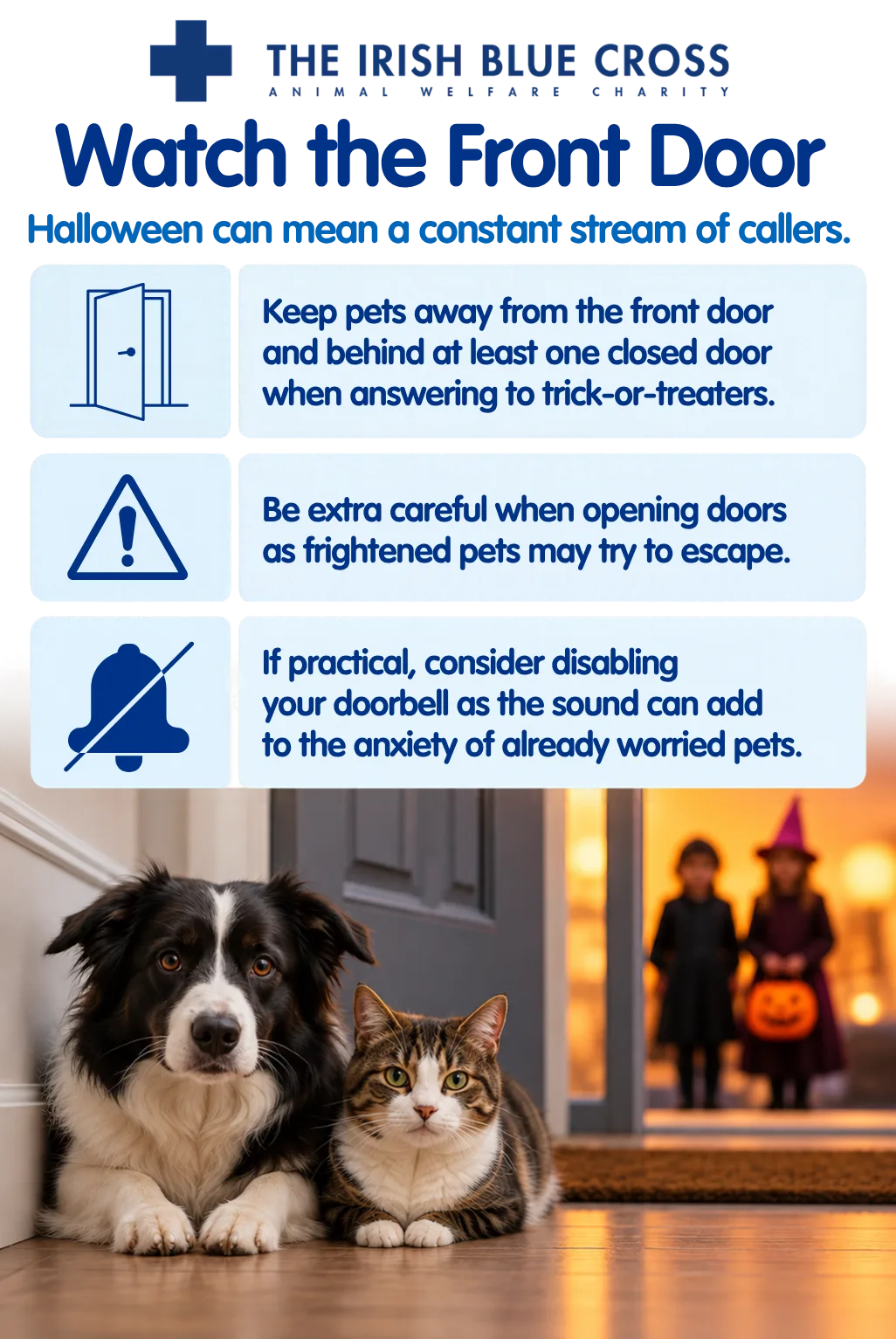
Halloween can be a terrifying time for many pets. Fireworks, trick-or-treaters at the door, unusual noises and disruptions to routine can all cause anxiety and fear. Taking a few simple precautions can help keep your pets safe, calm and comfortable.
Before Halloween
Check your pet’s identification details
Ensure your pet is microchipped and that your contact details are up to date.
Make sure dogs wear a collar and ID tag with current contact information.
Check that fences, gates and garden boundaries are secure.
Plan ahead
Walk dogs earlier in the day before fireworks are likely to begin.
During the Halloween period, keep dogs on a lead outdoors as unexpected fireworks can cause even normally confident dogs to panic and run.
If your cat usually goes outdoors, bring them inside before dark and prepare a litter tray for indoor use.
During Fireworks
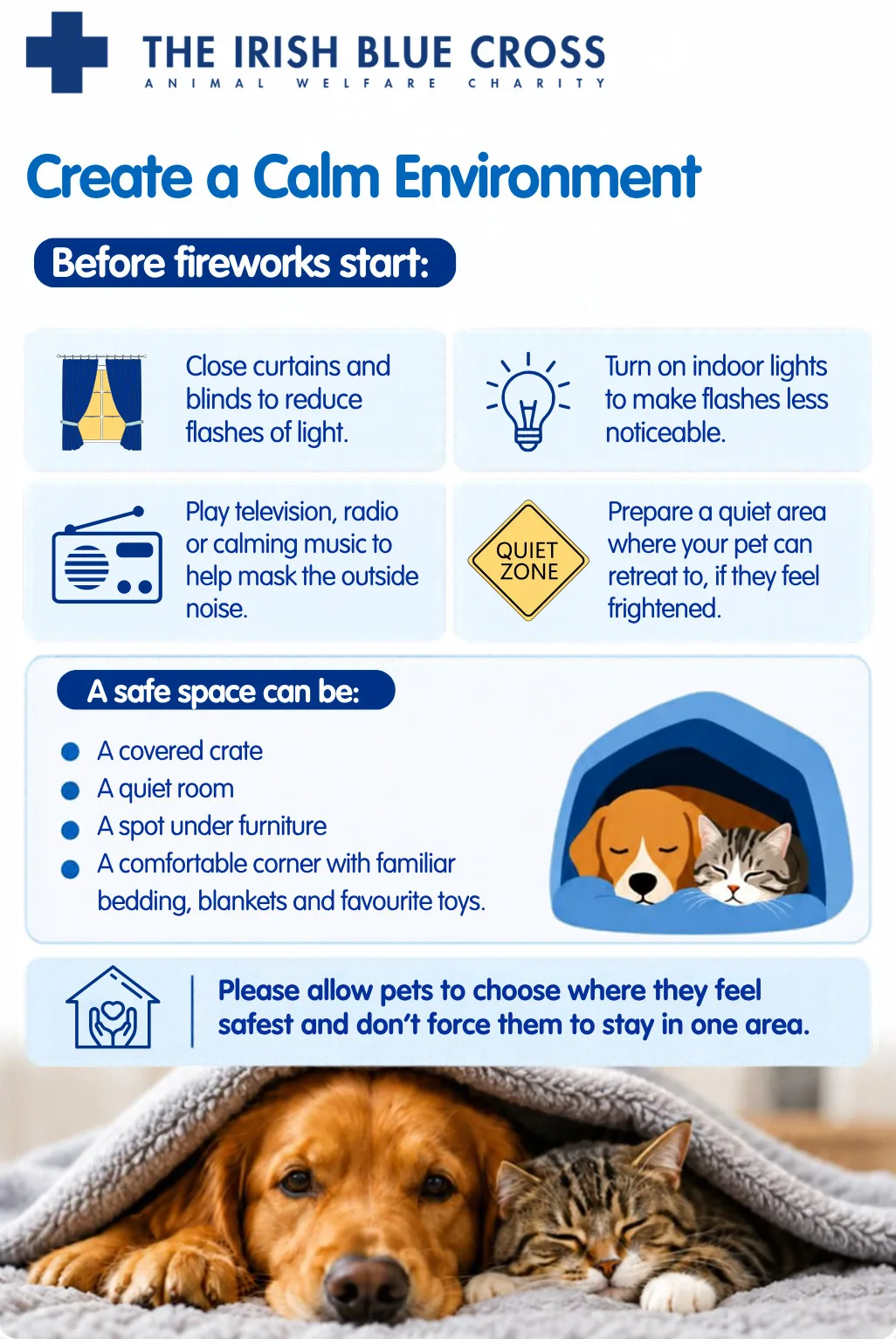
Keep pets indoors
Do not leave pets in gardens, cars or tied outside shops.
Keep windows, doors and cat flaps closed.
If your dog needs to go outside to toilet, accompany them and keep them on a lead.
Stay calm
Pets often take cues from their owners. Try to remain relaxed and keep routines as normal as possible.
If your pet seeks comfort, provide reassurance through gentle interaction and a calm voice.
If they prefer to hide, let them do so.
Never punish fearful behaviour
Barking, pacing, hiding, shaking, house-soiling or clinginess are often signs of fear, so punishment will only increase anxiety.
If you suspect your pet has eaten something toxic, contact a veterinary practice immediately.
Avoid Costumes
While costumes may seem harmless, many pets find them uncomfortable or stressful. Dressing up animals can:
Increase anxiety
Restrict movement
Cause overheating
Increase the risk of fear-related scratching or biting
If a pet shows any signs of distress, remove the costume immediately.
Additional Support for Nervous Pets
Some pets benefit from:
Pheromone diffusers or sprays
Calming supplements recommended by a vet
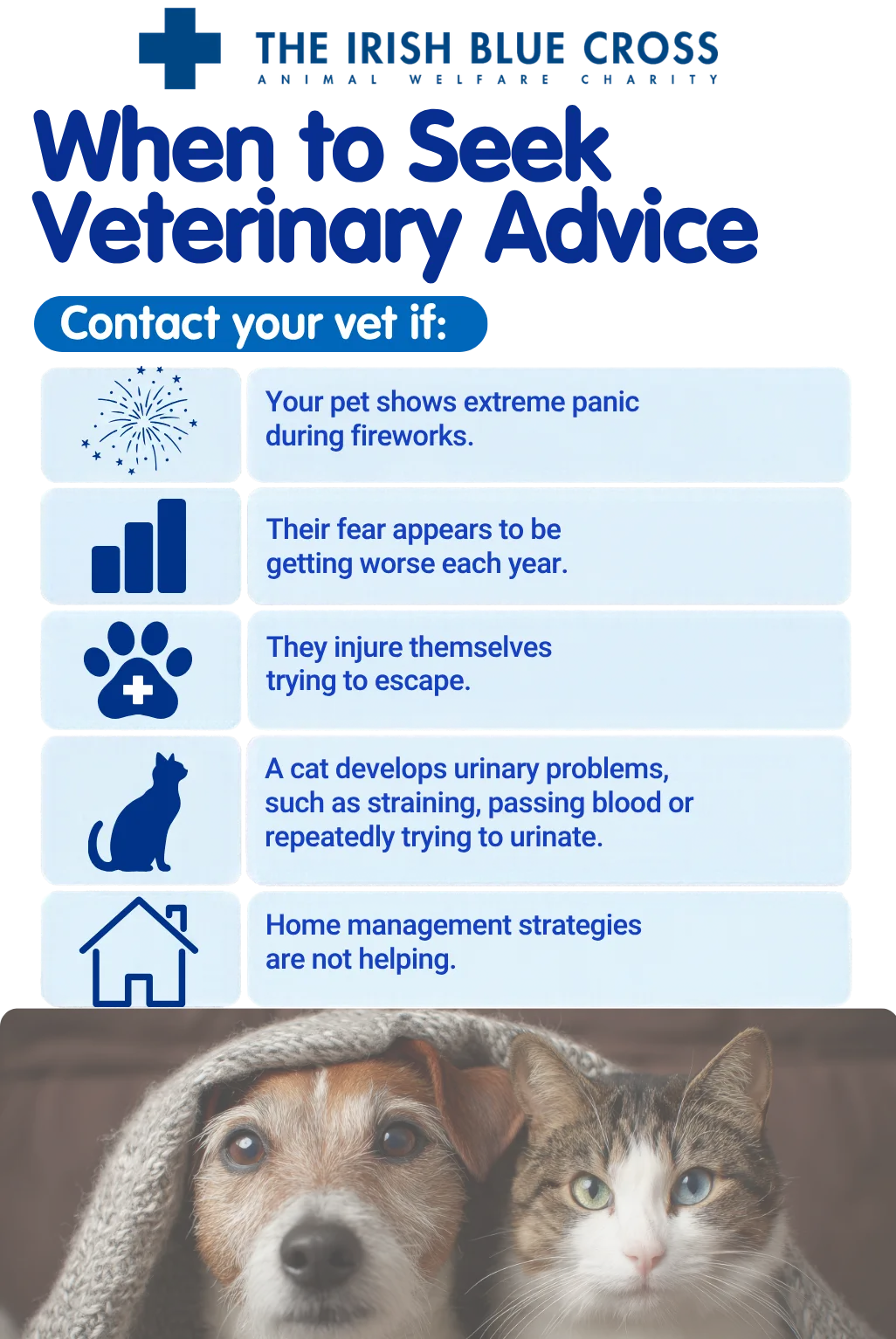
For pets with a history of severe firework fear, speak to your vet well in advance. Behavioural support or medication may be appropriate in some cases.
Summary
Halloween can be unpredictable, with fireworks occurring before, during and after 31st of October. A little preparation can make a significant difference. Keeping pets indoors, providing a safe space, maintaining normal routines and ensuring identification details are up to date are some of the most effective ways to protect pets during what can be a very stressful time.