

Many common garden and house plants can be harmful to dogs. While some may only cause a mild upset tummy, others can lead to more serious illness, particularly if your dog eats a large amount.
Most dogs will naturally avoid plants that don’t smell or taste right to them. However, curious puppies and young dogs are much more likely to investigate with their mouths.
Knowing what plants to watch out for, and recognising the signs of poisoning, can help you act quickly if something goes wrong.
If you’re worried that your dog has eaten something they shouldn’t have, always contact your vet straight away for advice.
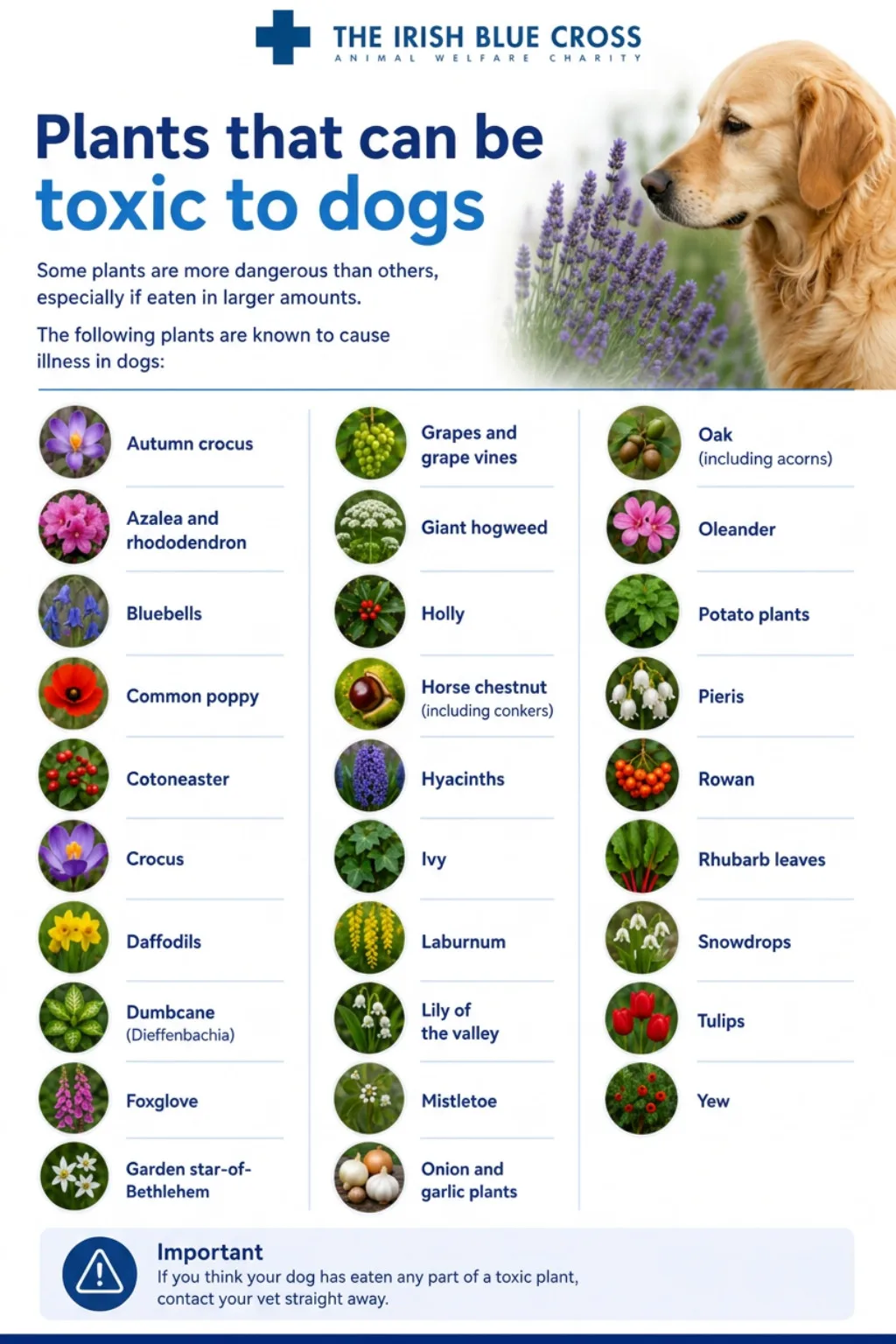
In some cases, only certain parts of a plant are toxic, such as bulbs, berries or leaves. As it’s not always easy to tell which parts are dangerous, it’s safest to keep your dog away from the entire plant.
Most plant poisonings cause mild symptoms, but some can be serious, particularly if several plants are eaten in a short space of time.
It’s also worth remembering that this isn’t a complete list. New plant risks are still being identified, and even plants not known to be toxic can cause problems if eaten in large quantities.
There’s no guaranteed list of plants that are completely safe for dogs. Plant identification can be tricky, and many plants, even those considered low risk, may still cause stomach upset if chewed or swallowed.
For this reason, it’s best to keep houseplants out of reach and supervise your dog in the garden and on walks.
Symptoms can vary depending on the plant and how much was eaten, but common signs include:
If your dog shows any of these signs, or you think they may have eaten a poisonous plant, contact your vet immediately.
Gardens and green spaces can contain other hidden dangers:
These can grow harmful moulds and bacteria so, always store compost securely and keep dogs away from freshly cut grass.
Often appearing in warm, damp conditions, especially in autumn and some mushrooms can be life-threatening if eaten.
Many garden products are toxic to pets so, please avoid using them where your dog plays, and block off treated areas.
Grass seeds can become lodged in your dog’s skin, paws, ears or armpits, causing irritation, infection and sometimes serious complications. They’re common in long grass during spring and summer, not just freshly seeded lawns.