

Dogs are loved pets in many homes, but even the best-behaved dogs can develop habits that their owners can find frustrating. Pulling on the lead, jumping up at visitors or barking at other dogs are common issues that many owners experience.
The good news is that most unwanted behaviours can be improved with patience, understanding and the right training approach.
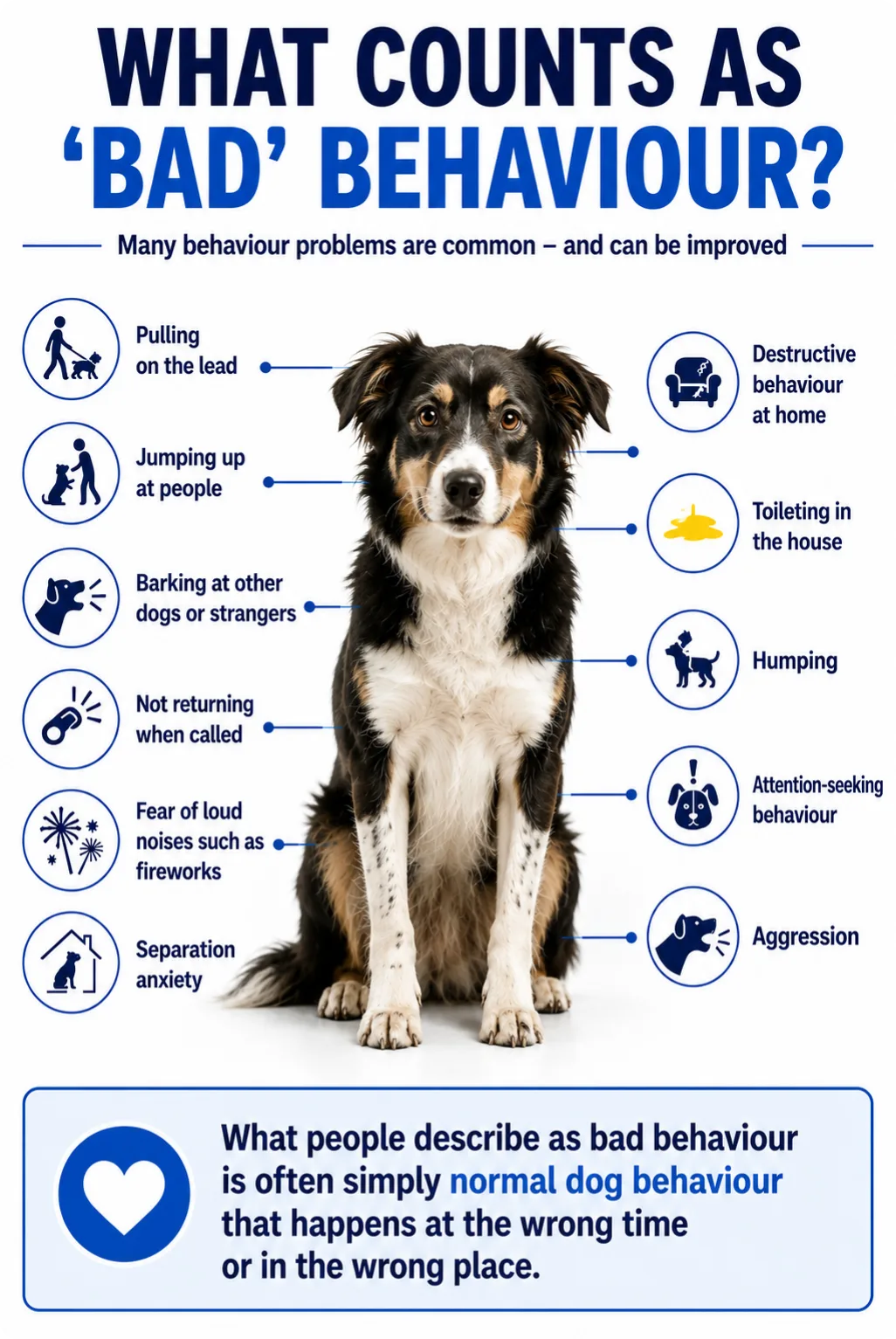
Some behaviours are minor annoyances, while others can affect a dog’s wellbeing or even become dangerous if not addressed early.
Small behaviour problems can sometimes be improved by revisiting basic training. For example, if your dog stops coming back when called, practising recall again in a quieter environment with fewer distractions can help rebuild the behaviour.
Dogs benefit from ongoing training throughout their lives. Even well-trained dogs may need occasional refresher training to reinforce good habits.
However, some behaviour problems are more complex and may require professional support.
If your dog’s behaviour changes suddenly or becomes more severe, it is always best to speak to your vet first.
Pain, illness or discomfort can cause behaviour changes in dogs, so it’s best to have a veterinary check-up to diagnose or rule out underlying medical causes before you start behaviour training.
Your vet may also recommend training advice or refer you to a qualified behaviour professional if needed.
If training at home is not working, professional support can be helpful.
A qualified dog trainer can help with common training issues such as:
For more serious or complex problems, such as aggression or severe anxiety, a certified dog behaviourist may be recommended. Behaviourists assess the underlying cause of the behaviour and develop a structured training plan for both dog and owner.
Behaviour modification focuses on helping dogs learn alternative, more appropriate behaviours but several approaches may be used, depending on the problem.
Reward-based training focuses on reinforcing behaviours you want to see.
This approach may involve using the following as rewards:
When dogs are rewarded for good behaviour, they are more likely to repeat it.
For example, if your dog chews household items, providing appealing chew toys and rewarding your dog for using them can help redirect the behaviour.
Punishment-based methods can cause fear and stress and can damage the relationship between dog and owner, so they are discouraged.
Counter-conditioning and desensitisation aim to change a dog’s emotional response to something they find frightening.
This involves gradually exposing the dog to the trigger at a safe distance while pairing it with something positive, such as treats or praise.
As this technique must be done carefully to avoid making the problem worse, it is best carried out with guidance from a qualified behaviour professional.
This is not to be confused with ‘flooding’ a technique of over-exposing a dog to something they are afraid of to ‘get them over it’. The easiest way to describe flooding is to be put in a room full of spiders if you were terrified of them. This would be most likely to make your fear worse and distress you.
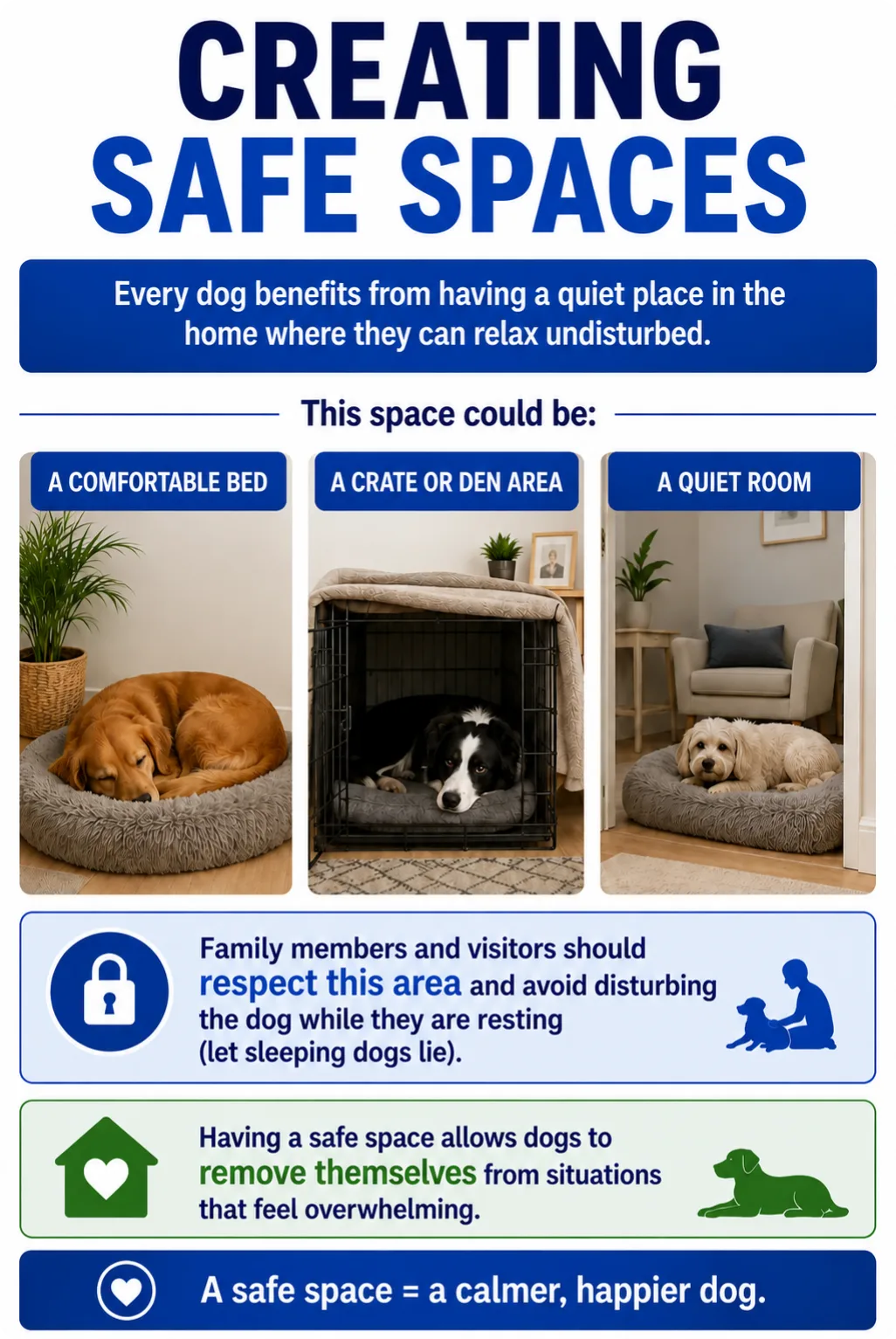
Even well-behaved dogs should always be actively supervised when around children.
Children can behave unpredictably and may not recognise when a dog is becoming uncomfortable.
Dogs communicate constantly through body language. Recognising early signs of stress can help prevent problems before they escalate.
Signs a dog may be uncomfortable include:
If you notice these signals, giving the dog space can prevent further stress.
Unwanted behaviour can be frustrating, but with patience and the right support, many dogs improve significantly.
The most important steps are:
With time, guidance and consistency, many behaviour challenges can be successfully managed, helping both you and your dog to enjoy a happier life together.