

Fireworks can be enjoyable for people, but they are often frightening for dogs. Loud bangs, bright flashes and unfamiliar smells can be overwhelming, and because dogs do not understand what fireworks are, they may believe they are in danger.
Dogs also hear sounds more acutely than humans, meaning fireworks can seem even louder and more unpredictable to them.
If your dog is worried by fireworks, planning ahead and taking a few simple precautions can help reduce stress and keep them safe during firework season.
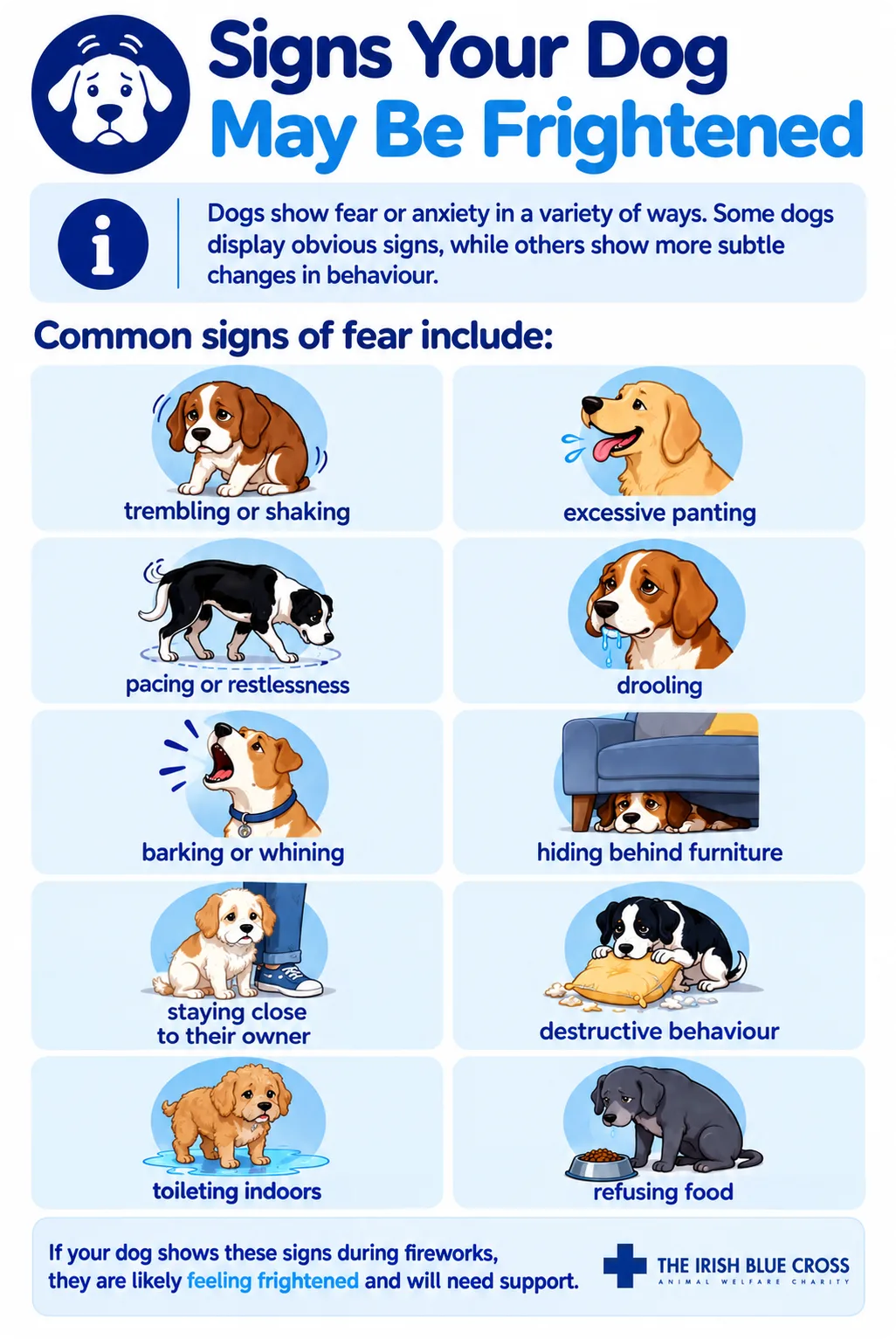
If your dog is known to be frightened of loud noises, preparation can make a big difference.
Make sure your contact details are recorded correctly against your dog’s microchip on the database that you are registered with, otherwise a finder may have no way of contacting you.
Your dog should also wear a collar with an ID tag showing your contact information.
Try to walk your dog earlier in the day before fireworks begin. Keeping your dog on a lead is advisable during firework season, as sudden noises may cause them to panic and run off.
Before fireworks start:
Introducing background noise before fireworks begin can help your dog become accustomed to it, if they’re not already.
Dogs should remain indoors while fireworks are being set off. Even dogs that normally enjoy being outdoors can panic and attempt to escape when frightened.
Avoid leaving dogs outside in gardens, tied outside shops, or alone in cars during fireworks.
If your dog needs to go outside to toilet, accompany them and keep them on a lead.
Some dogs cope better when they have a quiet place to hide. You can create a comfortable ‘den’ in an area where your dog already likes to rest.
A safe den might include a:
Adding items that smell familiar, such as your clothing or your dog’s bedding, may help them feel more secure.
Allow your dog to use this space freely but never force them to stay there.
Your dog may seek comfort from you while fireworks are happening.
Remain calm and behave normally as dogs are sensitive to human emotions, and appearing anxious may make them feel more worried.
If your dog comes to you for reassurance, gentle petting or quiet company can help them relax. However, if they prefer to hide or be alone, please allow them that choice.
Avoid scolding or punishing your dog if they bark, pace or have accidents indoors during fireworks as these behaviours are usually caused by fear rather than disobedience.
Some dogs benefit from extra support during firework season.
Products containing dog appeasing pheromones may help some dogs feel calmer. These are available as diffusers, sprays or collars and are designed to mimic natural calming signals produced by dogs.
Certain supplements and herbal products may support relaxation, although their effectiveness can vary between dogs.
Specially designed anxiety wraps or compression vests provide gentle pressure that some dogs find reassuring. These should only be used if your dog is comfortable wearing them.
If your dog experiences severe fear during fireworks, speak to your veterinary practice. Your vet may recommend behavioural support or, in some cases, medication to help manage anxiety.
Medication should always be discussed in advance so the most suitable option can be chosen before fireworks begin.
Some dogs can gradually learn to cope better with firework noises through a process called desensitisation and counterconditioning. This training involves exposing the dog to firework sounds at a very low volume and slowly increasing the intensity over time.
This training must begin several months before fireworks are expected and should be carried out carefully to avoid causing stress.
As the process takes time and patience, it is often helpful to work with your veterinary team or a qualified animal behaviour professional.
Events such as Halloween and New Year often involve fireworks and increased activity around the home. Extra visitors, costumes and frequent doorbell ringing can also be stressful for pets.
During these times:
If your dog becomes overwhelmed, providing a quiet area away from the activity can help them feel more secure.
You should speak with your veterinary practice if:
Fear of fireworks can worsen over time if left unmanaged, so seeking advice early can help protect your dog’s welfare.