

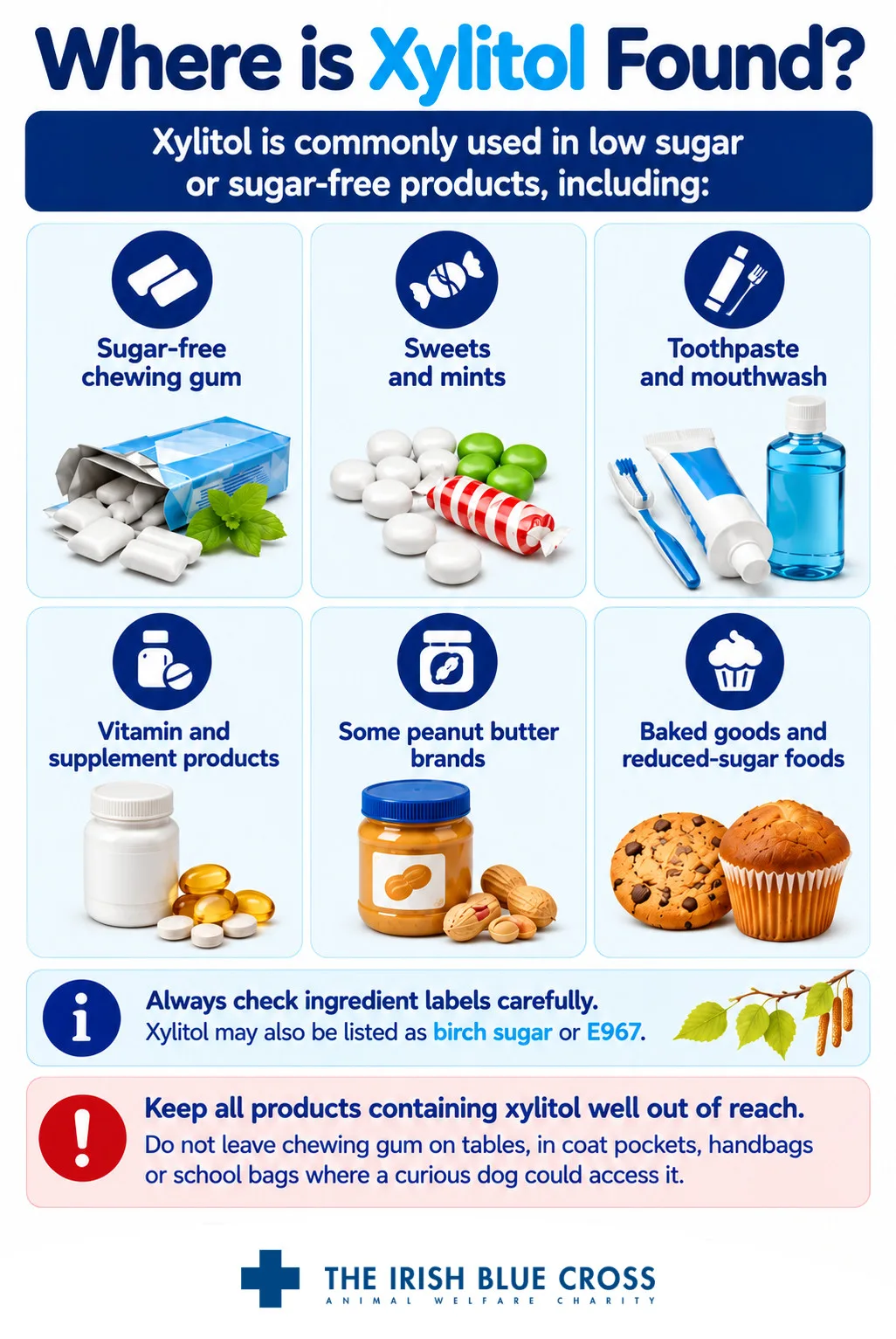
Xylitol (also known as wood sugar or birch sugar) is a widely used sugar substitute that is extremely dangerous for dogs. Even very small amounts can cause severe illness and may be fatal.
As it is found in many everyday household products, prevention and awareness are essential.
In dogs, xylitol triggers a powerful release of insulin from the pancreas. The body mistakenly treats it like real sugar. This sudden surge of insulin causes blood sugar levels to drop rapidly a condition known as hypoglycaemia.
Low blood sugar can develop quickly and may lead to collapse, seizures or coma.
In some cases, xylitol can also cause acute liver failure. The exact reason for this reaction is not fully understood, but it can be life-threatening.
The amount needed to cause harm depends on:
However, only a small quantity can be dangerous. In some cases, a single piece of sugar-free chewing gum can make a small or medium-sized dog critically ill.
As product formulations vary, it is safest to treat any ingestion as an emergency.
Symptoms can develop rapidly, often within 30 minutes, but in some cases may take up to 12 hours to appear.
Do not wait for signs to develop before contacting your vet. Early treatment significantly improves outcomes.
Symptoms may include:
If liver damage develops, additional signs may appear later and can be severe.
Treat this as an emergency.
Contact your vet immediately or attend the nearest veterinary clinic. Xylitol is absorbed quickly into the bloodstream, so rapid intervention is critical.
If possible, bring the product packaging with you. This helps the vet determine how much xylitol your dog may have consumed.
If seen early, your vet may:
Dogs often require hospitalisation for monitoring over 24–72 hours.
If liver damage occurs, treatment becomes more complex and may require intensive or specialist care.
When treatment is started quickly and blood sugar is stabilised early, many dogs recover well.
Delays in treatment increase the risk of:
Acting immediately can save your dog’s life.
Xylitol can also be harmful to other animals. All human food products, particularly sugar-free items, should be kept out of reach of every pet in the home.
Xylitol poisoning is a preventable emergency. Awareness, careful storage and rapid action if exposure occurs, are the best ways to protect your dog. If you are ever in doubt, contact your veterinary team without delay.