
Pet Loss Support Helpline – call 1800 83 99 54 for support and guidance, or find out more.

Helping Cats Cope with Fireworks

Fireworks can be frightening for cats. Loud, sudden bangs and bright flashes are intense experiences for them, and their heightened senses mean they often perceive these events more strongly than we do.

With preparation and calm management, you can significantly reduce stress and help your cat feel safe from Halloween through to New Year’s Eve.

Infographic titled “Why Fireworks Frighten Cats” explaining that cats rely on their senses to detect danger and that unexpected noise and bright lights from fireworks can trigger a fear response. Common signs of fear shown are hiding or covering, trying to escape, toileting indoors, refusing food, and dilated pupils with twitching ears. The graphic advises that recognising these signs early allows owners to respond appropriately. The Irish Blue Cross logo appears at the top.

Prepare in Advance

Check Microchip Details

Ensure your cat is microchipped and that your contact details are up to date. Frightened cats may bolt outdoors, and identification greatly increases the chance of reunion.

Know Local Firework Dates

Check if displays are planned in your area so you can prepare accordingly.

Keep Your Cat Indoors

Bring your cat inside before dark and keep them indoors overnight during firework periods.

  • Lock cat flaps to prevent escape.
  • Close windows and doors.
  • Provide a litter tray if your cat is usually outdoors.

Blocking cat flaps can also help muffle sound.

Reduce Noise and Visual Stimuli

  • Close curtains and blinds before dusk to block flashes.
  • Leave lights on to reduce the impact of sudden brightness.
  • Play low-level background noise, such as television or calm music, if your cat is already used to it.

Avoid increasing volume excessively, as this may add to stress.

Infographic titled “Create a Safe Retreat” explaining how to provide a safe hiding place for a cat. It advises providing a quiet, enclosed space where the cat can retreat freely, with access to secure elevated locations, familiar bedding, water nearby, and the ability to access the den at all times. It warns never to force a cat into a den or block access to their chosen hiding place. The Irish Blue Cross logo appears at the top.

Stay Calm and Maintain Routine

Cats are sensitive to changes in human behaviour, so please try to:

  • Maintain normal feeding routines
  • Behave calmly and confidently
  • Offer reassurance if your cat seeks contact
  • Allow space if they prefer to hide

Never punish fearful behaviour as shouting or reprimanding your cat will only serve to increase their anxiety.

Monitor Toileting Changes

Stress can cause changes in urination patterns. However, straining to urinate, passing blood in urine, or repeated attempts without producing urine can indicate a medical emergency such as cystitis or urinary blockage. Contact your veterinary practice immediately if these signs occur.

Pheromones and Supplements

Synthetic feline pheromone diffusers may help promote a sense of security. Ideally, plug these in several weeks before firework season begins.

Some calming supplements may also be beneficial. Speak to your vet for guidance on suitable options for your cat.
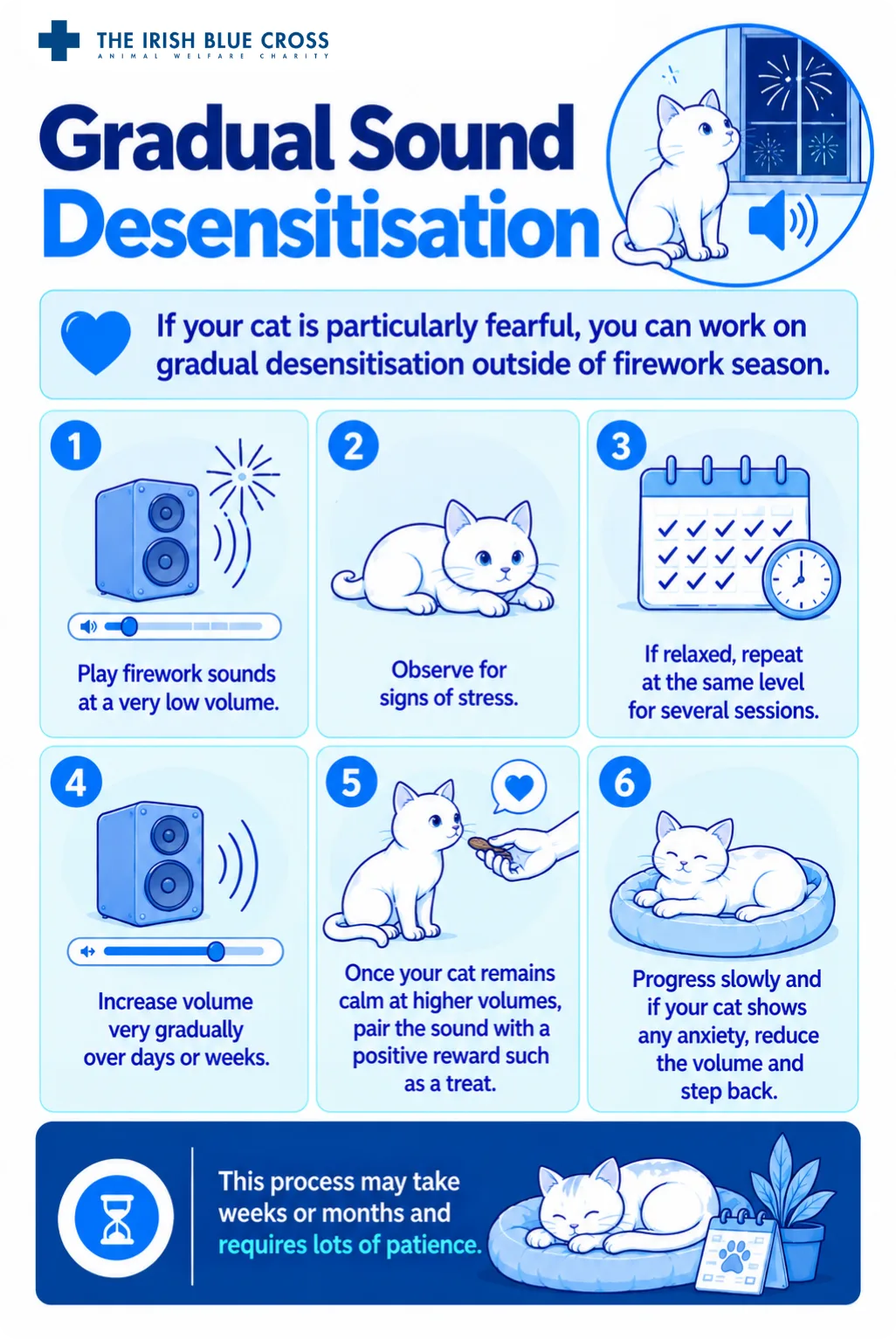
Infographic titled “Gradual Sound Desensitisation” explaining how to help a fearful cat become more comfortable with fireworks sounds. It recommends playing fireworks sounds at a very low volume, watching for signs of stress, repeating at the same level when the cat remains relaxed, gradually increasing the volume over days or weeks, pairing louder sounds with positive rewards such as treats, and reducing the volume and stepping back if the cat becomes anxious. The graphic notes that the process may take weeks or months and requires patience. The Irish Blue Cross logo appears at the top.

When to Contact Your Vet

Seek veterinary advice if:

  • Your cat remains severely distressed despite management strategies.
  • Fear responses suddenly worsen.
  • There are signs of illness or urinary problems.

In some cases, short-term medication may be prescribed to help your cat cope. This must be arranged well in advance of firework events.

Never give your cat medication that has not been prescribed specifically for them.

Summary

Most cats cope better when they feel in control of their environment, so providing safe spaces, maintaining routines and avoiding forced interactions, will help your cat navigate firework season more comfortably.

If you are concerned at any stage, your veterinary team can offer advice for your cat.

Share

Share: