

Intestinal worms are a common issue for cats. Most cats will pick them up at some point in their lives, if they are not treated regularly. These parasites live inside the gut, where they damage the intestinal lining and absorb nutrients that your cat needs to stay healthy.
Adult cats often cope well with low numbers of worms, but kittens are far more vulnerable. Heavy infestations can make them seriously unwell and, in severe cases, can be life-threatening. Regular worming is the most effective way to protect your cat.

Cats can become infected with worms in several ways:
Because many cats groom themselves and explore their environment, exposure is common.
Kittens need a strict worming schedule, using a product suitable for their age and weight:
After this, ongoing treatment every 1-3 month (depending on risk, which is influenced by hunting behaviour and outdoor access or households with vulnerable individuals – immunocompromised, elderly, pregnant, or children), or as advised by your vet
Most adult cats should be treated every three months. Cats that hunt frequently or when there is may need treatment more often, as advised by your vet.
After treatment
If your cat had a heavy infestation, you may see worms in their poo after treatment, but this is not always the case. Contact your vet if your cat develops diarrhoea or seems unwell following worming.
Worming treatments come in many forms, including tablets, liquids, pastes and spot-on products. A good wormer should protect against both roundworms and tapeworms.
It’s also important to choose a product that you can give easily, for example, a spot-on or liquid may be better if your cat won’t tolerate tablets.
Veterinary-prescribed wormers are usually the most reliable. If your cat has been seen by your vet recently and is otherwise healthy, your practice may be able to supply treatment without an appointment, provided you know your cat’s current weight.
Some worming products can be bought without a prescription, but their effectiveness varies. Products labelled NFA-VPS (Non-Food Animal – Veterinarian, Pharmacist, Suitably Qualified Person) are safer choices, as they are sold by trained professionals and require basic information about your cat before purchase.
There is no evidence that home remedies effectively treat worms in cats. To eliminate worms safely, you need a product with proven, licensed ingredients. Delaying proper treatment can allow worms to cause serious health problems.
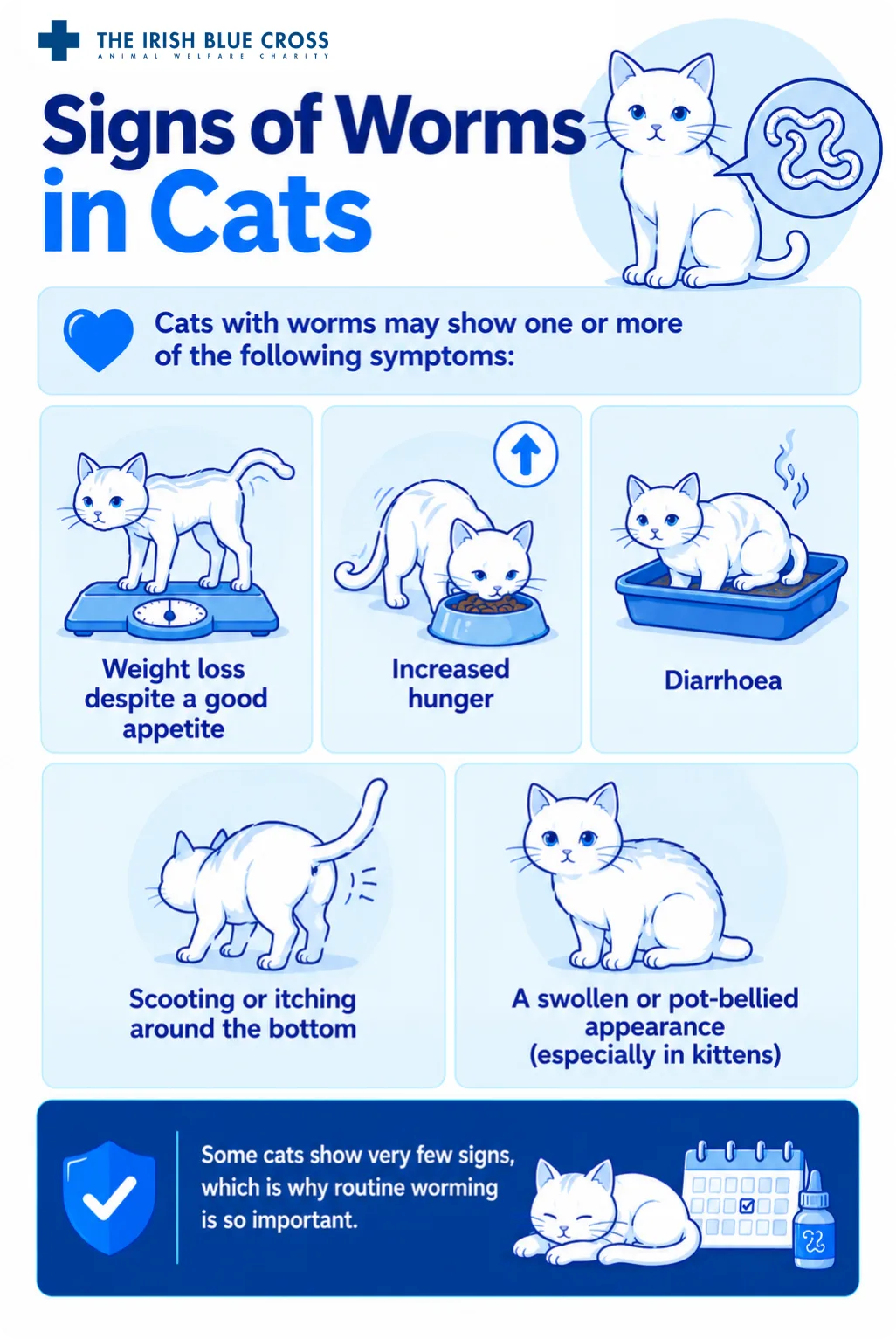
Contact your vet if:
If your cat is healthy and simply due for routine worming, your veterinary practice can usually advise you by phone.
It is uncommon, but humans can occasionally catch worms from cats. This is more likely in young children who play in areas where cats have toileted. In rare cases, cat worms can cause illness if they migrate to organs such as the eyes or liver.
Good hygiene and regular worming of your cat greatly reduce this risk. If you have concerns about human health, contact your GP.