

Many dogs are keen to share the foods we eat. However, some everyday ingredients can cause severe illness, and in certain cases, can be fatal.
Signs of food poisoning may appear within hours, although some toxins take longer to cause damage. Any sudden change in behaviour, vomiting, diarrhoea, lethargy or unusual symptoms after eating something new should raise concern.
To reduce the risk, keep dogs out of the kitchen while preparing food and ensure bins, compost and leftovers are securely stored.
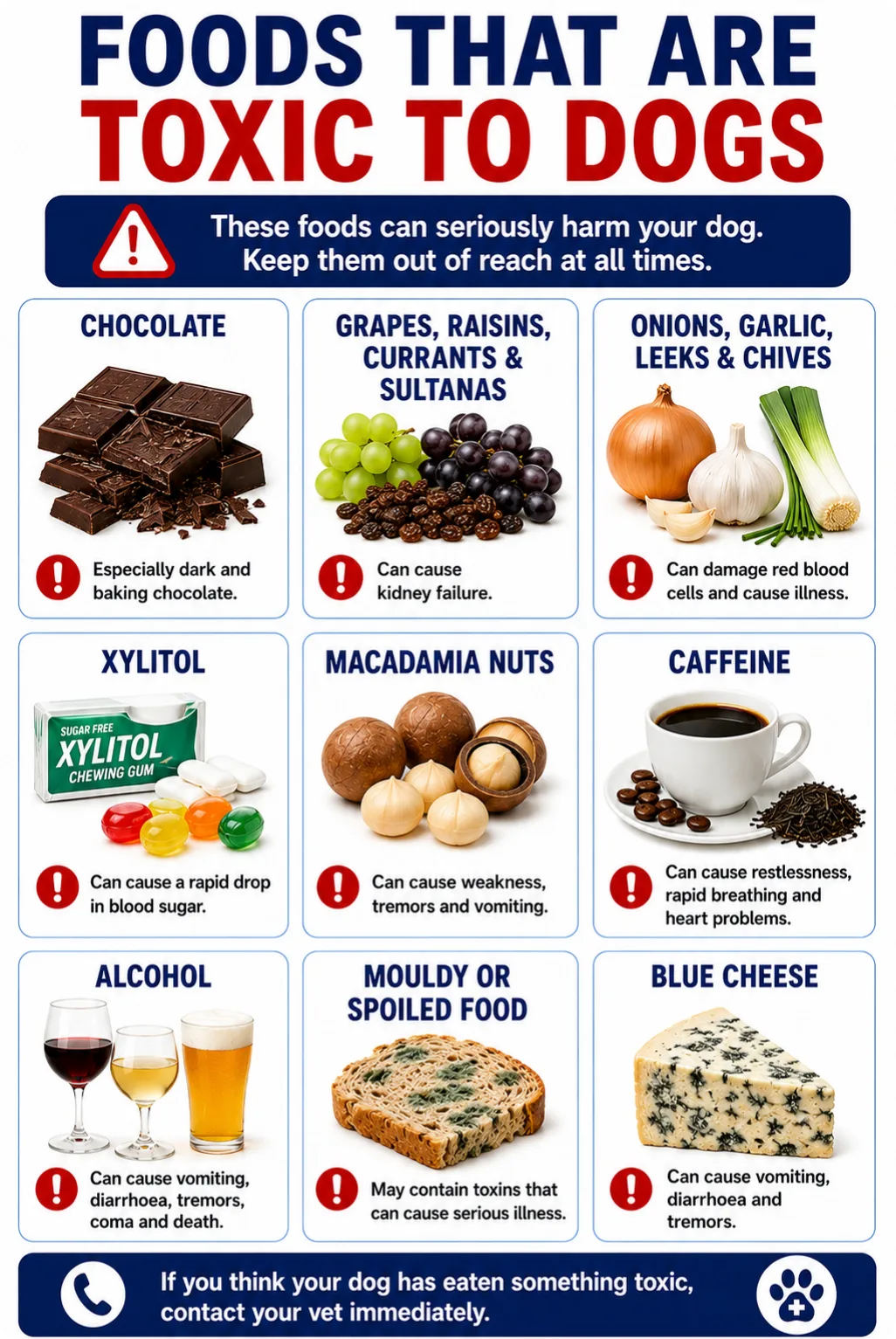
If you believe your dog has eaten a toxic food, even a small amount, please contact your vet immediately. Do not wait for symptoms to appear. Early treatment greatly improves the chances of recovery.
Grapes and their dried forms (raisins, currants and sultanas) can cause serious poisoning in dogs. In some cases, ingestion may lead to kidney failure.
The exact toxic substance is still unknown but even small quantities, particularly dried fruits, can make some dogs critically ill. Other dogs may appear unaffected, but it is impossible to predict which dogs are at risk.
Cases are often seen around festive periods when these fruits are common in baked goods such as fruit cakes, buns and biscuits.
Signs of toxicity may develop within hours and commonly include:
If kidney damage develops (usually within 1–3 days), additional signs may include:
Without treatment, kidney failure can be fatal.
Contact your vet immediately if your dog has eaten grapes, raisins, currants or sultanas, do not wait for symptoms.
Prompt veterinary care is essential and may include:
If treated quickly after ingestion, your vet may administer medication to make your dog vomit and remove undigested fruit from the stomach. Do not attempt to make your dog vomit at home.
This substance helps bind toxins within the gut and may reduce further absorption.
A fluid drip is often used to support the kidneys and help flush toxins from the bloodstream.
Kidney values may be monitored over several days, as damage can take time to develop.
Additional medications may be required, depending on your dog’s condition.
Dogs treated rapidly often recover fully. Delayed treatment significantly increases the risk of kidney failure and can be life-threatening.
Common Toxic Foods for Dogs
Chocolate contains theobromine, a stimulant that dogs cannot metabolise effectively. Dark chocolate, baking chocolate and cocoa powder contain the highest levels and are especially dangerous. Symptoms can include vomiting, diarrhoea, restlessness, tremors, abnormal heart rhythms and seizures.
Extra caution is needed during holidays, like Easter and Christmas, when chocolate is more plentiful and accessible.
These vegetables contain compounds that damage red blood cells and can cause anaemia. Symptoms may take several days to appear and can include weakness, pale gums and breathing difficulties.
Avoid sharing cooked meals that may contain these ingredients.
Xylitol is an artificial sweetener found in sugar-free gum, sweets, baked goods, some nut butters, medications and nicotine replacement products. It can cause a rapid and life-threatening drop in blood sugar, as well as liver failure. Signs may develop within an hour.
Xylitol can often be listed in the ingredients as a different name, such as birch sugar, wood sugar, birch bark extract, sucre de bouleau, the European code E967, or Meso-Xylitol.
Macadamia nuts are highly toxic to dogs, even in small amounts. Signs typically appear within a few hours and may include weakness, vomiting, tremors and fever.
While not all nuts are directly toxic, their high fat content can cause stomach upset or pancreatitis. Salted nuts increase the risk further.
Avocado contains persin, which can cause illness in some pets. In dogs, the high fat content can also lead to digestive upset or pancreatitis and there is a high risk of choking or blockage from the stone.
Uncooked dough can expand inside the stomach, causing painful bloating. As it ferments, it produces alcohol, which can lead to alcohol poisoning.
Homemade playdough is also dangerous due to its high salt content.
Found in tea, coffee, energy drinks, chocolate and some medications, caffeine affects the heart and nervous system. Signs of toxicity include restlessness, tremors, high blood pressure and abnormal heart rhythms.
Alcohol is rapidly absorbed and can cause serious harm within a short time. Some household items, like hand sanitiser contain alcohol. Severe poisoning can result in tremors, seizures, breathing difficulties and collapse.
Food waste, compost and mouldy items can contain harmful toxins that affect the nervous system. Symptoms may include vomiting, tremors and seizures.
Certain mould-ripened cheeses can trigger vomiting, diarrhoea, high temperature and neurological signs in dogs.
Cooked and raw bones can cause dental damage, choking, internal injury or bowel obstruction. Cooked bones are especially likely to splinter.
Emergency treatment for poisoning can be costly.
If you’re able to, consider pet insurance while your dog is young and healthy to help with unexpected illness or injury. If your dog becomes unwell, talk openly with your vet about the options, the likely costs, and what feels manageable for you. Together, you can tailor a plan that’s right for your dog and your situation.
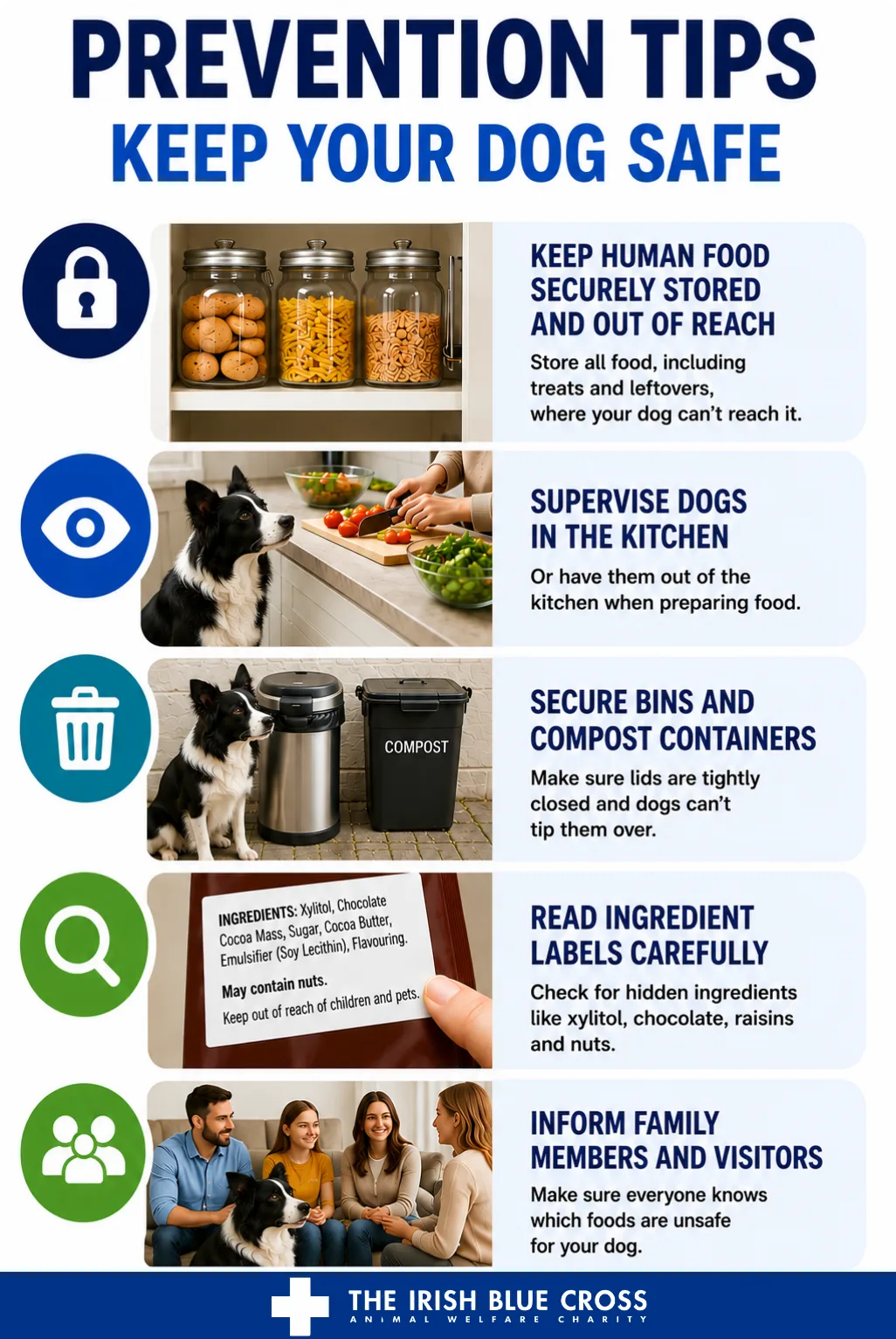
Keeping your dog safe from toxic foods is one of the simplest ways to protect their health. When in doubt, always contact your veterinary team, as acting quickly can save your dog’s life.