

Fleas are a common problem for dogs and their owners, and while they’re small, they can cause big discomfort. Understanding how fleas spread, how to spot them early, and how best to deal with them can help keep your dog comfortable and your home flea-free.
Fleas are tiny parasites that live on animals such as dogs, cats and rabbits. They feed on blood and are only a few millimetres long, which makes them surprisingly hard to spot.
Although we often associate fleas with pets, most of a flea problem actually lives in the environment; carpets, soft furnishings and cracks in floors can all harbour flea eggs.
Fleas are commonly picked up outdoors during walks or from contact with other animals, but they can also survive indoors all year round, especially in warm homes. Flea eggs can lie dormant for many months, waiting for the right conditions to hatch.
Some dogs show obvious signs of fleas, while others barely react at all. This can make flea problems tricky to detect in the early stages.
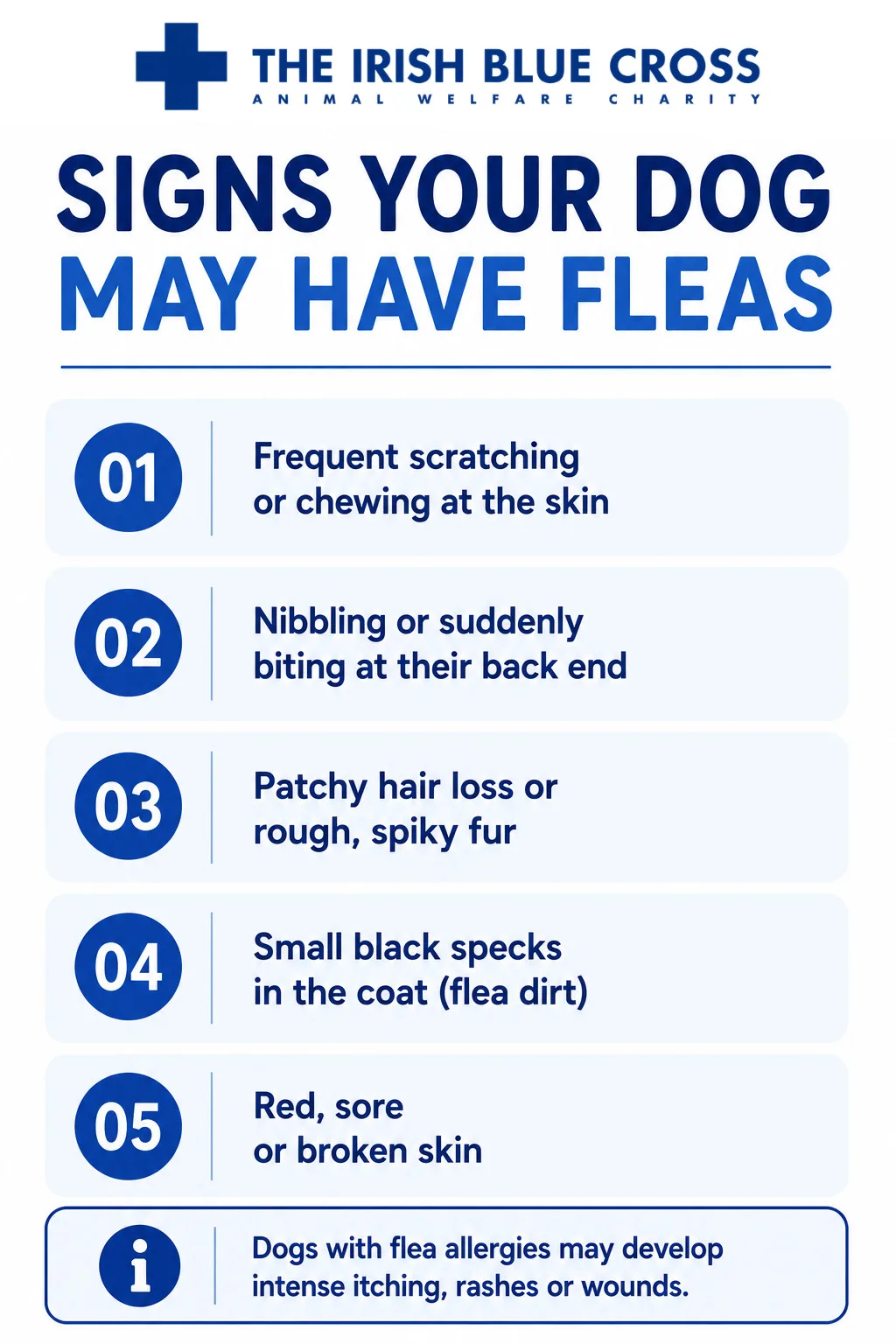
Dogs with a flea allergy can have a much stronger reaction, with intense itching, rashes or wounds developing after even a single bite. Puppies, older dogs and those who are unwell are also more vulnerable and may develop anaemia if fleas are left untreated.
It’s worth remembering that very itchy dogs may groom themselves so much that you see little evidence of flea dirt at all.
If you think your dog may have fleas, it’s a good idea to contact your vet for advice. They can recommend a suitable treatment based on your dog’s age, weight, lifestyle and health.
You should always seek veterinary advice if your dog:
Dogs usually pick up fleas from other animals, outdoor spaces, such as gardens or parks, or from the home itself. Although flea problems tend to increase in warmer months, they can occur at any time of year.
If you see fleas on your dog, there are likely many more living in your home environment.
Treating fleas successfully means tackling both your dog and your home at the same time. Fleas only spend a short part of their life on your pet; most of their eggs and larvae live in the surroundings.
All pets in the household should be treated together, including cats and rabbits. It’s very important to ask your vet for advice, as some flea products that are safe for dogs are extremely dangerous for cats.
You’ll also need to treat your home by vacuuming thoroughly and using a household flea spray that contains an insect growth regulator. These sprays can provide long-lasting protection, but they must be used carefully and never around pets, fish tanks or birds.
There are many flea products available, but not all are equally effective.
The most reliable long-term treatments are prescription or vet-recommended products, usually given as spot-on treatments or tablets. These work by killing adult fleas, preventing eggs from developing, or both.
Spot-on treatments are applied to the skin and are easy to use, though they may be less suitable for dogs that swim or are bathed frequently – flea tablets might be a better alternative.
Some products you can buy without a prescription may help, but many contain lower-strength ingredients and may not fully resolve an infestation. Your vet can advise on safer non-prescription options if needed.
Some flea control methods don’t offer reliable or lasting protection.
Flea combs can help confirm the presence of fleas but won’t treat an infestation.
Powders and shampoos only work for a short time and don’t affect eggs or larvae.
Herbal remedies are ineffective, and some natural products, such as tea tree oil, can be harmful to pets.
Flea collars vary in quality, and while some modern collars can be effective, many older or low-quality versions don’t work well and may irritate the skin. Always seek veterinary advice before using one.
Regular vacuuming, especially around pet bedding and under furniture, helps remove eggs and larvae. Washing bedding at high temperatures also helps break the flea life cycle. Household flea sprays can provide longer-term control but should always be used exactly as instructed.
Never allow flea sprays or insecticides to come into contact with your pets and keep them well away from fish tanks.
Fleas may bite people, usually around the ankles or arms, but they can’t live on humans.
Preventing fleas is far easier than treating an infestation. Regular flea control, as advised by your vet, helps protect your dog, your home and other pets. Checking your dog’s coat, washing bedding regularly and keeping your home clean all play a role too.
There is growing awareness that some flea treatments may affect the environment, so it’s best to use them thoughtfully and only as recommended by your vet.