

Dogs explore their surroundings with their mouths and sometimes that curiosity leads to swallowing objects that can become stuck inside the stomach or intestines.
A gut (intestinal) blockage is a medical emergency. If an object cannot pass naturally, it can cause severe pain, dehydration, internal damage and, in some cases, be fatal without urgent treatment.
Vomiting is often one of the earliest warning signs. If you suspect your dog has eaten something they shouldn’t have, contact your vet immediately.
Signs can vary depending on where the object is lodged, but commonly include:
Symptoms can develop quickly and some dogs become very unwell within a short period of time.

If you reach your vet very soon after your dog swallows an object, it may sometimes be possible to safely induce vomiting with an injection, but this depends entirely on what was swallowed.
Never attempt to make your dog vomit at home as this can cause serious harm.
Dogs with suspected blockages usually require:
After surgery, your dog may need to stay in hospital for monitoring and recovery for several days.
If the intestine has been punctured or torn, more complex surgery and intensive care are required.
With prompt veterinary treatment and no complications, many dogs recover well.
However, intestinal blockages are always serious. Complications during or after surgery, such as infection, leakage from the surgical site, or delayed healing, can occur.
Seek emergency veterinary care if:
Do not wait to see if symptoms improve as delaying treatment can allow the condition to become life-threatening.
If you are worried, even if the signs are mild, please contact your veterinary practice for advice.
No. Feeding bones, cooked or raw, can result in broken teeth, choking, intestinal blockages, or gut perforation.
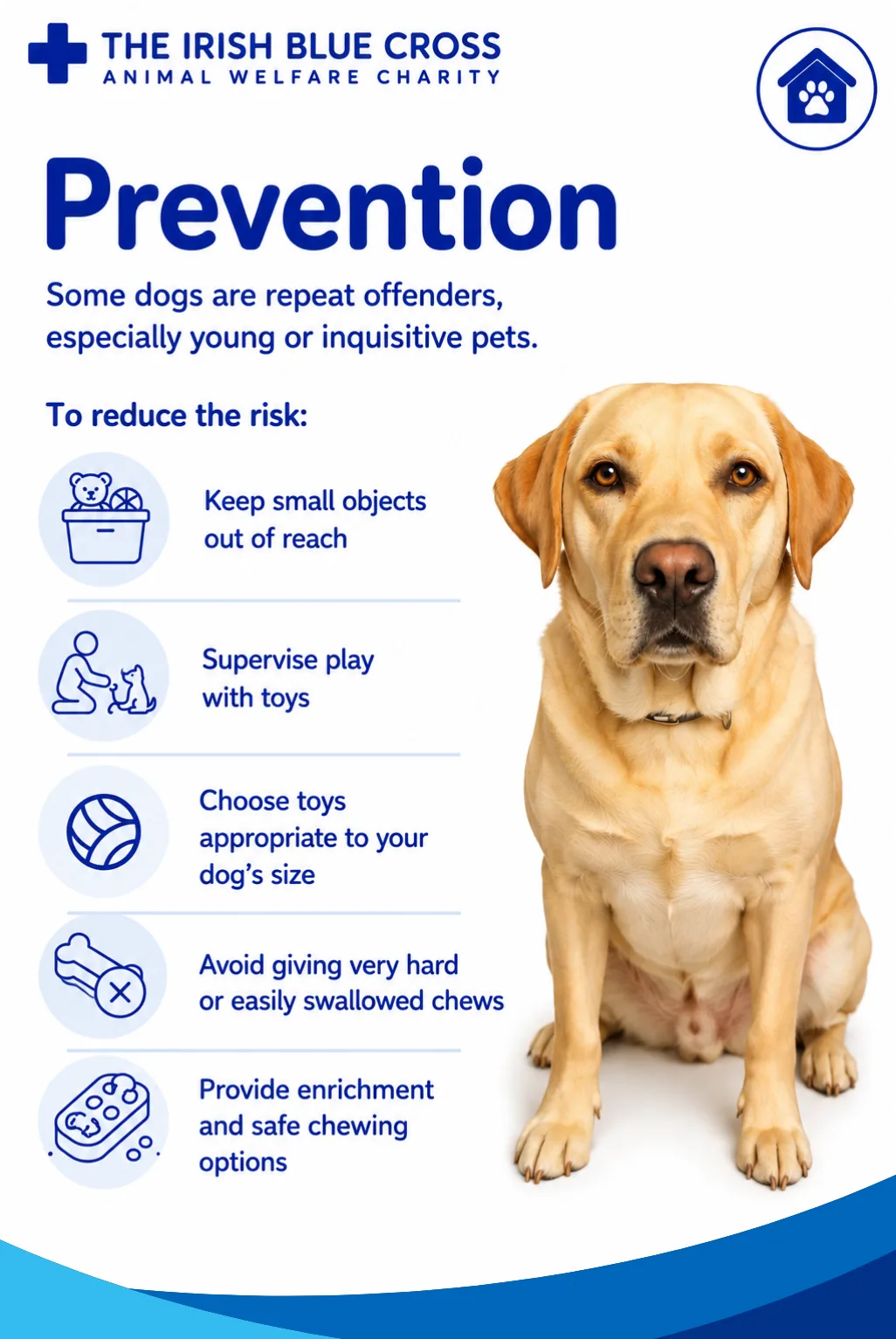
If your dog enjoys chewing, choose durable, size-appropriate toys designed specifically for dogs, and supervise them during use.