
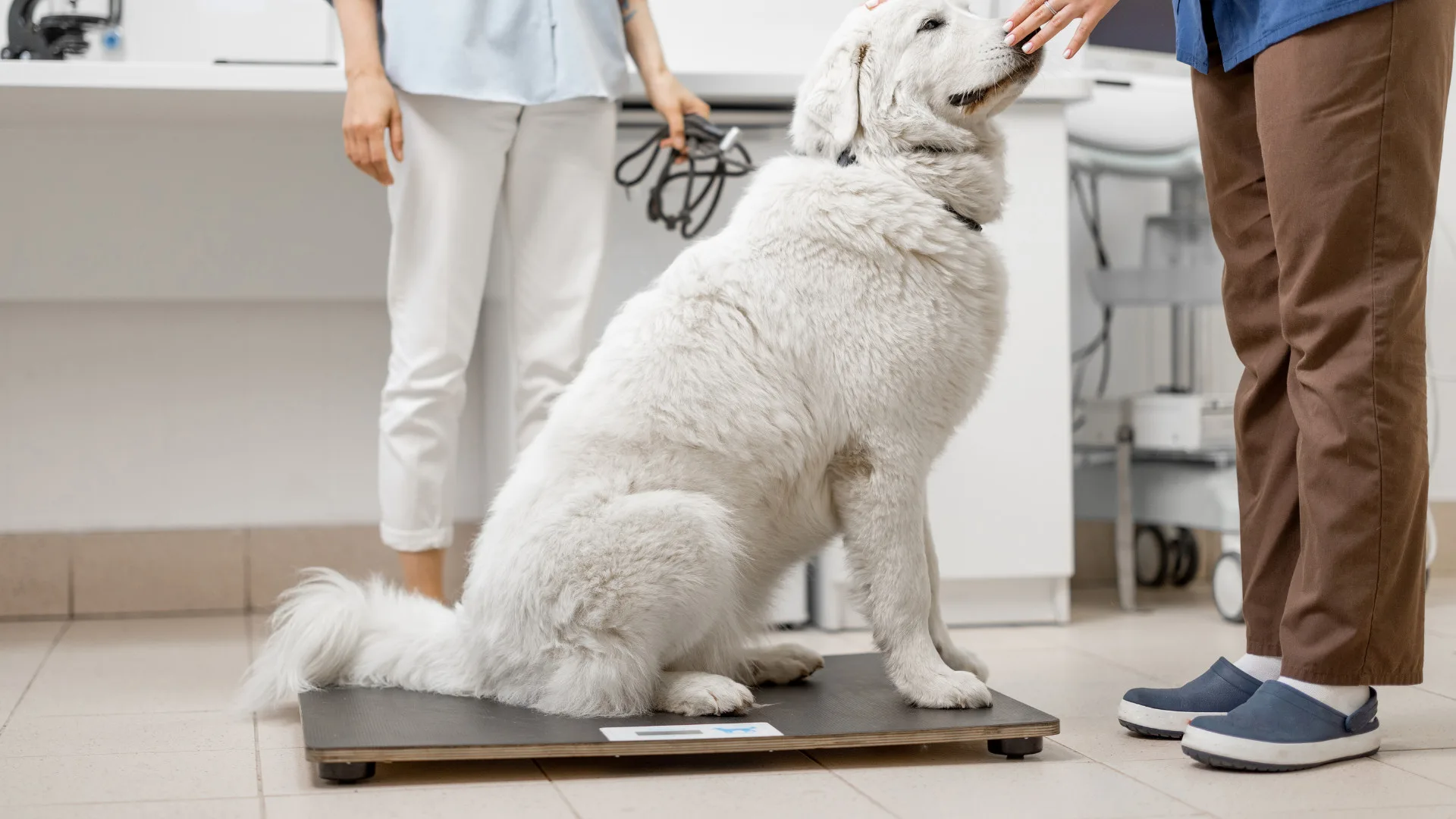
Excess weight is one of the most common health problems affecting dogs today. Veterinary teams estimate that close to half of dogs are heavier than they should be. Carrying extra weight doesn’t just affect appearance, it can shorten a dog’s life and increase the risk of serious and expensive illness.
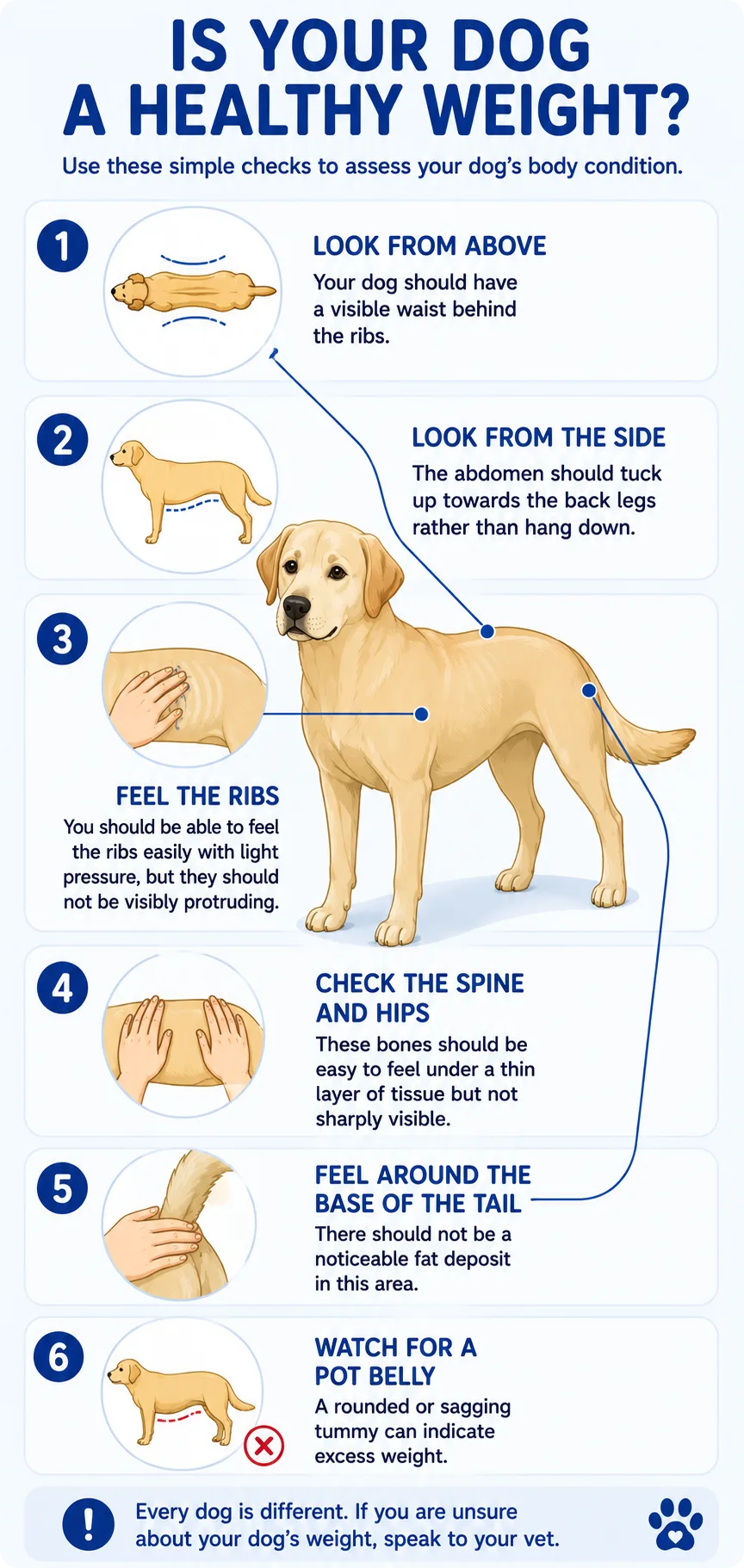
Understanding what a healthy body shape looks like for your dog is essential. With the right balance of nutrition, exercise and regular monitoring, you can help your dog stay fit and well throughout their life.
If you are unsure about your dog’s weight, your local vet practice can offer guidance and support.
The most common cause of weight gain is simply your dog consuming more calories than they burn. Overfeeding, too many treats, table scraps, and insufficient exercise all contribute.
Dogs are natural scavengers and may continue eating even when they do not need more food. Many quickly learn to beg effectively, making portion control challenging.
Although less common, certain illnesses can lead to weight gain. Conditions such as hypothyroidism and Cushing’s disease may cause changes in appetite, energy levels, thirst, and coat quality. If your dog is gaining weight unexpectedly or showing other symptoms, please consult your vet.
Some treatments, including steroid medications, may increase appetite and contribute to weight gain.
While neutering itself does not directly cause obesity, hormonal changes after neutering can slow metabolism and increase appetite. Many neutered dogs require fewer calories, so adjusting their diet is important.
Excess weight places strain on nearly every system in the body. Overweight dogs are more likely to develop:
Maintaining a healthy weight can significantly improves quality of life and longevity.
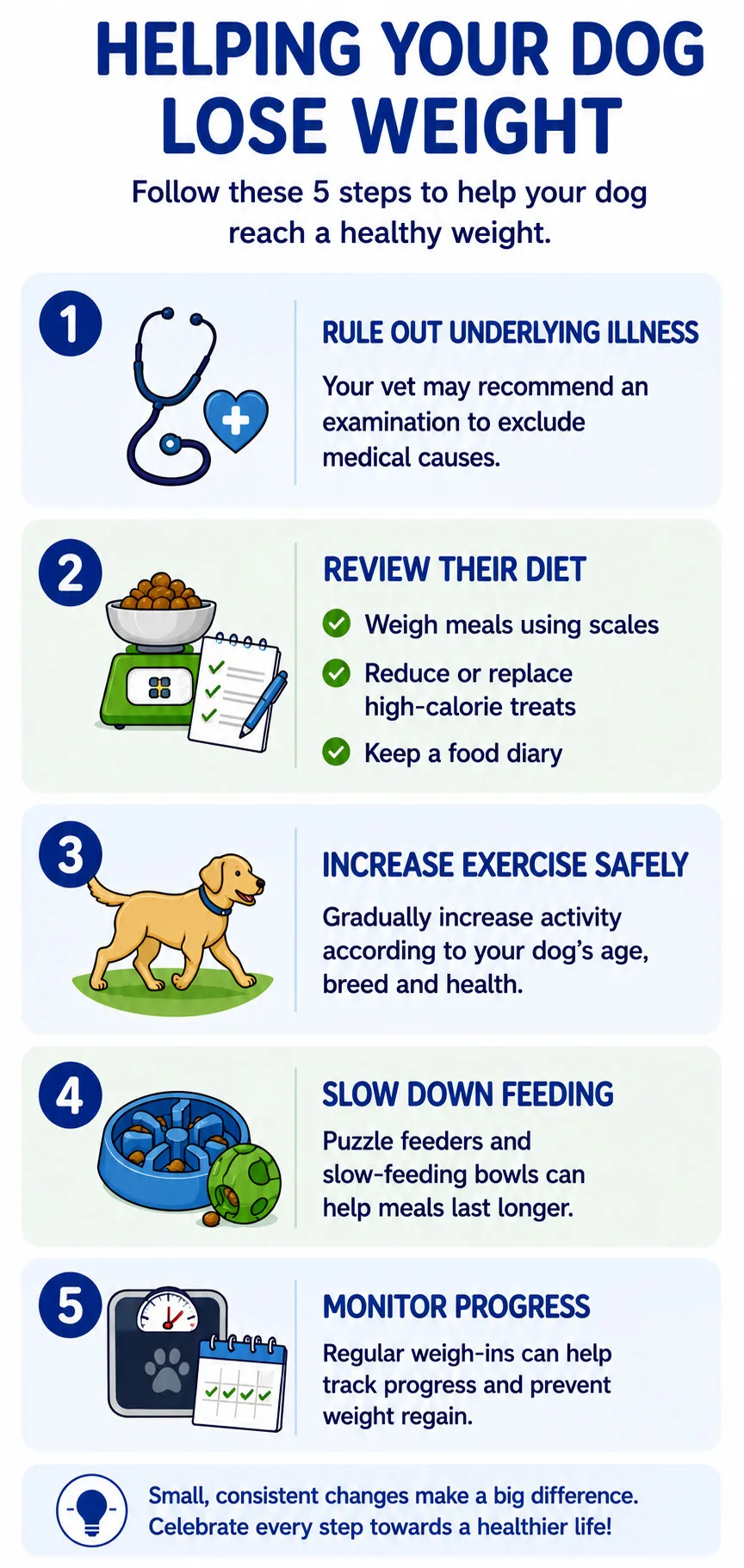
Speak to your vet if:
Weight management can be challenging, and professional support makes a significant difference.
Dogs carrying excess weight are more prone to developing medical conditions, which may result in increased veterinary expenses over time.
If you’re able to, consider pet insurance while your dog is young and healthy to help with unexpected illness or injury. If your dog becomes unwell, talk openly with your vet about the options, the likely costs, and what feels manageable for you. Together, you can tailor a plan that’s right for your dog and your situation.