
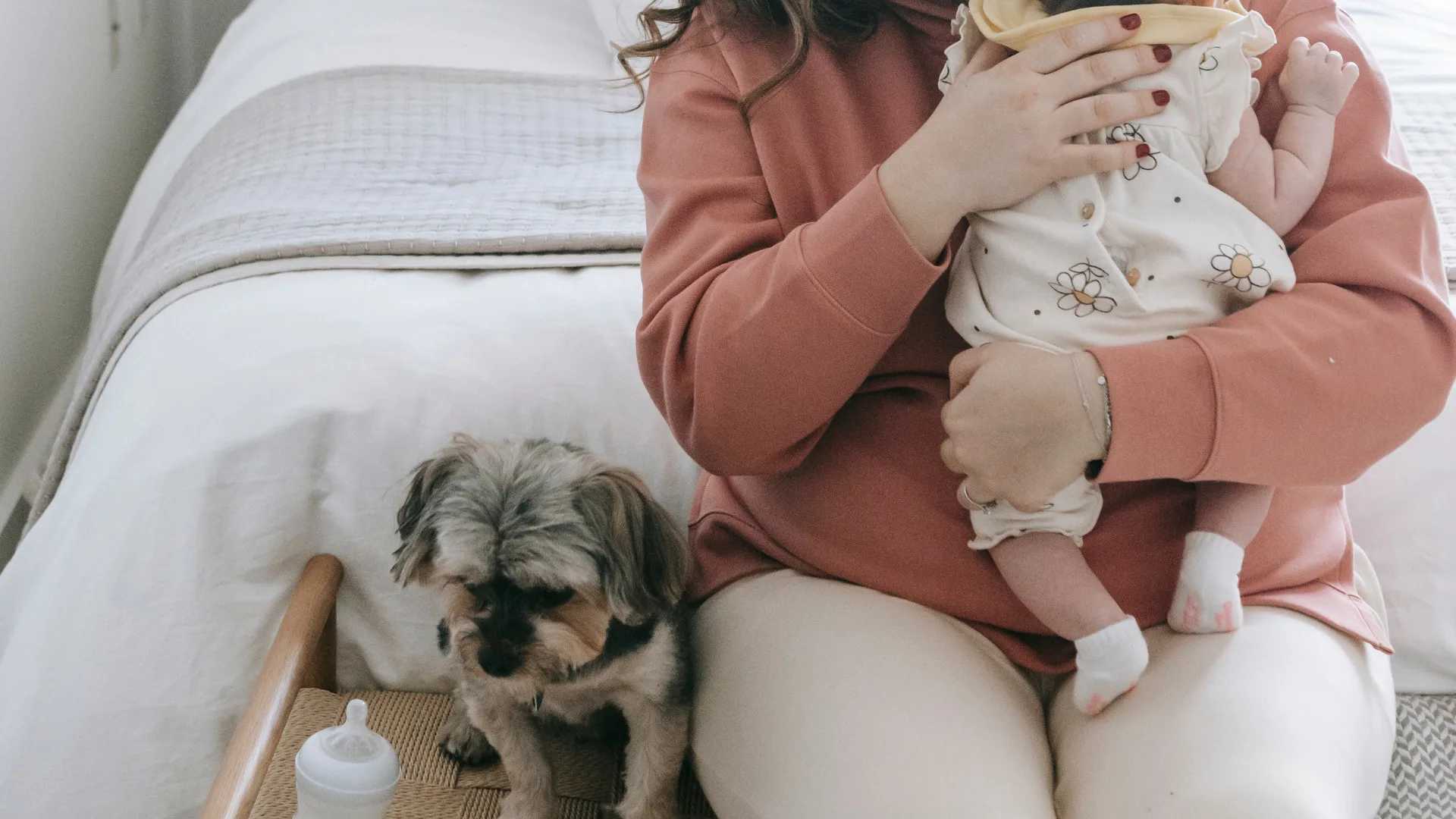
Welcoming a new baby is an exciting and emotional time, but it can also be a big adjustment for your dog. Babies bring unfamiliar sounds, smells and routines, and dogs don’t instinctively understand what a baby is or how they should behave around one.
With preparation, careful supervision and realistic expectations, most dogs can learn to live safely and calmly alongside a new baby.

Dogs rely on predictability to feel secure. A baby appearing suddenly in their home can be confusing or unsettling, especially if it brings changes to attention, routine or boundaries.
A calm, well-managed first introduction helps:
There’s no rush, taking things slowly helps everyone feel more at ease.
When your baby comes home, choose a quiet moment for the first introduction.
Helpful tips include:
There’s no need for your dog to immediately approach or sniff your baby. Simply being calm in the same space is a positive start.

Dogs and babies should never be left alone together, even for a moment. This isn’t because your dog is bad, it’s because babies move unpredictably and dogs can react instinctively if startled or uncomfortable.
Active supervision means:
Using baby gates or playpens can help manage space safely while still allowing your dog to feel included.
It’s natural for your time and attention to shift after a baby arrives, but dogs still need reassurance.
You can help by:
This helps your dog feel secure and reduces the risk of frustration or anxiety.
Reward your dog for calm choices, like lying down, settling nearby, or choosing to walk away. Avoid telling your dog off for simply being curious; instead, guide them towards safe, appropriate behaviour.
Teaching your dog a reliable ‘settle’ or ‘go to bed’ cue can be especially useful in busy moments.
As babies begin to crawl and walk, interactions will need even closer management. Children should be taught to respect dogs by not grabbing, climbing or disturbing them while resting or eating.
Your dog should always have access to a quiet, child-free space where they can relax undisturbed.
If your dog shows signs of ongoing stress, fear, or discomfort around your baby, early support is vital. Speak to your vet or vet nurse for recomendations for a qualified behaviour professional for guidance.
Getting help early can prevent problems and support a safe, happy home for everyone.