

Intervertebral Disc Disease, often called IVDD or a ‘slipped disc’, is a condition that affects the spine and can cause significant pain and mobility problems in dogs. It happens when the discs that sit between the bones of the spine lose their cushioning ability and, in some cases, move out of position.
When a disc slips, it can press on the spinal cord. This pressure may lead to pain, weakness, nerve damage and, in severe cases, paralysis. Some dogs develop symptoms gradually, while others can deteriorate very suddenly.
Certain breeds are more at risk because of their body shape, particularly dogs with long backs or compact spines, such as Dachshunds and French Bulldogs.
If you are worried your dog may have symptoms of IVDD, contact your vet for advice. If your dog appears to be in pain or suddenly cannot walk, seek veterinary help immediately.
Your dog’s spine is made up of small bones called vertebrae, with soft discs between them. These discs act like shock absorbers, allowing the spine to move and flex comfortably.
With IVDD, these discs become stiff and brittle over time. A damaged disc may bulge or burst, putting pressure on the spinal cord and nearby nerves. This can cause pain, difficulty moving, and changes in sensation or bladder control.
Although IVDD is the most common cause of slipped discs, spinal injuries caused by trauma, such as falls or accidents, can lead to similar problems.
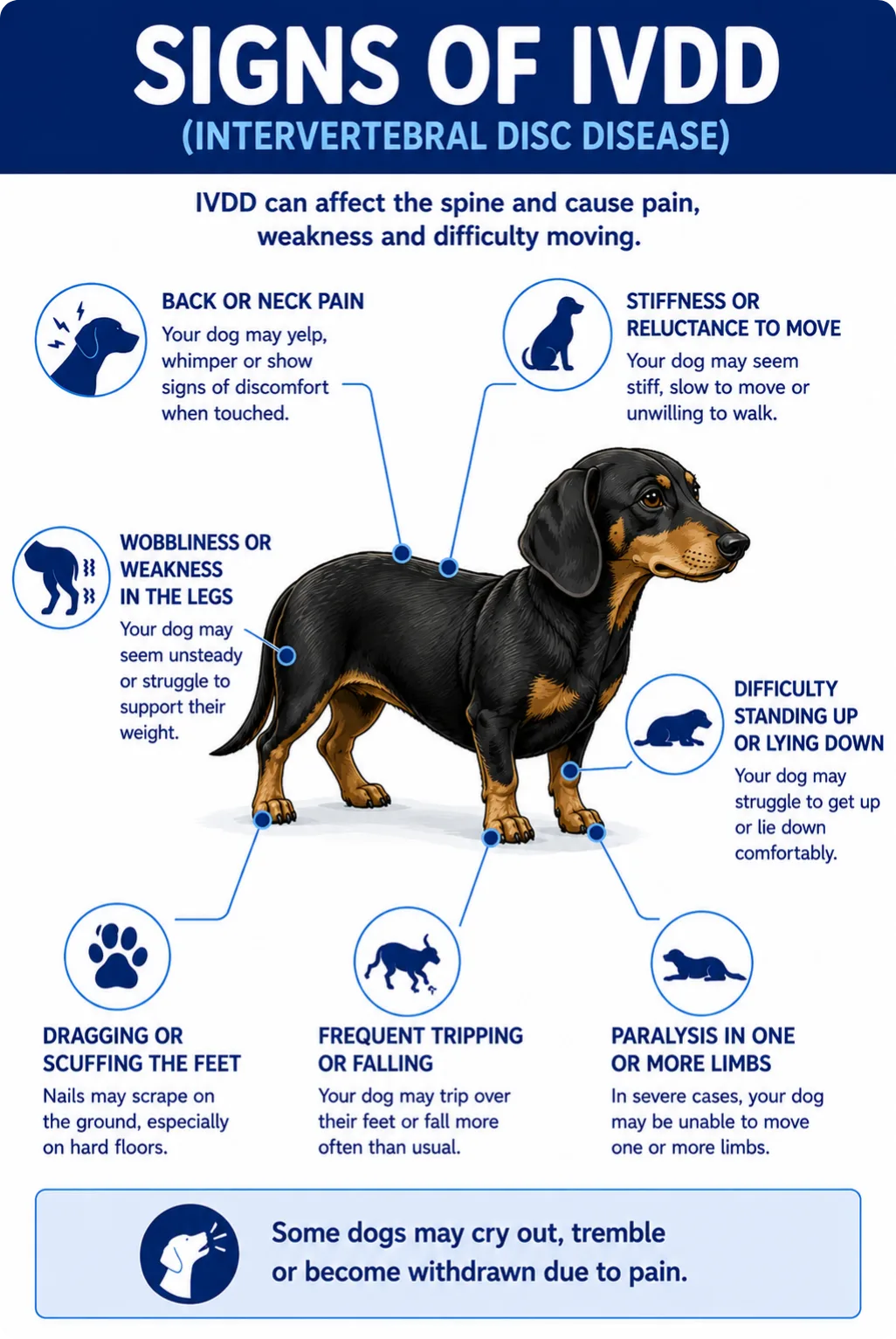
Always speak to your vet if your dog shows any signs of a slipped disc. IVDD can worsen quickly if left untreated, and early care can make a big difference.
Contact your vet urgently if:
If your dog is struggling to move, handle them carefully. Supporting them on a firm board, blanket or towel can help prevent further injury. Be aware that dogs in pain may react unpredictably, so keep both yourself and your dog safe.
Your vet may suspect IVDD after a physical and neurological examination, but further tests are often needed to confirm the diagnosis.
These may include:
MRI scans, which give the clearest picture of the spine and spinal cord
X-rays, which can show some spinal changes but not nerves
Additional tests, such as blood tests or CT scans, depending on your dog’s condition
Advanced imaging like MRI and CT is usually carried out at specialist veterinary centres.
Treatment depends on how severe your dog’s symptoms are and how much damage has occurred.

Surgery is often recommended for dogs with severe pain or those who are unable to walk. When performed quickly, surgery can be very effective at relieving pressure on the spinal cord.
However, spinal surgery is a major procedure. Your vet will discuss the potential benefits, risks, recovery time and costs with you before any decision is made.
In some severe cases, dogs may not respond to treatment or may be in ongoing, uncontrollable pain. If recovery is unlikely and quality of life is poor, euthanasia may be the kindest option. Your vet will support you through this decision and talk through all available options.
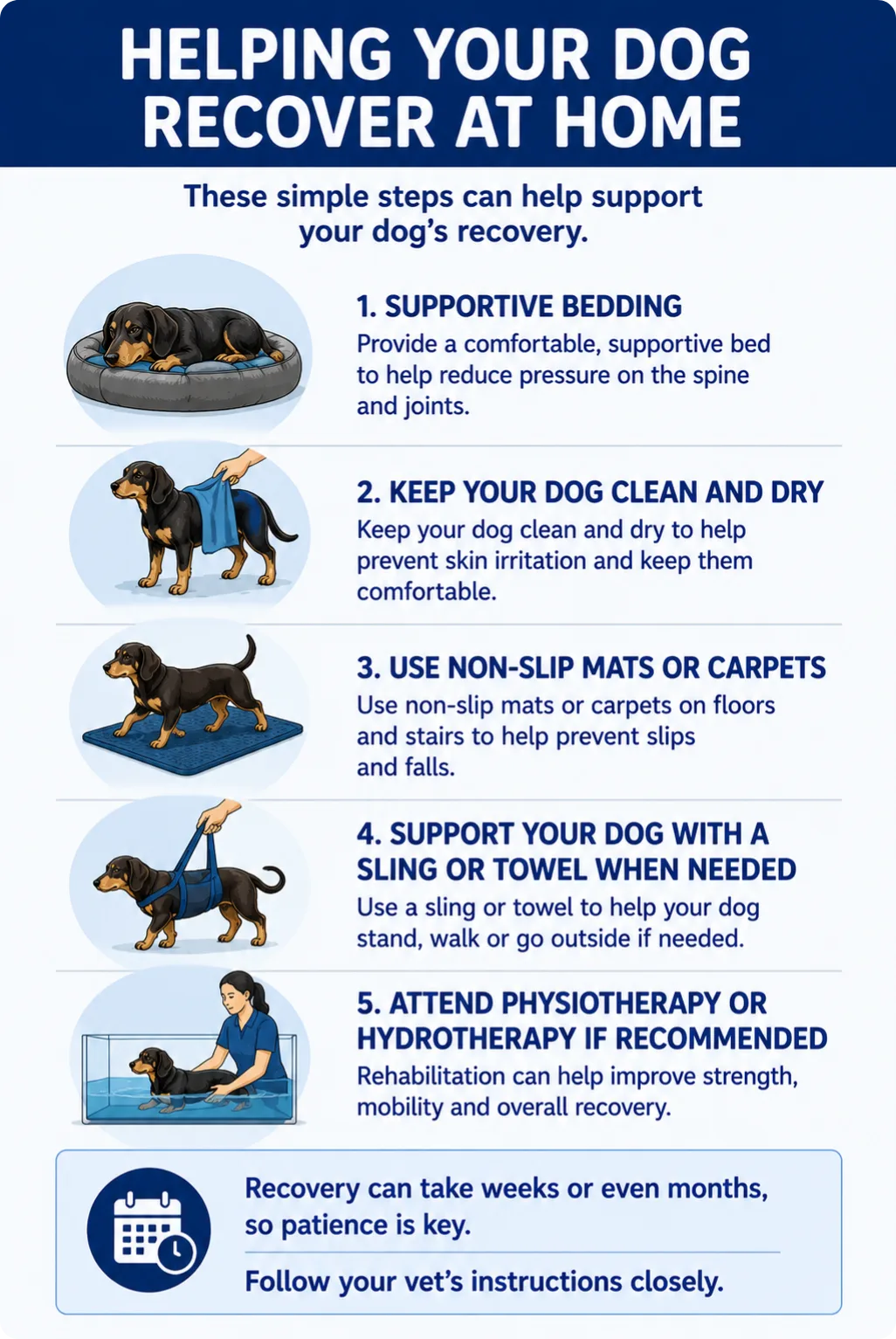
Many dogs with mild IVDD recover well and go on to enjoy a good quality of life. However, they may need long-term lifestyle adjustments, such as avoiding jumping, climbing stairs and rough play.
Dogs with severe symptoms may have a poorer outlook and can be left with lasting problems such as paralysis or incontinence. Your vet will help you understand what to expect based on your dog’s individual situation.
The cost of treating IVDD varies widely. Medical management is usually less expensive, while advanced imaging, surgery and hospital care can run into several thousand euro.
If you’re able to, consider pet insurance while your dog is young and healthy to help with unexpected illness or injury. If your dog becomes unwell, talk openly with your vet about the options, the likely costs, and what feels manageable for you. Together, you can tailor a plan that’s right for your dog and your situation.
IVDD is more common in certain breeds due to their body shape and spinal structure. These include:
If you’re considering bringing one of these breeds into your home, researching health issues and choosing a responsible breeder can help reduce the ris