

Dogs may be frightened by thunderstorms for several reasons.
Loud, sudden noises – Thunder can be extremely loud and unpredictable. Dogs that are sensitive to noise or have had negative experiences with loud sounds may find this particularly frightening.
Changes in the weather – Before a storm arrives, there are often changes in air pressure, humidity, wind and rainfall. Dogs can detect these changes and may become unsettled even before thunder begins.
Previous experiences – If a dog has had a frightening experience during a storm in the past, they may develop a strong fear response whenever similar weather occurs.
Signs that your dog may be stressed during a storm include:
You may also notice changes in behaviour such as:
These behaviours are often attempts to cope with stress or find a place that feels safe.
If you know a storm is approaching, preparing in advance can help reduce your dog’s anxiety.
Check the weather forecast
Knowing when storms are expected can help you plan to be at home with your dog if they need reassurance.
Adjust walk times
Try to walk your dog earlier if storms are expected as being caught outside during a storm can make anxiety worse.
Create a safe space
Provide a comfortable place where your dog can rest. Many dogs feel safer in small, enclosed areas such as a crate or a quiet room. Adding blankets, toys or an item of your clothing can make the space feel more reassuring.
Reduce noise and visual triggers
Closing curtains or blinds can help block flashes of lightning and playing calming music or leaving the television on can also help mask some of the storm sounds.
Ensure your home is secure
Some frightened dogs may try to escape or hide so make sure doors, gates and fences are secure.
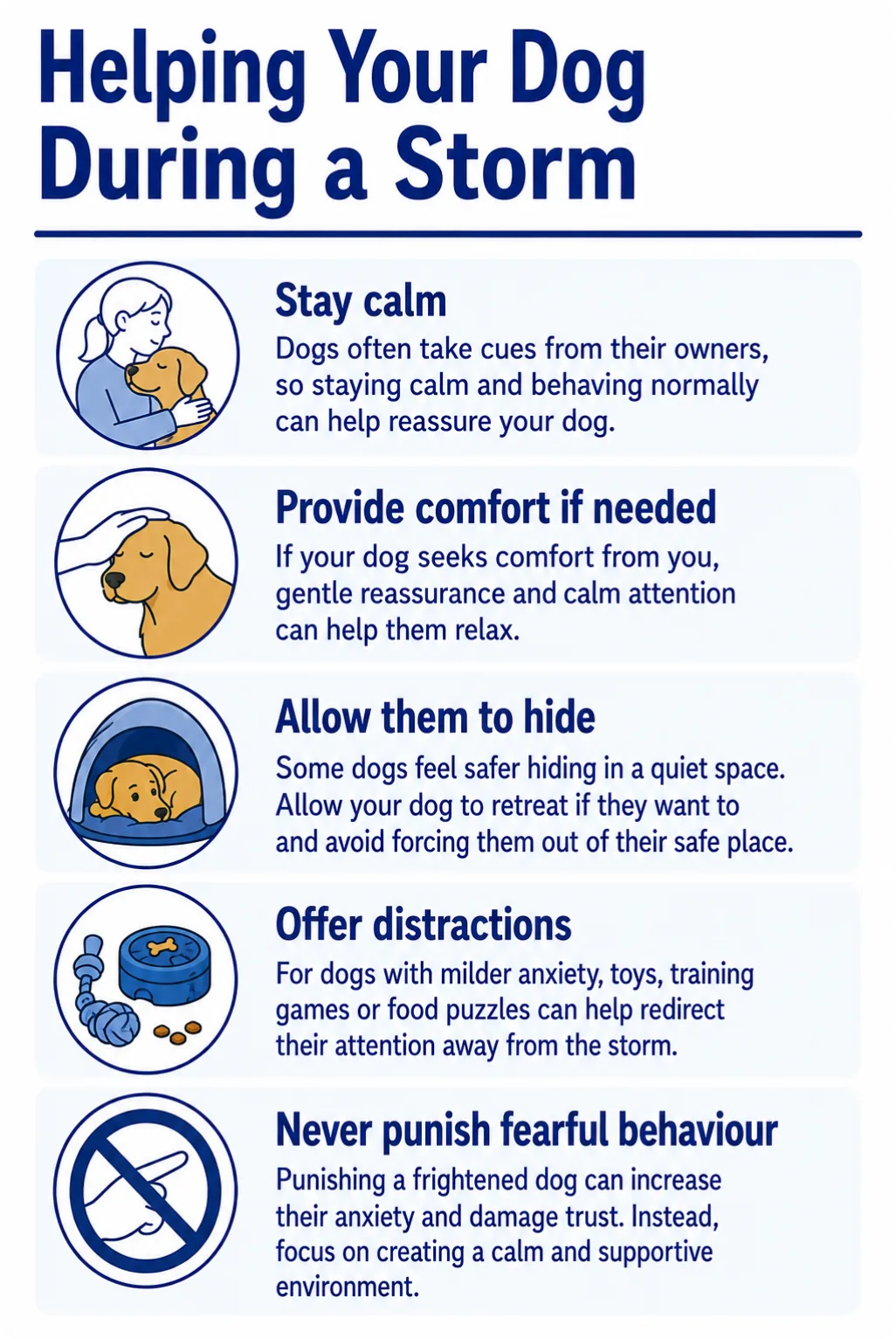
For dogs with strong fears of storms or loud noises, behaviour training may help reduce their anxiety over time.
These training methods gradually change how a dog feels about something that scares them.
Desensitisation involves exposing the dog to a very low level of the trigger (such as a quiet recording of thunder).
Counter-conditioning pairs that trigger with something positive, such as treats or play.
Over time, this can help dogs develop a more positive association with the noise.
Training must be done slowly and carefully. If the dog becomes stressed, the training may be progressing too quickly.
Some dogs benefit from calming aids such as:
These products may help some dogs feel more relaxed but usually work best when combined with behavioural training.
If your dog shows severe fear during thunderstorms or their anxiety is getting worse, it is important to seek professional advice.
Speak to your vet, who may:
Medication is sometimes used alongside behaviour training to help dogs cope with severe fear.
Never give human anti-anxiety medication to dogs – unless specifically prescribed by a vet.
Introducing young dogs to a variety of sounds, environments and experiences in a positive way can help reduce the risk of developing fears later in life.