
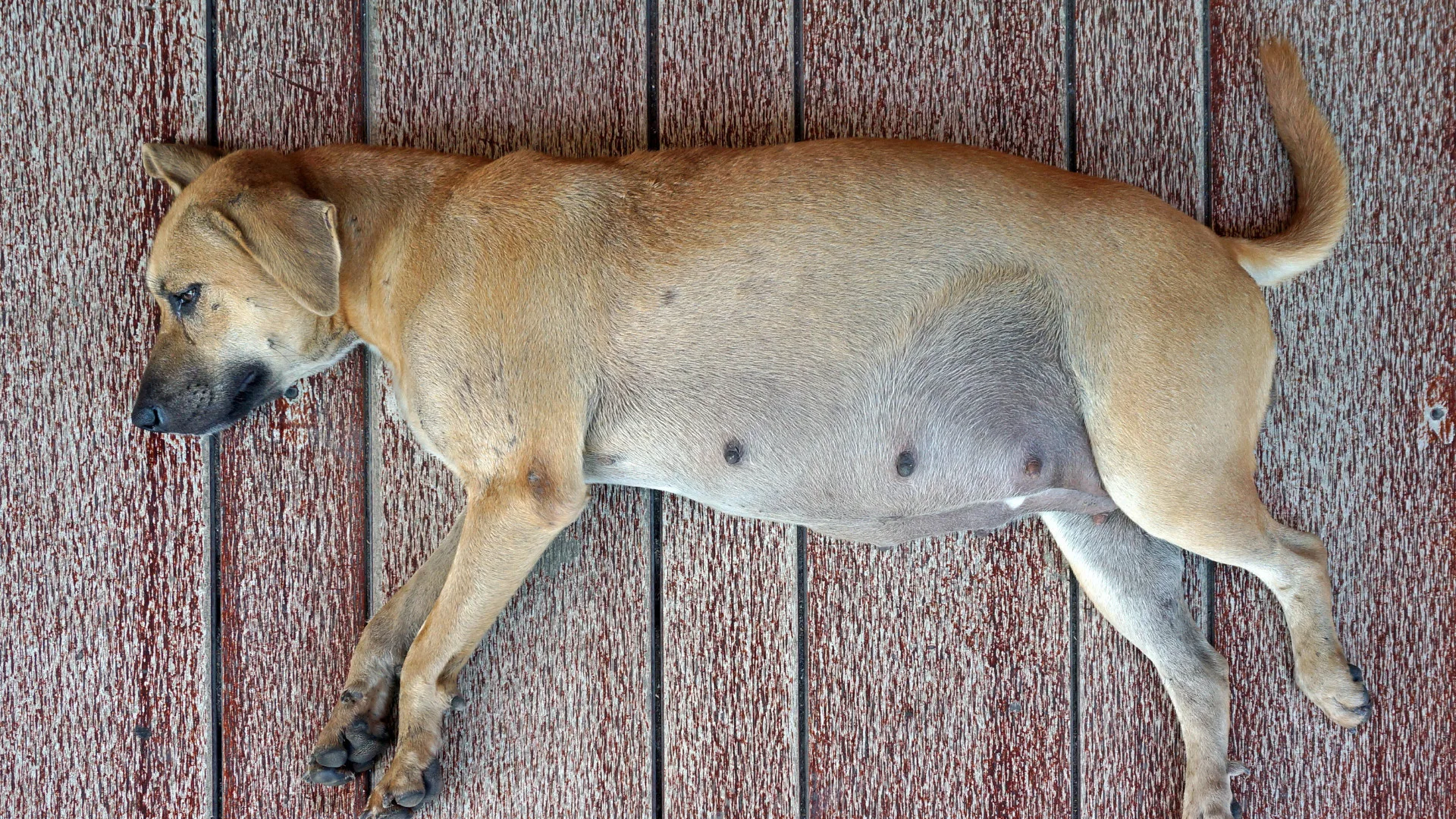
Dogs are pregnant for around nine weeks, with most pregnancies lasting close to 63 days, although this can vary slightly. If your dog becomes pregnant, she’ll need some extra care and attention, particularly as she gets closer to giving birth.
It’s always a good idea to speak to your vet as soon as you suspect your dog may be pregnant, or if you have any concerns at any stage. They can guide you through what to expect, help you prepare, and advise you if anything doesn’t seem quite right.
Given the huge volume of unwanted dogs in Ireland, from an animal welfare perspective, most charities, including The Irish Blue Cross, recommend neutering your dog. If you are a client of The Irish Blue Cross, please read our neutering and breeding policy.
In the early weeks, many dogs show very few obvious changes. You might notice slightly enlarged or pinker nipples, or some swelling around the vulva (female dog’s private parts), but these signs can be subtle.
As the pregnancy progresses, changes usually become more noticeable and may include:
Every dog is different, so not all these signs will be present.
Your vet has a few different ways to confirm whether your dog is pregnant. Depending on timing and circumstances, this may include:
This can usually be carried out from around 25 days after mating.
This can can also detect pregnancy hormones from around 25 days post mating
Your vet will advise which option is most appropriate for your dog.
If your dog becomes pregnant and you feel it’s not the right time for her to have puppies, options may be available, particularly if addressed early. These can include spaying or medical treatment, depending on circumstances. Your vet can talk you through the safest and most appropriate choice for your dog.
Phantom pregnancy is common in unneutered female dogs. This happens when hormonal changes after a season (heat) cause a dog to behave, and sometimes even look, as though she is pregnant, despite not carrying puppies.
Dogs experiencing a phantom pregnancy may show nesting behaviour, mammary development, milk production, or changes in mood. While it can be worrying to see, it is usually temporary. Your vet can offer advice if symptoms are severe or persistent.
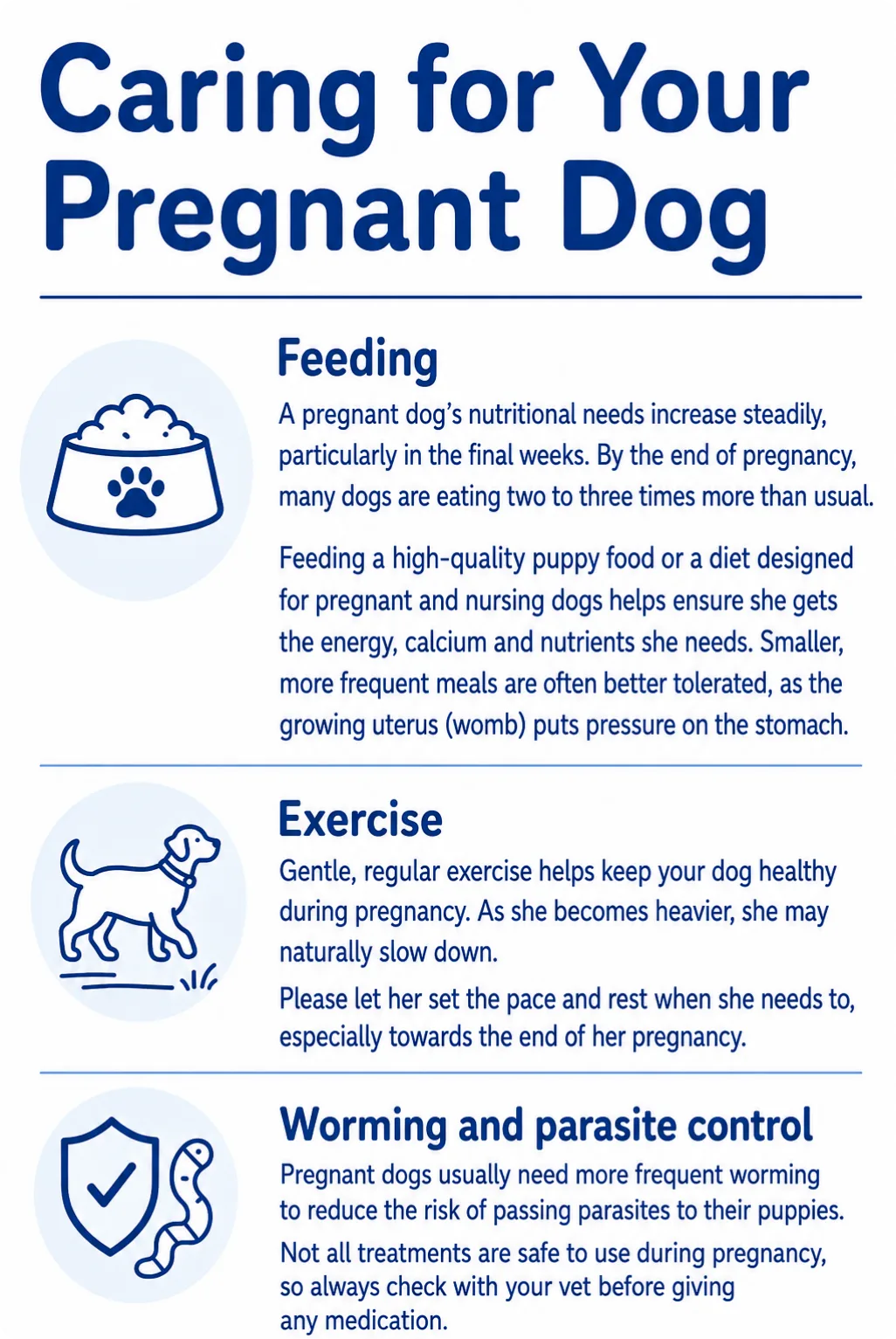
Many dogs cope well with pregnancy, but complications can occasionally occur. Being aware of potential warning signs can help you act quickly if needed.
Pregnancy loss can happen for a range of reasons, including infection, injury, stress or hormonal problems. Early losses may go unnoticed, but later miscarriages can cause labour-like signs, vaginal discharge, milk production or distress.
Always contact your vet if you suspect your dog has lost her pregnancy. As a precaution, pregnant people should avoid contact until the cause has been identified, as some infections can affect humans.
This rare but serious condition tends to occur in late pregnancy, particularly in underweight dogs or those carrying large litters. It’s caused by low energy levels and toxin build-up in the blood.
Signs can include:
Prompt veterinary treatment is essential, and outcomes are usually good when caught early.
If your dog develops vomiting, unusual vaginal discharge, weight loss, or simply doesn’t seem herself at any point during pregnancy, it’s always safest to seek veterinary advice.
As your dog approaches the end of her pregnancy, it’s important to be prepared for whelping. Knowing what’s normal and when to seek help can make a big difference.
For detailed guidance, including what to expect during labour and how to spot problems afterwards, see our page Whelping: a guide to your dog giving birth.
You should contact your vet:
Dogs do not need to have a litter to live a happy, healthy life. Unless you are committed to breeding responsibly and are prepared for the demands involved, neutering is usually the kindest option.
Neutering prevents unwanted pregnancies and reduces the risk of serious conditions such as womb infections, certain cancers and repeated phantom pregnancies.
Pregnancy and birth can be expensive, particularly if complications arise. Emergency procedures such as caesarean sections can cost over €1,000, and breeding-related care isn’t always covered by insurance.
If you’re considering breeding, it’s important to be realistic about the financial commitment.