
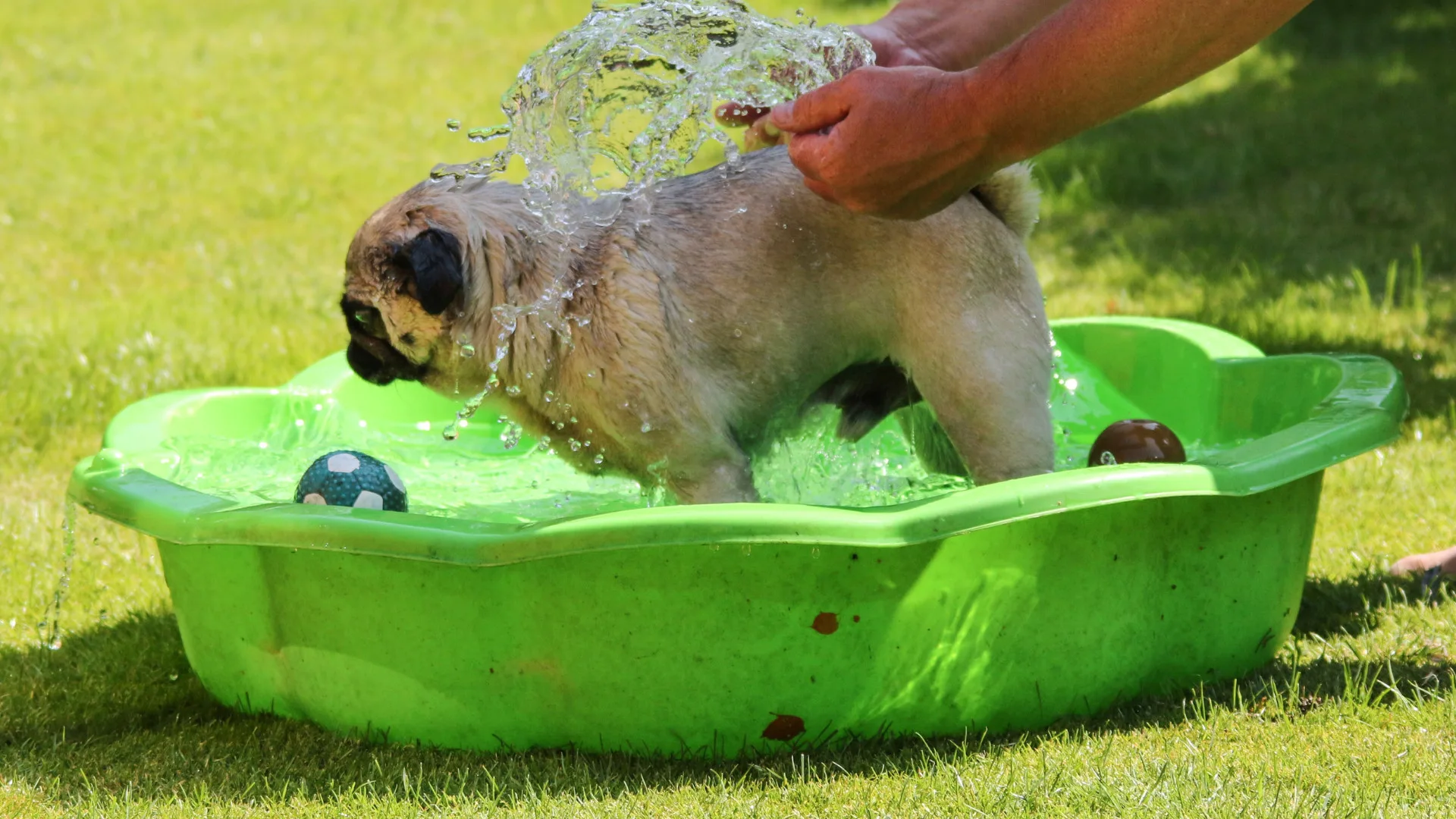
Heatstroke is a serious and potentially life-threatening condition for dogs. It can develop very quickly and, if not treated promptly, may lead to seizures, organ failure or even death. Knowing how to spot the signs, what to do in an emergency, and how to prevent heatstroke can make all the difference.
While many cases happen during exercise on warm days, dogs can also overheat simply by resting in a hot environment or becoming trapped somewhere with poor ventilation. Some dogs are more vulnerable than others, so extra care is needed during warmer weather.
Dogs rely mainly on panting to cool themselves, as they cannot sweat like humans. If panting and shade are not enough to bring their body temperature down, their temperature can rise to dangerous levels.
A dog’s normal body temperature sits between 38–39°C. Once it rises above 40°C, heatstroke can occur. The longer a dog remains overheated, the greater the risk of serious internal damage, which is why fast action is so important.


If you suspect heatstroke, start cooling your dog straight away and contact your vet as soon as possible.
Avoid wrapping your dog tightly, covering them with wet towels or cuddling them, as this can trap heat.
Transport your dog to the nearest vet as soon as possible. Keep cooling them during the journey by using air conditioning or opening the windows safely.
Your vet will continue cooling your dog and may provide oxygen, fluids and medication. In severe cases, blood and urine tests may be needed to assess organ damage, and hospitalisation may be required.
Once stable, most dogs can go home, but close monitoring is essential for the next 24–48 hours. Follow-up checks are often needed to ensure recovery is progressing well.
The outlook depends largely on how quickly treatment begins. Dogs treated early often recover fully, while severe or delayed cases carry a much poorer prognosis.
Prevention is always better than treatment and simple steps can greatly reduce the risk:
Brachycephalic dogs release less heat through breathing due to their shortened airways. This puts them at a much higher risk of overheating, even in cooler conditions.
Breeds such as Pugs, French Bulldogs and English Bulldogs need extra care, minimal exercise in warm weather, and close monitoring at all times.
Hot cars – Cars heat up rapidly and can become fatal within minutes. Shade and open windows are not enough. If you see a dog in distress in a hot car, contact your local garda station immediately.
Sunburn – Dogs with light fur or exposed skin are at risk. Use pet-safe sun cream and encourage regular shade breaks.
Bites and stings – Fleas, ticks, bees, wasps and adders are more active in summer. Check your dog regularly and contact your vet if you’re concerned about a bite or sting.
Swimming and Water Safety – Swimming can help dogs cool down, but it’s not without risk. Excitement can mask overheating, and some dogs swallow too much water.
Limit swimming time, encourage regular breaks, and never force a dog into water. Be cautious of currents, tides and blue-green algae, and always bring fresh drinking water.