

A heart murmur is an extra sound heard during a heartbeat, often described as a whooshing noise. It is caused by unusual blood flow within or around the heart.
Heart murmurs are quite common in dogs. Some are harmless and never cause problems, while others are linked to heart disease or underlying illness. If your dog has been diagnosed with a murmur, the next step is to determine the cause and decide whether monitoring or treatment is needed.
Normally, a heartbeat produces two clear sounds, often described as ‘lub-dub’. A murmur is an additional sound caused by turbulent blood flow.
Anything that disrupts smooth blood movement through the heart can create a murmur. In some dogs, this turbulence is harmless. In others, it may signal structural heart problems.
A murmur itself is not a diagnosis; it is a finding that may lead to further investigation.
Heart murmurs can develop for several reasons.
Structural problems within the heart are a frequent cause, including:
Mitral valve disease is the most common heart condition in dogs and often causes a murmur.
Low red blood cell levels, blood loss, fever or other systemic illness can temporarily cause abnormal blood flow and result in a murmur.
Some pregnant dogs develop a mild murmur due to changes in circulation. These typically resolve after whelping (giving birth).
Flow murmurs are harmless and caused by fast moving blood within a healthy heart. They are often heard in puppies, particularly large or fast-growing breeds, and usually disappear by four to six months of age.
Occasionally, athletic adult dogs with strong hearts may also have a mild flow murmur.
Vets assess murmurs based on their loudness.
They may be described as low, moderate or high intensity, or graded on a scale from 1 (very quiet) to 6 (very loud).
Louder murmurs can indicate more significant disease, but this is not always the case. Some serious conditions produce relatively soft murmurs, and some minor issues may sound louder.
Your vet’s approach will depend on the suspected cause. If your dog is otherwise well and has a soft murmur, your vet may recommend regular monitoring without immediate treatment.
If there are concerns about underlying heart disease or your dog is showing symptoms, further tests may be advised.
These can include:
Treatment is tailored to the underlying diagnosis. Some conditions require medication, while others may simply need observation and monitoring.
Although less common, puppies can have heart murmurs.
There are two main causes:
These are soft murmurs caused by rapid blood flow in a growing heart. They are usually detected at a young age and often resolve by six months.
These are structural problems present from birth. Murmurs linked to congenital disease are often louder and may require further investigation.
All puppies should have their heart checked during routine vet visits. If a breeder mentions a murmur, ensure your puppy is examined by a vet as soon as possible and that you receive full details.
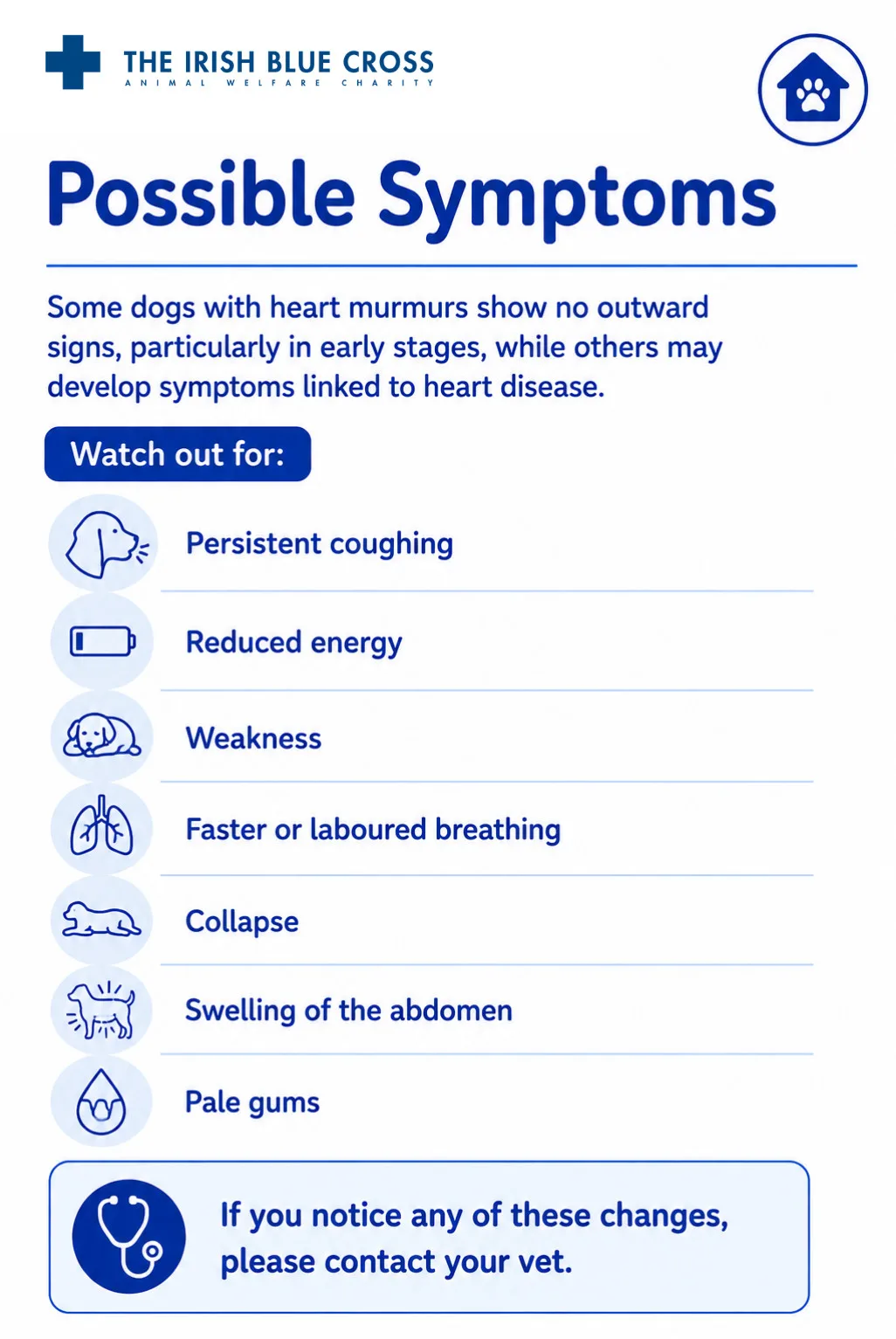
Seek veterinary advice if you notice coughing, breathing changes or reduced stamina or your dog belongs to a breed prone to heart disease and you have concerns.
Regular vet checks are an important way to detect murmurs early. If you are ever unsure about your dog’s heart health, please contact your veterinary practice for guidance.