
As dogs grow older, some develop a condition similar to dementia in people. This is known as cognitive dysfunction. It affects the ageing brain and can lead to gradual changes in behaviour, memory and personality.
Although there is no cure, early recognition and supportive care can make a significant difference to your dog’s comfort and wellbeing. If you notice changes in your older dog’s behaviour, please contact your vet for advice.
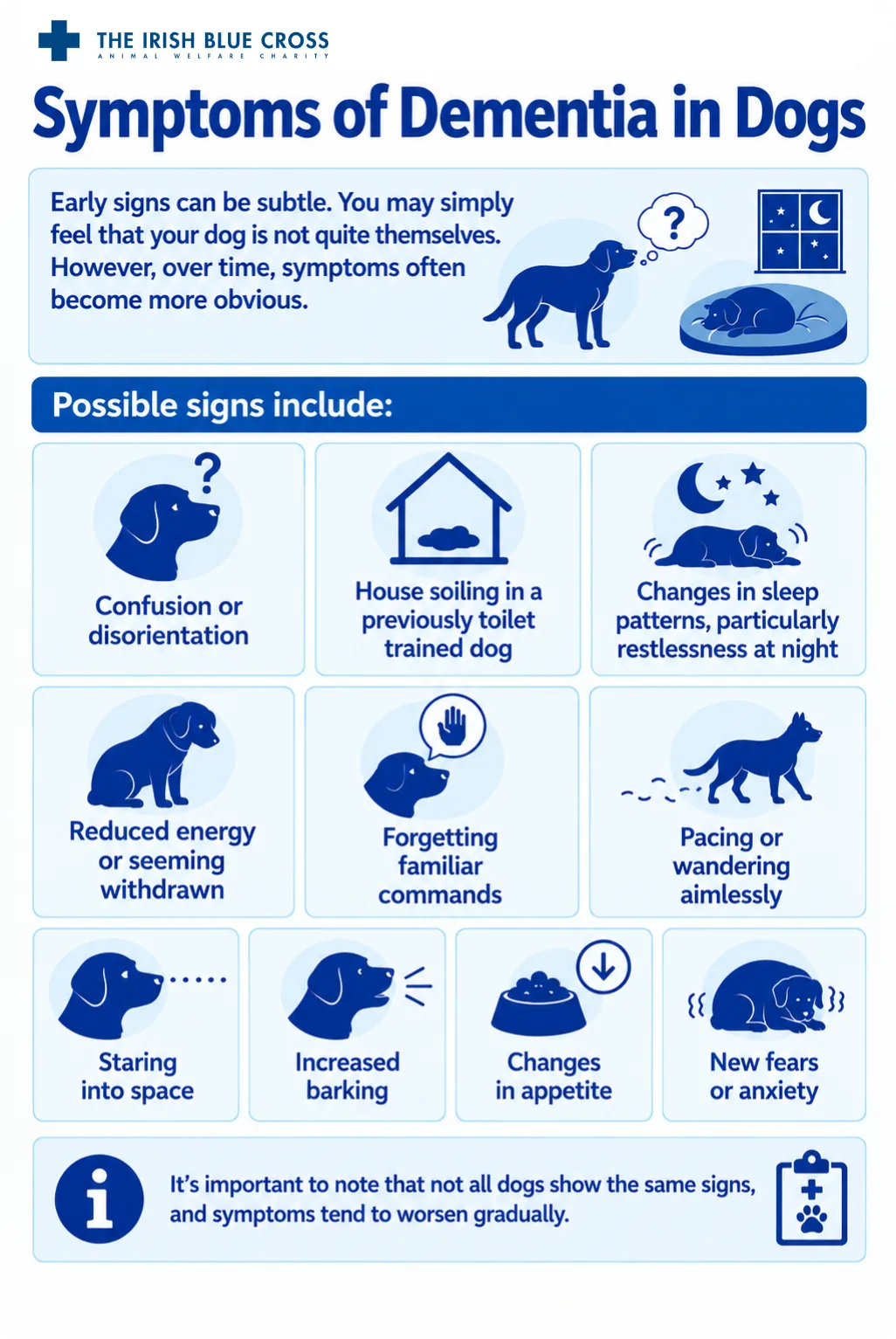
Behavioural changes in older dogs should always be discussed with your vet. Many medical conditions can cause similar symptoms, including pain, sensory loss or hormonal disorders, so a thorough examination can help rule out other causes.
The earlier cognitive dysfunction is identified, the more options there are to support your dog.
Management usually involves a combination of approaches tailored to your dog’s needs.
Certain prescription medications may help improve brain function or slow the progression of symptoms in some dogs but your vet will advise whether these are appropriate for your dog.
Specially formulated diets and antioxidant supplements designed to support brain health may be recommended. Always seek veterinary guidance before starting supplements.
Dog appeasing pheromone products may help reduce anxiety in some dogs affected by cognitive decline.
In more complex cases, referral to an accredited behaviourist may be helpful, particularly if anxiety or aggression develops.
Practical adjustments at home can greatly improve comfort and confidence.
Avoid major changes to furniture layout or household routines where possible as sudden changes can increase confusion.
Create a quiet, familiar resting area where your dog can easily access their bed, food, water and favourite toys.
Use consistent lighting and consider using different textures or gentle background sounds to help your dog orient themselves.
Regular feeding, walking and bedtime schedules can be reassuring. Encouraging gentle daytime activity may also help reduce nighttime restlessness.
Short, familiar walks and simple enrichment activities can help keep the brain active. Keep your dog on a lead if recall becomes unreliable.
Use clear, consistent cues. If your dog forgets commands, calmly revisit basic training using positive reinforcement.
If your dog becomes disoriented or stops responding reliably, keep them on a lead while outdoors and consider installing baby gates to prevent access to hazards such as stairs.
Calm interaction, gentle play and affection can help maintain your bond and provide reassurance.
Dogs with cognitive dysfunction may occasionally react unpredictably. Never leave children unsupervised with any dog and remove your dog from situations that appear to cause them stress.
Many dogs continue to enjoy a good quality of life for months or even years after diagnosis, especially with early intervention and thoughtful management.
However, cognitive dysfunction is progressive. In the advanced stages, dogs may become severely disoriented, distressed or unable to cope with daily life. If your dog is having more bad days than good, or their quality of life has declined significantly, please speak to your vet.
Deciding when to say goodbye is deeply personal and can be difficult. Your vet can help you assess your dog’s comfort, safety and overall wellbeing. The goal is always to prevent unnecessary suffering.
Ongoing management may include medication, specialist diets and regular veterinary reviews. Costs can vary depending on your dog’s needs.
If you’re able to, consider pet insurance while your dog is young and healthy to help with unexpected illness or injury. If your dog becomes unwell, talk openly with your vet about the options, the likely costs, and what feels manageable for you. Together, you can tailor a plan that’s right for your dog and your situation.