

Dental (tooth and gum) disease is one of the most common health problems affecting dogs in Ireland. It can be extremely uncomfortable, yet many dogs continue to eat and behave normally even when their mouth is sore, so problems often go unnoticed until they are advanced.
Checking your dog’s mouth regularly at home and arranging a veterinary examination at least once a year are key steps in protecting their health. Daily tooth brushing is the most effective way to prevent plaque build-up and gum disease.
Adult dogs have 42 permanent teeth, 20 in the upper jaw and 22 in the lower jaw.
Like children, puppies first develop temporary (milk) teeth. These begin to fall out at around four months of age, and most dogs have their full adult set by six months.
Dogs often hide oral discomfort, so visible symptoms may only appear once disease is established.
Watch out for:
If you notice any of these signs, please contact your vet for advice.
Your vet will examine your dog’s mouth and discuss any changes you’ve noticed. Most dogs tolerate a gentle oral check while awake. However, if your dog is anxious, painful, or needs a more detailed assessment, sedation or a general anaesthetic may be required.
As around 60% of each tooth lies beneath the gum line, dental X-rays are the only way to properly assess the roots and detect hidden disease.
Plaque is made up of food debris, saliva and bacteria. If not removed, it hardens into tartar. Tartar irritates the gums, damages teeth and harbours bacteria that can spread through the bloodstream, potentially affecting organs such as the heart, kidneys and liver.
Inflamed, red and bleeding gums are usually caused by plaque build-up and without treatment, this can progress to more serious periodontal disease.
An abscess forms when bacteria infect the root of a tooth beneath the gum. This is very painful and often causes swelling under the eye or along the face.
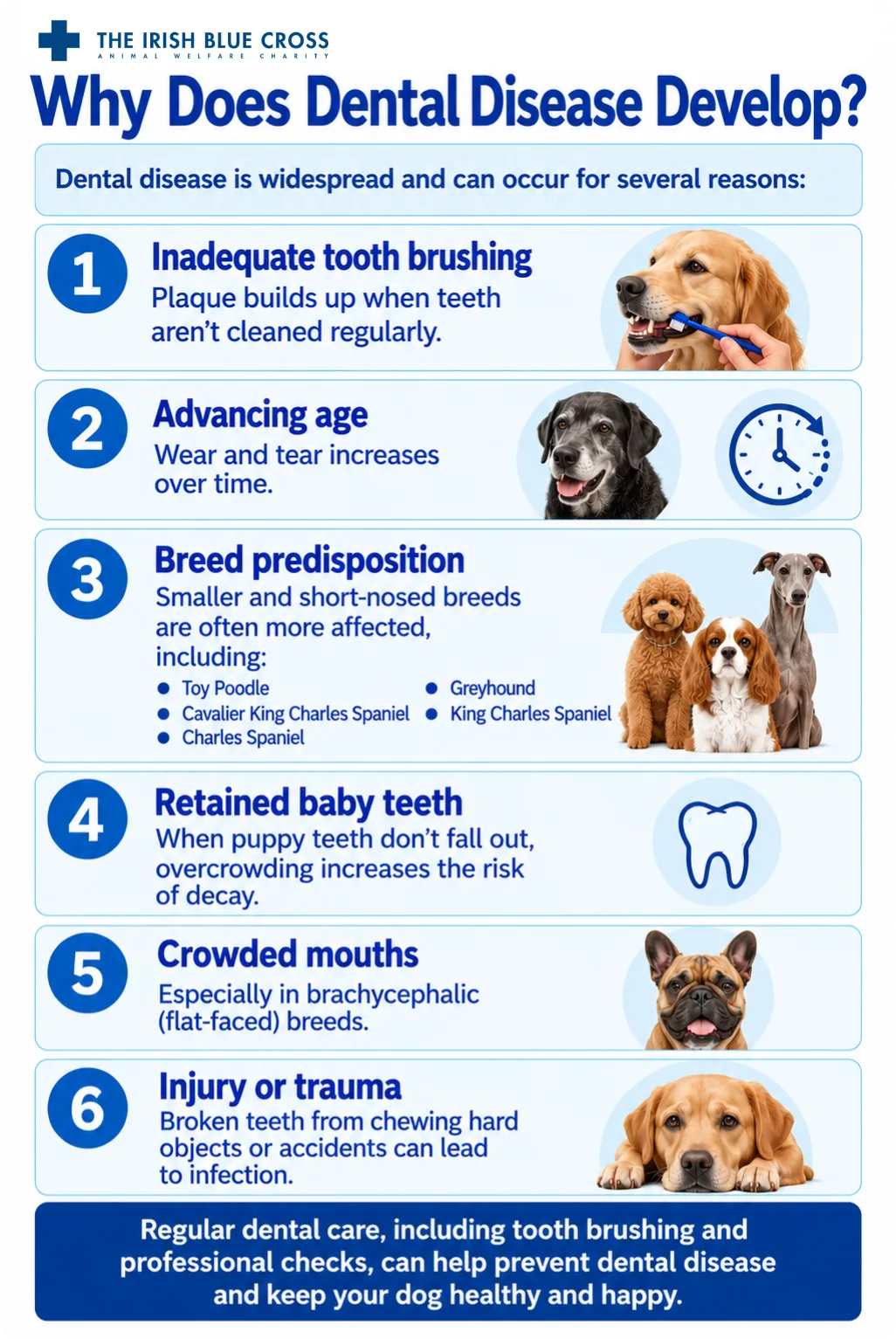
Although teeth are strong, they can fracture, particularly if weakened by disease or from chewing very hard items. As damaged teeth are painful and prone to infection, we do not recommend feeding bones or very hard chews due to the risk of slab fractures.
Treatment depends on the severity and type of dental problem.
This may involve:
It is often not possible to know exactly how many teeth require removal until a full examination is carried out under anaesthetic.
Anti-inflammatory medication is commonly prescribed to relieve discomfort.
Antibiotics are not routinely required for every dental procedure but may be used in certain cases of infection.
After treatment, your vet will advise on a prevention plan which is usually centred on regular tooth brushing.
Removing plaque before it hardens is the most effective protection against gum disease.
Brushing every day, or at least three times weekly, significantly reduces the need for repeated dentals under anaesthetic later in life.
An annual dental examination, often done alongside vaccination appointments, helps detect problems early.
Specially designed dental chews may help reduce plaque. Always supervise chewing and include treats within your dog’s daily calorie allowance, treats should not exceed 10% of their daily intake.
Dog-safe dental rinses added to drinking water or antibacterial gels may help reduce bacteria but always seek veterinary advice before using these products and never use human mouthwash.
Book an appointment if you suspect dental disease or notice any of the symptoms listed above.
Seek urgent veterinary care if your dog:
You know your dog best, so if something seems wrong, please have it checked.
Dental treatment can involve diagnostics, anaesthesia, surgery and follow-up care, so costs can vary significantly.
If you’re able to, consider pet insurance while your dog is young and healthy to help with unexpected illness or injury. If your dog becomes unwell, talk openly with your vet about the options, the likely costs, and what feels manageable for you. Together, you can tailor a plan that’s right for your dog and your situation.