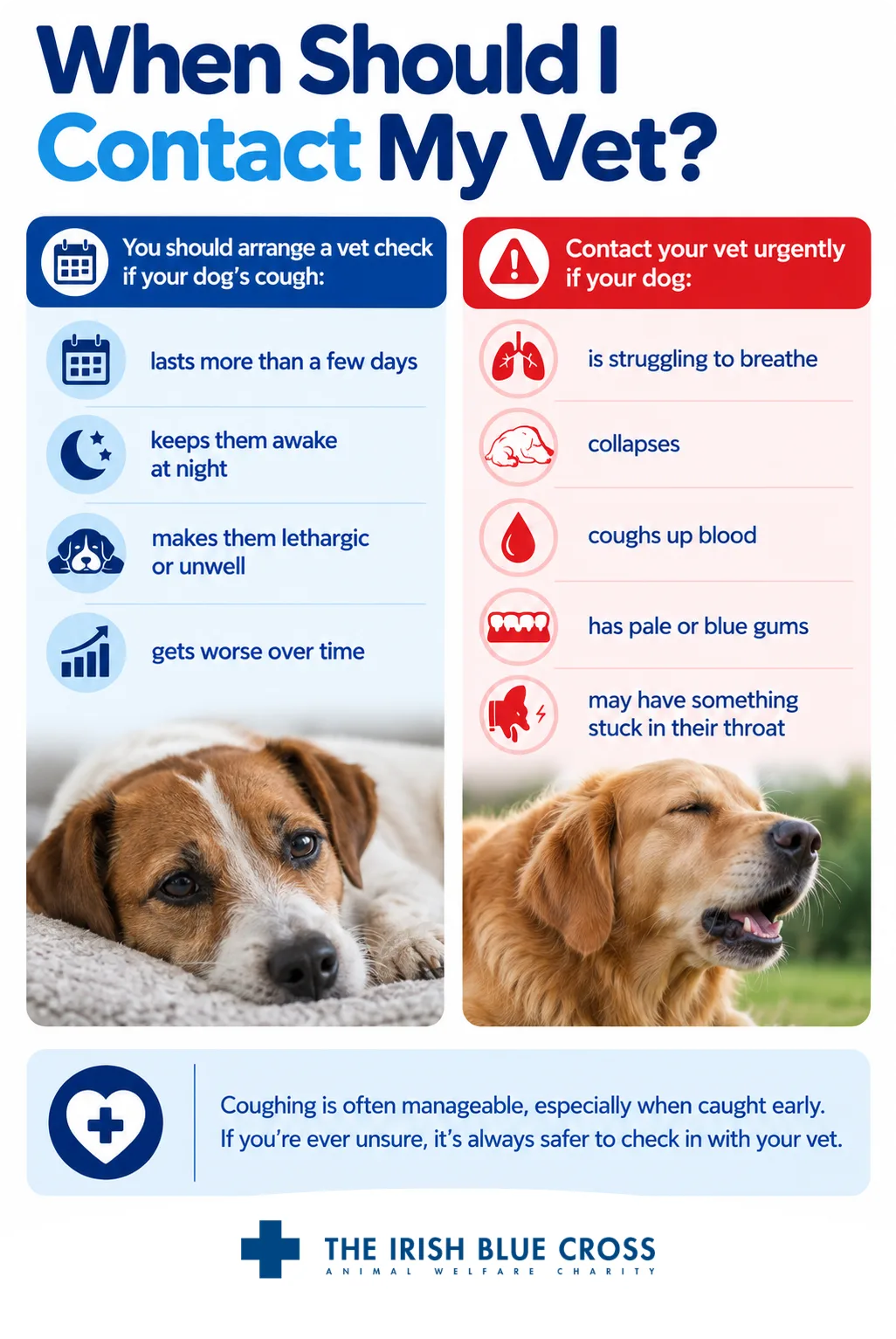
Dogs can cough for many different reasons, ranging from mild irritation to more serious underlying conditions. An occasional cough isn’t usually a cause for concern, but if your dog has been coughing regularly for more than a few days, or seems unwell alongside it, it’s best to contact your vet for advice.
If your dog is struggling to breathe, collapsing, or has a coughing fit they can’t stop, seek veterinary help immediately.
A dog’s cough often sounds like a human cough, but it can sometimes be confused with sneezing, gagging, or something called reverse sneezing. If you’re unsure what you’re hearing, try to take a short video of an episode. This can be extremely helpful for your vet when deciding what might be going on.
There are many possible causes of coughing in dogs. Some are minor and easy to manage, while others need prompt veterinary care.
One very common cause is pulling on the lead as pressure from a collar on the windpipe can trigger coughing. Switching to a harness and working on loose-lead training can often make a big difference.
Kennel cough is another frequent cause. This contagious respiratory infection typically causes a dry, hacking cough. Most dogs recover within two to three weeks and remain bright and active, but they should be kept away from other dogs while they’re infectious. If your dog seems unwell or isn’t improving, your vet may recommend treatment. Vaccines are available, so it’s worth discussing this with your vet.
Some dogs cough because of long-term airway conditions, such as chronic bronchitis. This causes ongoing inflammation and mucus build-up in the airways. It is more common in middle-aged to older dogs, particularly small breeds. Chronic bronchitis can’t be cured, but it can often be well managed with medication and avoiding irritants like smoke or aerosols.
Tracheal collapse is another condition seen mainly in toy and small breeds such as Yorkshire Terriers and Chihuahuas. It causes a distinctive dry, honking cough that often comes in bouts, especially during excitement, exercise, or hot weather. Treatment varies depending on the severity and can include medication or, in rare cases, surgery.
Coughing can also be linked to heart disease, especially if it worsens at night or when your dog is lying down. An enlarged heart or fluid build-up in the chest can irritate the windpipe and lungs. Dogs with heart disease may also tire easily, struggle to exercise, or breathe faster than normal.
In some cases, coughing is caused by irritants in the air, such as cigarette smoke, dust, sprays, or strong fragrances. If you smoke, please remember that your dog is being exposed too.
Other, less common causes include lungworm, infections, foreign objects lodged in the airway (such as grass seeds or sticks), cancer of the lungs or throat, and conditions affecting the voice box, such as laryngeal paralysis, most common in older large-breed dogs.
Flat-faced breeds like Pugs, French Bulldogs and Shih Tzus may cough due to BOAS (brachycephalic obstructive airway syndrome). Their shortened skull shape makes breathing more difficult and can lead to coughing, noisy breathing, gagging, and reduced tolerance to exercise or heat.
Your vet will start by asking questions about your dog’s cough, like how long it’s been happening, how often it occurs, and whether there are any other symptoms. They’ll examine your dog, listen to their heart and lungs, and check their temperature.
If needed, further tests may be recommended, such as blood tests, x-rays, heart scans, endoscopy, or sampling fluid from the airways. These tests help identify the underlying cause so the right treatment can be implemented.
Treatment depends entirely on what’s causing the cough. Some dogs may need anti-inflammatory medication, others may need antibiotics, heart medication, or parasite treatment. In many cases, managing the environment, such as avoiding smoke or using a harness, plays an important role alongside any prescribed medication.
Your vet will guide you on the most appropriate treatment plan for your dog.