

Also known as hypoadrenocorticism, Addison’s disease develops when the adrenal glands stop producing enough of two essential steroid hormones: cortisol and aldosterone.
These hormones play a crucial role in keeping the body functioning properly. Cortisol helps the body cope with stress, illness and inflammation, while aldosterone regulates fluid and salt balance. When levels of these hormones drop too low, the body begins to struggle.
In most dogs, Addison’s disease occurs because the immune system mistakenly attacks the adrenal glands, preventing them from working as they should. This makes Addison’s an immune-mediated condition. It is essentially the opposite of Cushing’s disease, where too much steroid hormone is produced.
Although any dog can develop Addison’s disease, it is seen more often in certain breeds and tends to appear in dogs between four and six years of age.
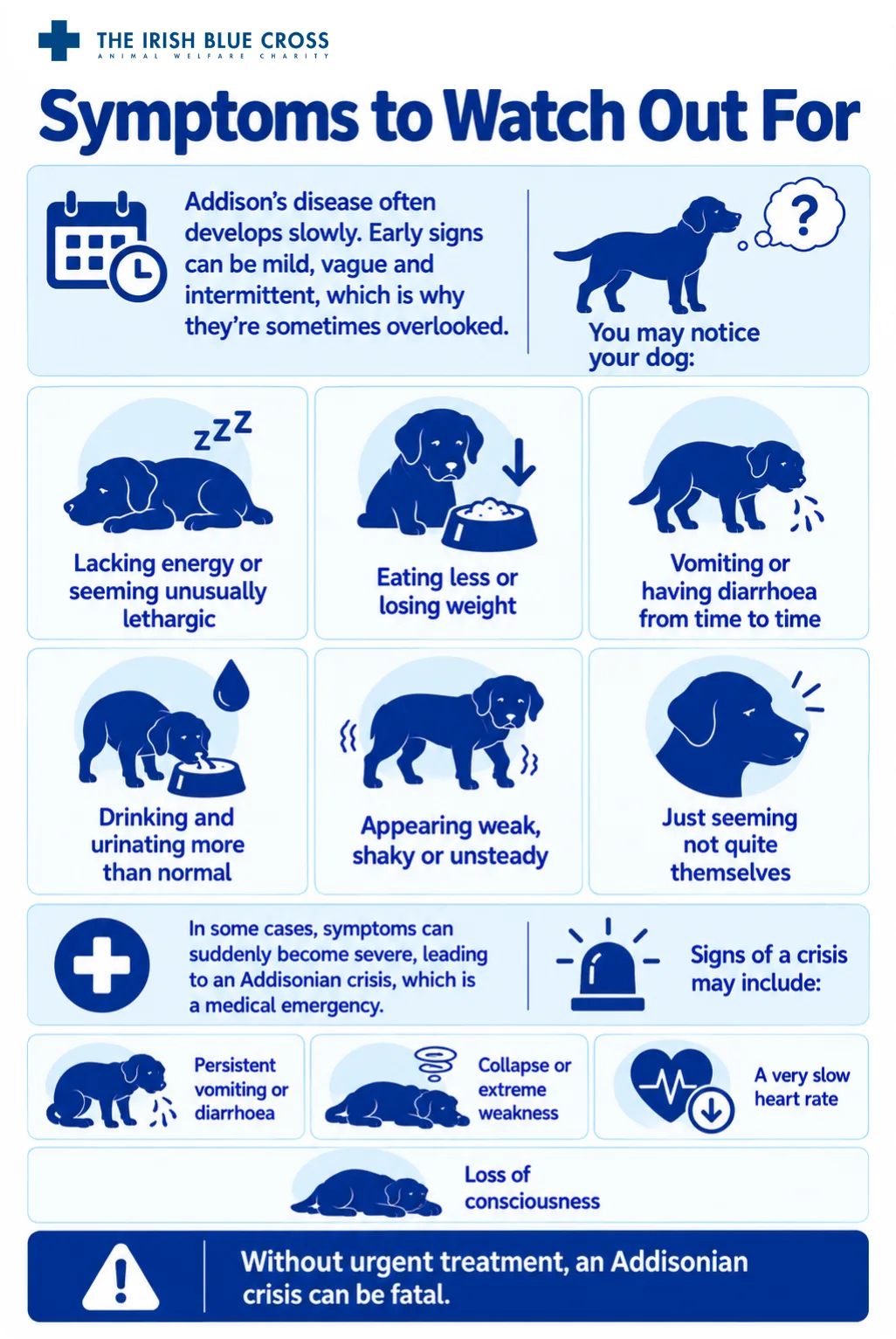
Because the signs of Addison’s disease can be subtle and inconsistent, it’s important to contact your vet if you notice ongoing or recurring changes in your dog’s health or behaviour.
If your dog shows signs of collapse, severe vomiting or diarrhoea, or appears critically unwell, seek veterinary help immediately. An Addisonian crisis is an emergency and needs urgent treatment.
If your vet suspects Addison’s disease, they will usually carry out a series of tests to confirm the diagnosis. These may include blood and urine tests, and sometimes an ECG or ultrasound scan.
Once diagnosed, Addison’s disease is managed with lifelong medication to replace the missing hormones.
Most dogs require:
It’s essential to give medication exactly as prescribed. Stopping or missing doses can cause symptoms to return and may lead to serious complications.
If a dog is experiencing an Addisonian crisis, they will need emergency care. This typically involves a fluid drip, intravenous steroids, and close monitoring until they are stable. Once stable, long-term treatment can begin.
Dogs with Addison’s disease need regular check-ups to make sure their treatment is working effectively. Your vet will examine your dog, discuss any changes you’ve noticed, and carry out blood tests from time to time to monitor hormone levels.
Regular monitoring helps keep your dog stable and reduces the risk of future crises.
Steroid hormones help the body cope with stress, so dogs with Addison’s disease can become unwell during stressful situations. Keeping life calm and predictable can make a big difference.
During unavoidable stressful periods, like fireworks, holidays, moving house or illness, your vet may advise temporarily adjusting medication. Never change your dog’s dose without speaking to your vet first.
The outlook for dogs with Addison’s disease is generally very positive once the condition is well controlled. Many dogs go on to live happy, active lives with the right treatment and monitoring.
The prognosis is less favourable if treatment is delayed, if the dog does not respond well to medication, or if an Addisonian crisis is not treated quickly.
Because Addison’s disease requires lifelong medication and regular veterinary care, treatment costs can add up over time.
If you’re able to, consider pet insurance while your dog is young and healthy to help with unexpected illness or injury. If your dog becomes unwell, talk openly with your vet about the options, the likely costs, and what feels manageable for you. Together, you can tailor a plan that’s right for your dog and your situation.