
Pet Loss Support Helpline – call 1800 83 99 54 for support and guidance, or find out more.

Is My Dog Overweight?

Excess weight is one of the most common health problems affecting dogs today. Veterinary teams estimate that close to half of dogs are heavier than they should be. Carrying extra weight doesn’t just affect appearance, it can shorten a dog’s life and increase the risk of serious and expensive illness.

Understanding what a healthy body shape looks like for your dog is essential. With the right balance of nutrition, exercise and regular monitoring, you can help your dog stay fit and well throughout their life.

If you are unsure about your dog’s weight, your local vet practice can offer guidance and support.
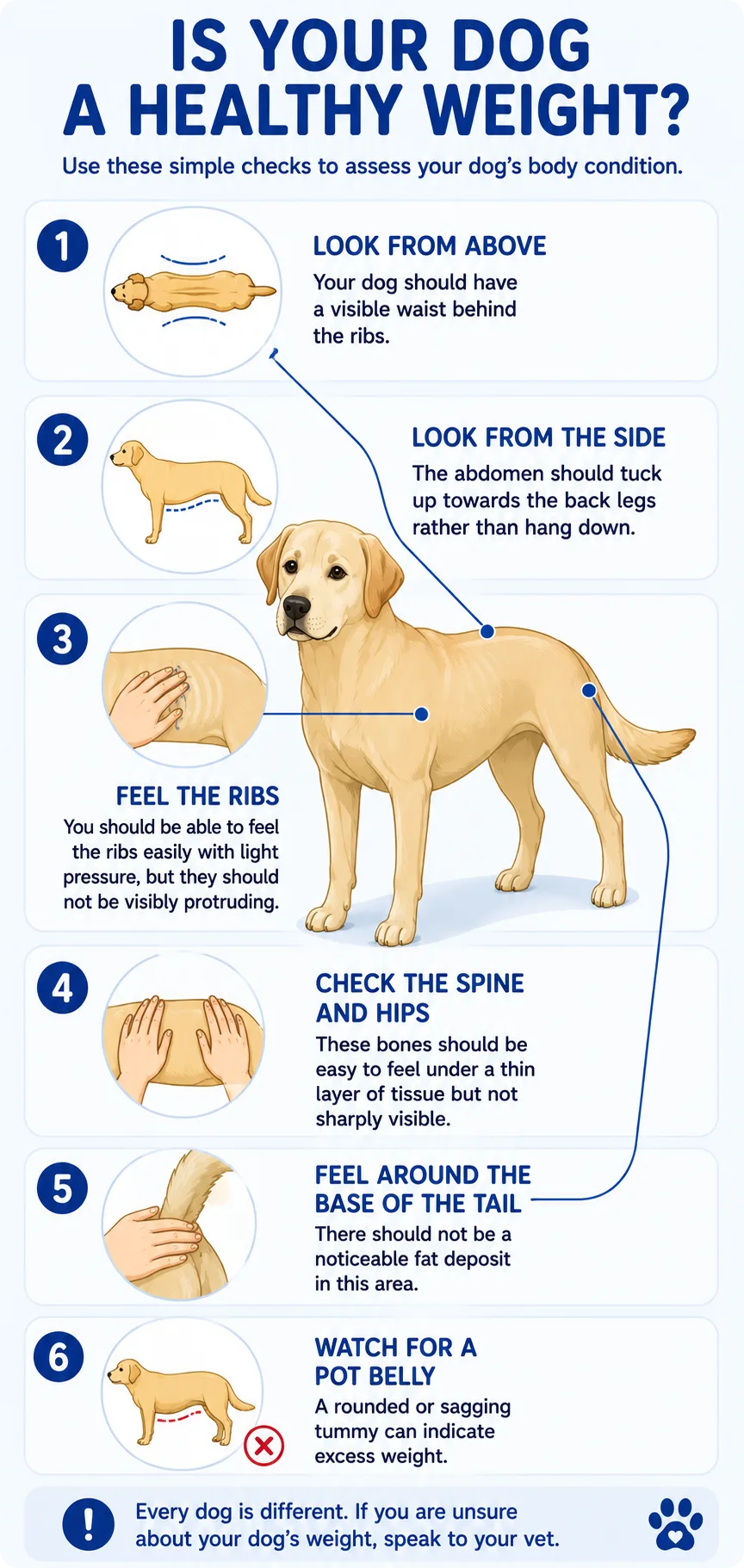
Is My Dog Overweight? As dogs vary greatly in size and breed, a number on the scales doesn’t tell the whole story. Assessing your dog’s body shape, known as Body Condition Scoring (BCS), is one of the most reliable ways to check whether they are at a healthy weight. How to check your dog’s body condition: Look from above: Your dog should have a visible waist behind the ribs. Look from the side: The abdomen should tuck up towards the back legs rather than hang down. Feel the ribs: You should be able to feel the ribs easily with light pressure (think of velvet over a banister), but they should not be visibly protruding. Check the spine and hips: These bones should be easy to feel under a thin layer of tissue but not sharply visible. Feel around the base of the tail: There should not be a noticeable fat deposit in this area. Watch for a pot belly: A rounded or sagging tummy can indicate excess weight. Regularly weighing your dog, either at home or at your veterinary practice, can also help you track changes over time.

Why is My Dog Overweight?

Diet and Exercise Imbalance

The most common cause of weight gain is simply your dog consuming more calories than they burn. Overfeeding, too many treats, table scraps, and insufficient exercise all contribute.

Dogs are natural scavengers and may continue eating even when they do not need more food. Many quickly learn to beg effectively, making portion control challenging.

Medical Conditions

Although less common, certain illnesses can lead to weight gain. Conditions such as hypothyroidism and Cushing’s disease may cause changes in appetite, energy levels, thirst, and coat quality. If your dog is gaining weight unexpectedly or showing other symptoms, please consult your vet.

Medications

Some treatments, including steroid medications, may increase appetite and contribute to weight gain.

Neutering

While neutering itself does not directly cause obesity, hormonal changes after neutering can slow metabolism and increase appetite. Many neutered dogs require fewer calories, so adjusting their diet is important.

Health Risks Linked to Obesity

Excess weight places strain on nearly every system in the body. Overweight dogs are more likely to develop:

  • Arthritis and joint pain
  • Cruciate ligament injuries
  • Back problems, including disc disease
  • Diabetes
  • Urinary incontinence
  • Breathing difficulties, especially in flat-faced breeds
  • Heart disease
  • Certain cancers
  • Heatstroke
  • Complications during anaesthesia
  • Reduced life expectancy

Maintaining a healthy weight can significantly improves quality of life and longevity.
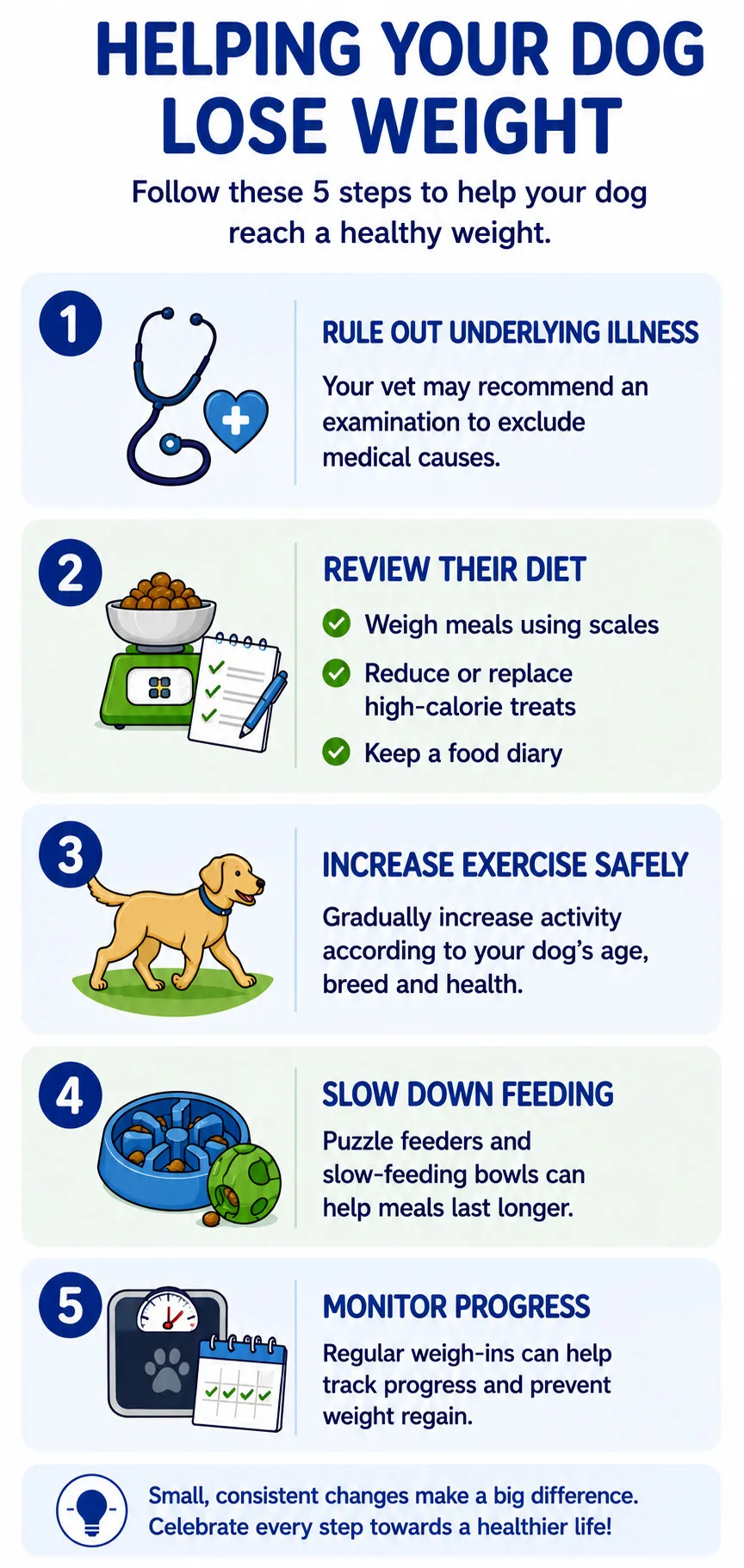
Helping Your Dog Lose Weight Weight loss should always be tailored to the individual dog. Your vet or veterinary nurse can design a safe and effective plan. Rule Out Underlying Illness Before starting a weight-loss programme, your vet may recommend an examination to exclude medical causes. Review their Diet Switch to a veterinary-recommended weight management food if advised. Carefully weigh all meals using scales – we do not recommend using measuring cups as they are not exact for uneven items like food kibbles and can cause weight gain. Reduce or replace high calorie treats with healthier options. Consider food designed specifically for neutered dogs if appropriate. Keeping a food diary can help identify hidden calories. Weight management diets are formulated to reduce calories while maintaining proper nutrition and helping your dog feel satisfied. Increase Exercise Safely Physical activity is essential, but it should match your dog’s age, breed and health status. Gradually increasing walk length, incorporating play, and providing mental stimulation can all help burn calories. Slow Down Feeding Using puzzle feeders or slow-feeding bowls can make meals last longer and improve satiety. However, you need to ensure your dog does not get frustrated, so it can be useful to scatter some kibble on the floor, as well as using a slow feeder and preferable to use puzzle feeders for their evening meal when they are less likely to be as hungry as their breakfast meal. Monitor Progress Regular weigh-ins improve success rates. Many veterinary clinics offer weight-check services and if not, you can simply bring your dog to your local veterinary practice and weigh them yourself and keep track. Please continue monitoring even after your dog reaches their target weight to prevent regain.

When to Contact Your Vet

Speak to your vet if:

  • You are unsure whether your dog is overweight
  • Your dog is gaining weight despite controlled feeding
  • You are struggling to help your dog lose weight
  • Your dog shows additional symptoms such as lethargy, increased thirst, or coat changes

Weight management can be challenging, and professional support makes a significant difference.

Cost Considerations

Dogs carrying excess weight are more prone to developing medical conditions, which may result in increased veterinary expenses over time.

If you’re able to, consider pet insurance while your dog is young and healthy to help with unexpected illness or injury. If your dog becomes unwell, talk openly with your vet about the options, the likely costs, and what feels manageable for you. Together, you can tailor a plan that’s right for your dog and your situation.


Are neutered dogs more likely to gain weight?

Neutering changes hormone levels, which can increase appetite and reduce metabolic rate. Without adjusting calorie intake, weight gain may occur, however feeding appropriate portions and choosing suitable diets can prevent this.

Are certain breeds more prone to weight gain?

Some breeds, including Labradors and other food-motivated dogs, may be more inclined to overeat. However, any dog can become overweight if their calorie intake exceeds their energy use.

Summary

Keeping your dog at a healthy weight is one of the most important steps you can take to support a long, active and happy life. If you have concerns, your veterinary team is there to help.

Share

Share: