

Bringing a new kitten home is an exciting time. Providing the right food in the right way will help them grow into a healthy adult cat.
Always ask the rehoming centre or breeder what food your kitten has been eating.
When your kitten first arrives home, continue feeding the same diet as a sudden change of food, combined with the stress of moving to a new environment, can cause stomach upsets and diarrhoea.
Unlike people, kittens do not get bored of eating the same food every day, so there is no need to frequently change their diet.
If you do wish to change their food, introduce it gradually over several days by mixing increasing amounts of the new food with their current diet.
Regular weighing is one of the best ways to monitor your kitten’s growth.
Consistent weight gain is a good sign that your kitten is developing properly and receiving the right amount of food. If weight gain slows or increases too quickly, you may need to adjust portions in consultation with your vet.
The simplest way to ensure a balanced diet is to feed a premium complete kitten food.
These foods are specially formulated to meet the higher nutritional needs of growing kittens. They contain the correct balance of:
Kitten food is available in dry and wet varieties.
Kittens should be fed kitten-specific food until they are around 12 months old.
Although your kitten may start to look like an adult between six and twelve months of age, they are still growing during this time.
Kittens are considered fully grown at around 12 months old. At this stage, you can gradually transition them onto a complete adult cat food over several days.
By eight weeks of age, kittens no longer need their mother’s milk.
Never give cow’s milk to kittens or adult cats, as it can cause diarrhoea.
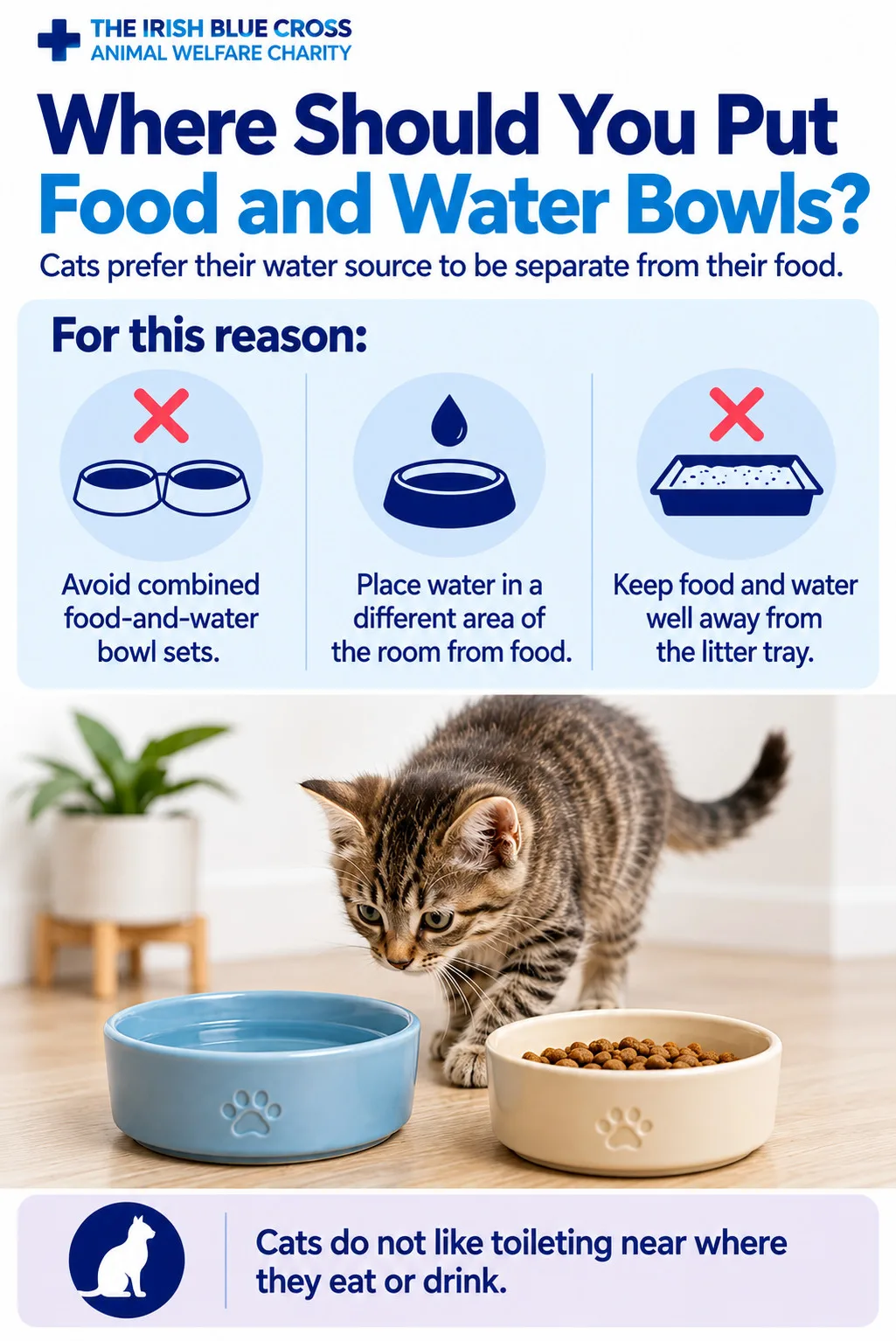
Fresh, clean drinking water should be available at all times.
Most kittens begin eating solid food at around three weeks old. At first, this should be soft, easy-to-digest food and will still be supplemented by their mother’s milk.
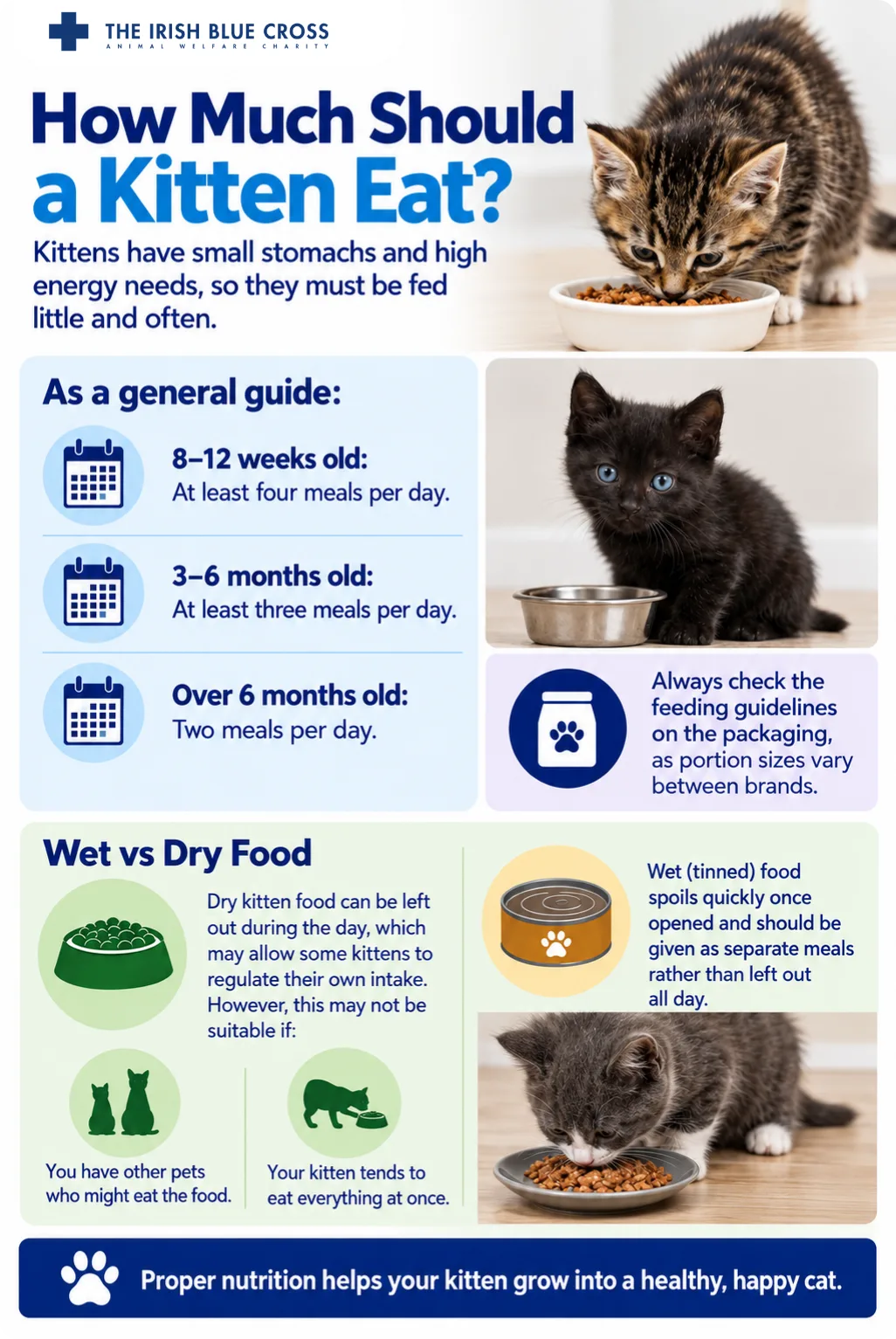
Young kittens require frequent small meals to maintain stable energy levels.
By the time they are ready to go to their new home (usually between eight and twelve weeks), they should be fully weaned and eating solid kitten food.
Over time, many kittens can move to two meals per day by six months of age. However, some cats prefer to graze, eating small amounts throughout the day.
Whichever method you choose, monitor your kitten’s weight and body condition to ensure they are growing steadily and maintaining a healthy shape.
Feeding the correct food in the right amounts during your kitten’s first year is vital for healthy growth and development.
If you are ever unsure about your kitten’s diet, growth or feeding routine, please speak to your vet or veterinary nurse for advice.