

Cats need a combination of a balanced diet and regular exercise to stay healthy and maintain a good body condition throughout life.
Once your cat reaches adulthood (around 12 months of age), you can transition them from a kitten growth diet to a complete adult cat food.
Cats are obligate carnivores. This means they must eat meat to obtain essential nutrients such as taurine and arginine. Without these nutrients, they are at risk of serious health problems including heart disease and blindness.
Most commercial “complete” cat foods contain all the nutrients your cat needs.
When choosing a food, look for:
• ‘Complete’ on the label (not ‘complementary’)
• A commercially prepared diet
• A life-stage appropriate formula (adult, senior, etc.)
A cat’s nutritional needs change with age.
Kitten (0–12 months) – Require a high-energy, growth-formulated diet.
Adult (1–10 years) – Require maintenance food appropriate to lifestyle (e.g. indoor, neutered, weight control).
Senior (11+ years) – May benefit from senior-specific diets formulated to support kidney health, muscle maintenance and changing metabolism.
Monitor older cats carefully, as changes in appetite or thirst can signal health issues such as kidney disease or diabetes.
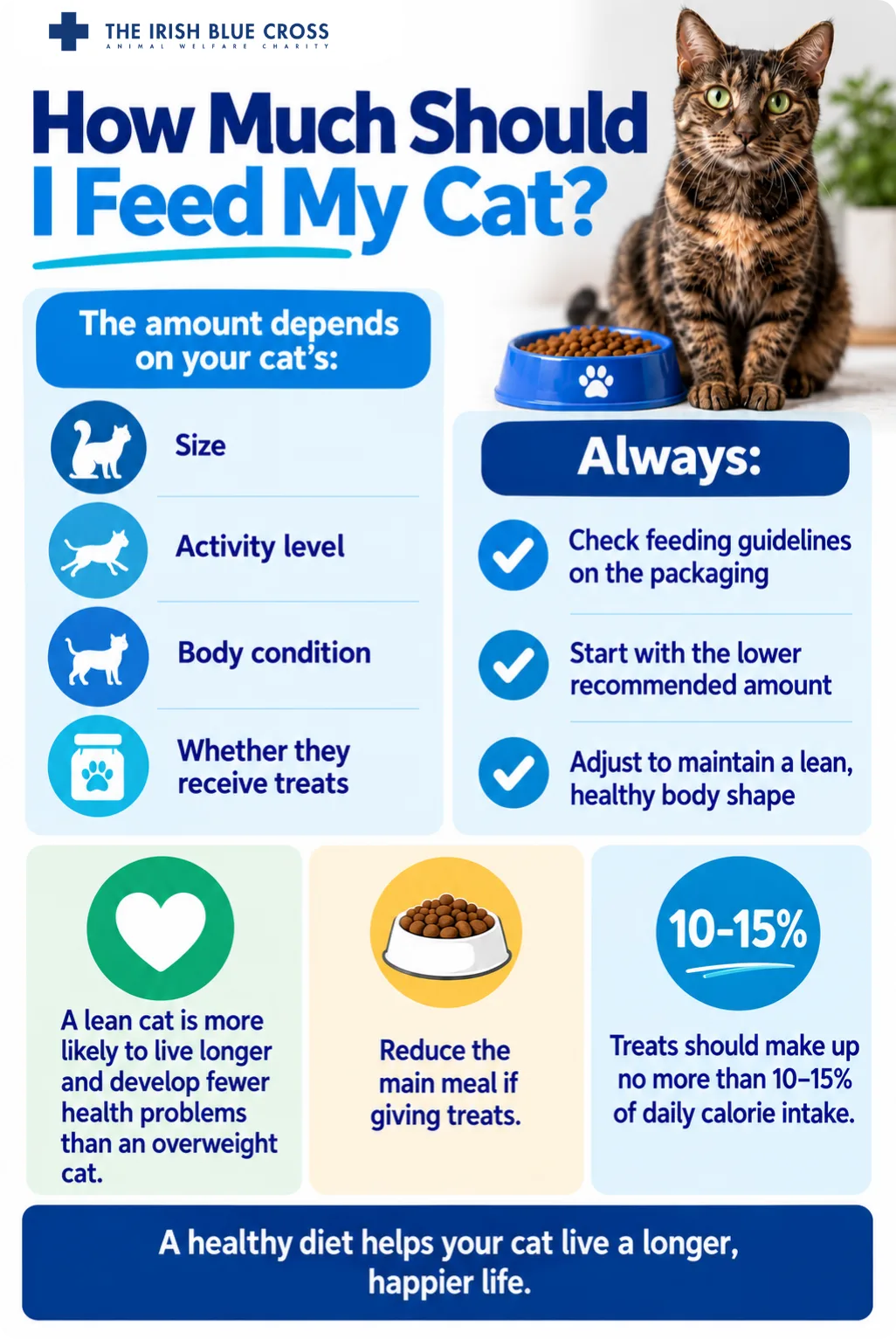
Many cats prefer to graze throughout the day.
Some regulate their intake well, while others may overeat. If your cat gains weight, measure their daily portion rather than free feeding.
If your cat eats their full allowance quickly and begs for more, divide their daily portion into two meals.
A balanced, complete diet tailored to your cat’s life stage, combined with regular weight checks and exercise — is the foundation of lifelong health.
If you are unsure about what or how much to feed your cat, speak to your vet or veterinary nurse for personalised advice.