
Cats love to sleep, in fact, most cats snooze for around 15 hours a day (and sometimes even more!). But regular exercise is still essential for their physical and mental wellbeing.
Staying active helps reduce the risk of:
Play and movement also allow cats to express natural hunting behaviours, keeping them happier and more relaxed. Best of all, interactive play is a wonderful way to strengthen your bond.
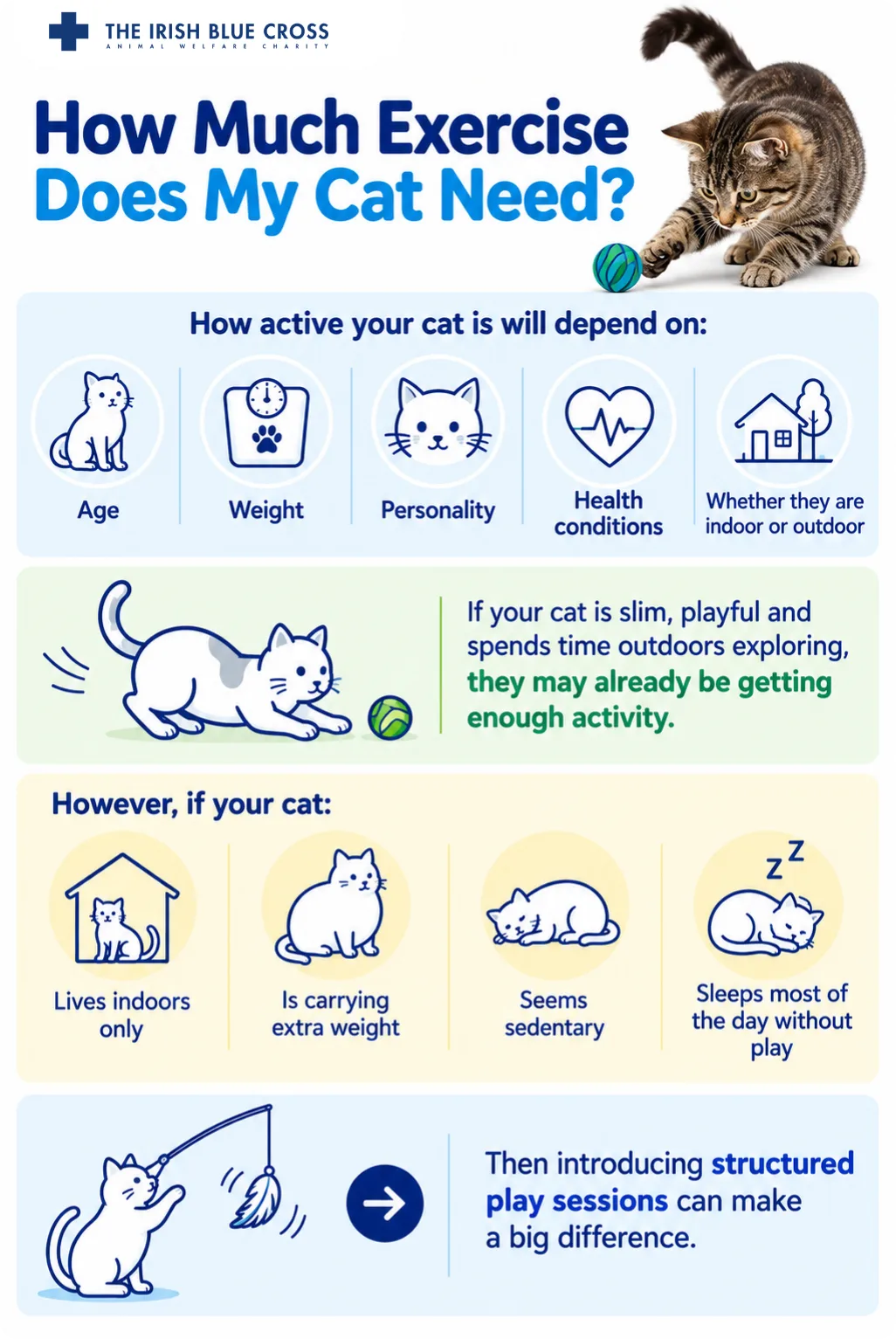
Aim for two 15–20 minute play sessions per day which you can gradually increase as your cat becomes fitter.
Keep sessions short and always allow rest breaks. Never force your cat to play.
In the wild, cats get most of their exercise from hunting. We can recreate this by encouraging chasing and pouncing games at home.
Indoor-only cats need extra encouragement to stay active, as they miss out on outdoor exploration.
Without stimulation, boredom can lead to:
Indoor cats benefit from multiple scratchers in different materials:
If possible, consider:

Cats with outdoor access typically get more natural exercise through exploring and hunting.
However, indoor play remains important for:
Even outdoor cats benefit from daily interaction.
Kittens are naturally energetic and need frequent play to:
Short, frequent play sessions throughout the day are ideal.
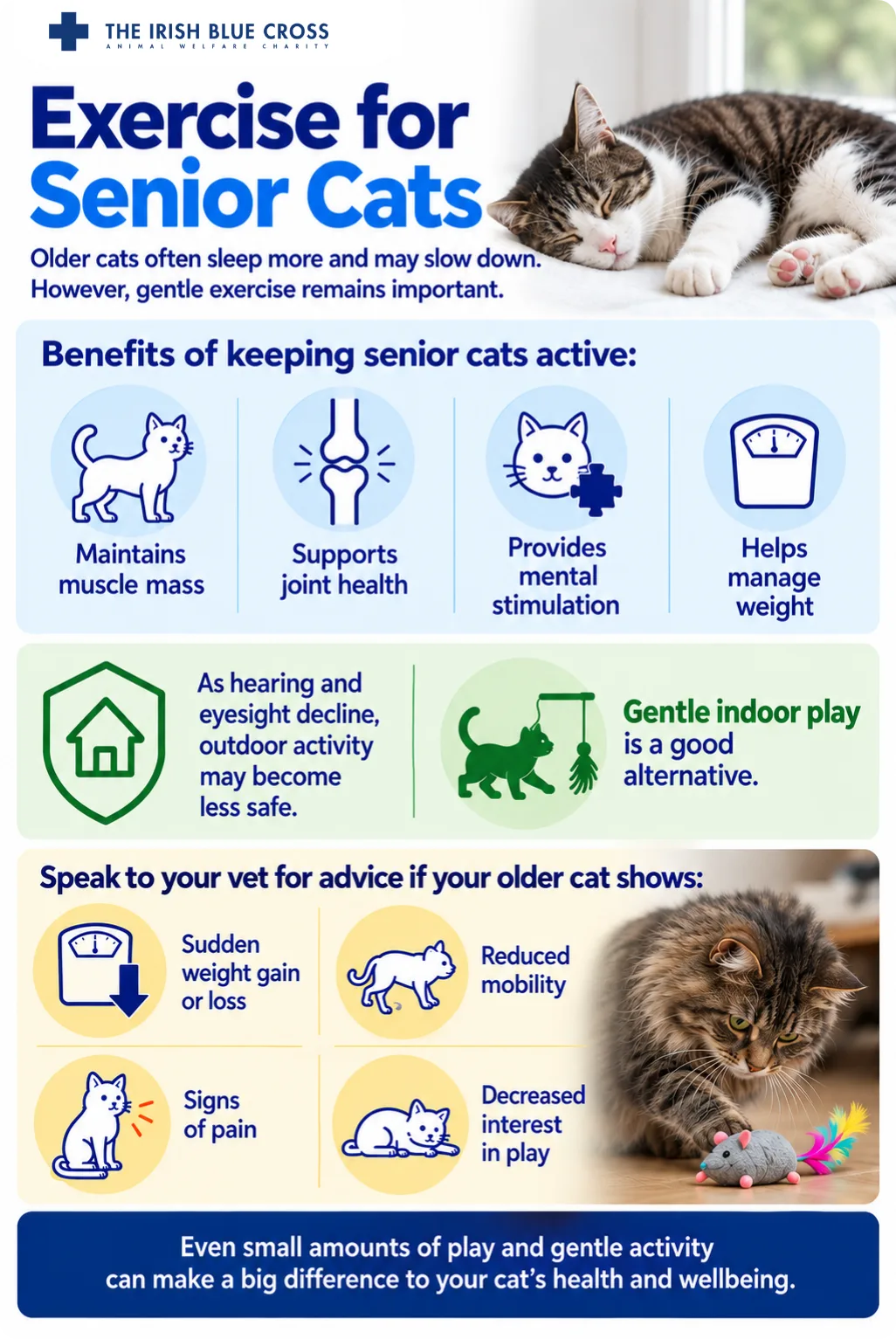
All cats, young or old, indoor or outdoor, need regular opportunities to move, play and explore.
Exercise helps keep your cat:
A few short play sessions each day can significantly improve your cat’s health and strengthen the bond you share.
If you’re ever unsure about your cat’s weight, activity levels or mobility, contact your vet for guidance.