

Bringing a puppy home is an exciting time, and getting their nutrition right from the start is essential for healthy growth and development.
Ask the breeder or rescue centre what brand and type of food your puppy is currently eating. By eight weeks of age, puppies should be fully weaned from their mother and eating solid food.
A responsible breeder or rescue organisation should provide a small supply of your puppy’s current food to help with the transition home. If a puppy has not been properly weaned onto solid food by this age, this is a serious welfare concern.
You can choose to continue feeding the same food or change to a different puppy food, once your puppy has settled in.
If you decide to switch foods, do so very gradually over 7–10 days to avoid digestive upset.
If switching from wet to dry food, you may notice your puppy drinks more water, this is normal. Fresh, clean water should always be available.
There are many options available in pet shops, supermarkets and veterinary clinics. Look for a food labelled ‘complete’, as this means it contains all the nutrients your puppy needs and does not require additional supplementation.
It’s important to choose a food suitable for your puppy’s age and expected size when fully grown so: toy, small, medium, large or giant.
Puppies have different nutritional needs to adult dogs. In most cases, they should stay on puppy food until around 12 months of age, or as advised by your vet. Large and giant breeds may need puppy food for longer.
A consistent feeding routine helps puppies feel secure and helps the toilet training process.
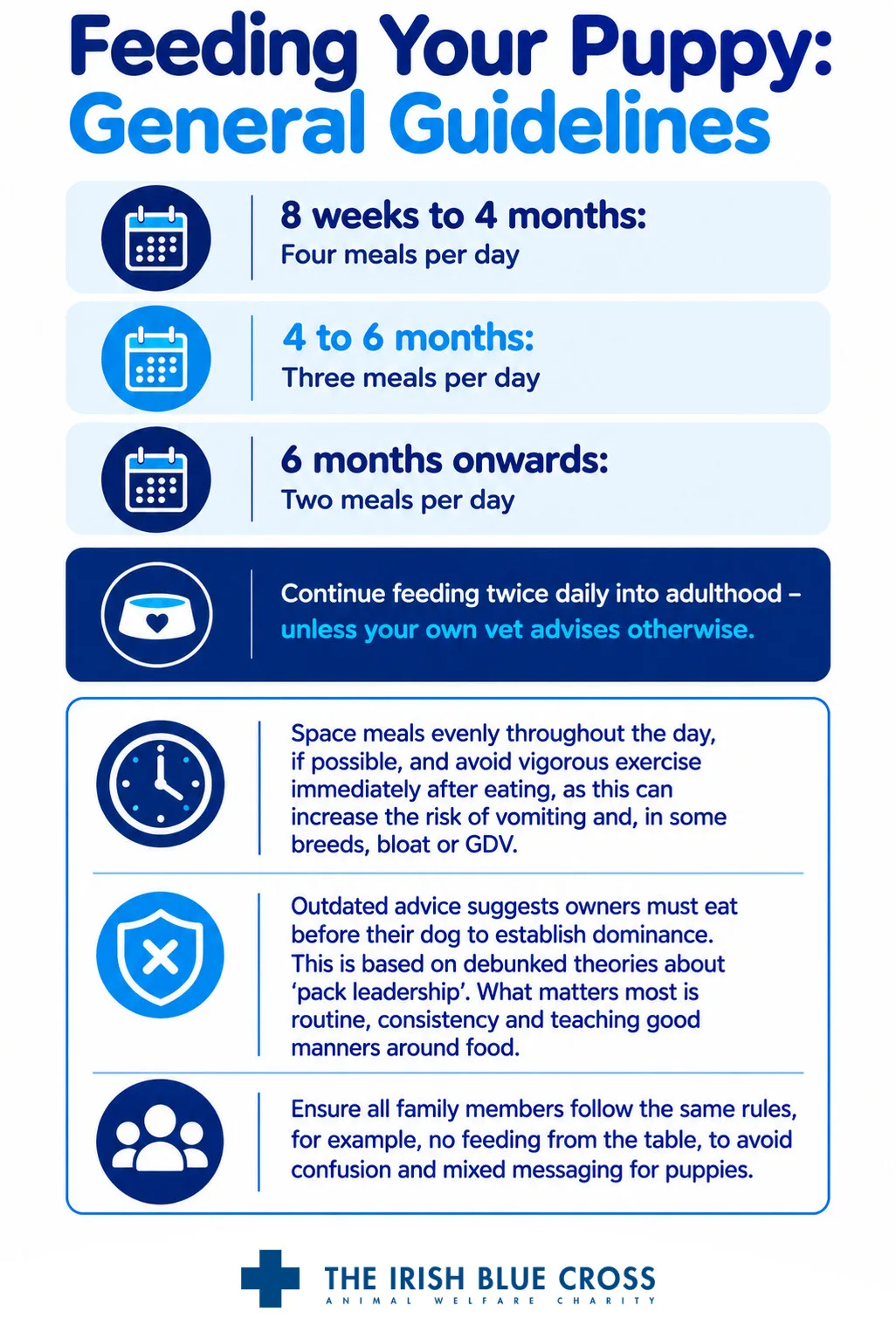
Choose a quiet, low-distraction area where your puppy can eat undisturbed. If you have other pets, feed them separately until everyone is settled and unlikely to steal from one another.
Some puppies eat very fast, which can increase the risk of digestive upset and, in large or giant breeds, a serious condition called bloat. Bloat is life-threatening and requires immediate veterinary attention.
To slow down a fast eater:
Start with simple enrichment toys and progress gradually. If a puzzle is too difficult, your puppy may become frustrated.
Using food toys or activity feeders can:
Choose feeders suitable for your puppy’s developmental stage. Simple designs are best for beginners.
Excess weight is a growing problem in dogs. Overweight puppies are more likely to become overweight adults, increasing the risk of:
Managing portion sizes and providing appropriate exercise for your puppy’s age are key to prevention.
Many owners do not realise their dog is overweight, but you can assess your puppy’s body condition at home:
Your puppy should have a visible waist, creating a gentle ‘hourglass’ shape behind the ribs.
You should be able to feel the ribs easily under a thin layer of fat.
While ideal shape varies between breeds, a general guide is:
Sighthounds are naturally lean, whereas flat-faced breeds (such as bulldogs and pugs) have different body shapes but are at increased risk from obesity, due to breathing challenges.
If you are unsure about your puppy’s weight, your veterinary team can help. Many practices offer weight clinics and nutritional advice.
Establishing good feeding habits early will support your puppy’s growth, behaviour and long-term health. Provide a complete puppy diet, maintain a consistent routine, monitor body condition regularly and seek veterinary advice if you have concerns.
Healthy feeding today helps lays a solid foundation for a lifetime of wellbeing.