Pet Loss Support Helpline – call 1800 83 99 54 for support and guidance, or find out more.

Vomiting & Diarrhoea in Cats

Vomiting is a common problem in cats and can happen for many different reasons. Some causes are mild and short-lived, while others can be more serious and need veterinary attention.

An occasional episode of vomiting does not always mean your cat is seriously ill. However, it is very important to monitor your cat closely and seek veterinary advice if vomiting continues, becomes frequent, or is accompanied by other signs of illness.
Common Causes of Vomiting in Cats

  • Mild stomach upset (gastritis)
  • Hairballs
  • Worms or other gut parasites
  • Eating something unusual
  • Sudden change in diet
  • Travel-related nausea

Less common but more serious causes

  • Pancreatitis (inflammation of the pancreas)
  • Food intolerance or allergy
  • Inflammatory bowel disease
  • Kidney disease
  • Liver disease
  • Hyperthyroidism (especially in older cats)
  • Diabetes
  • Intestinal blockage
  • Reaction to medication
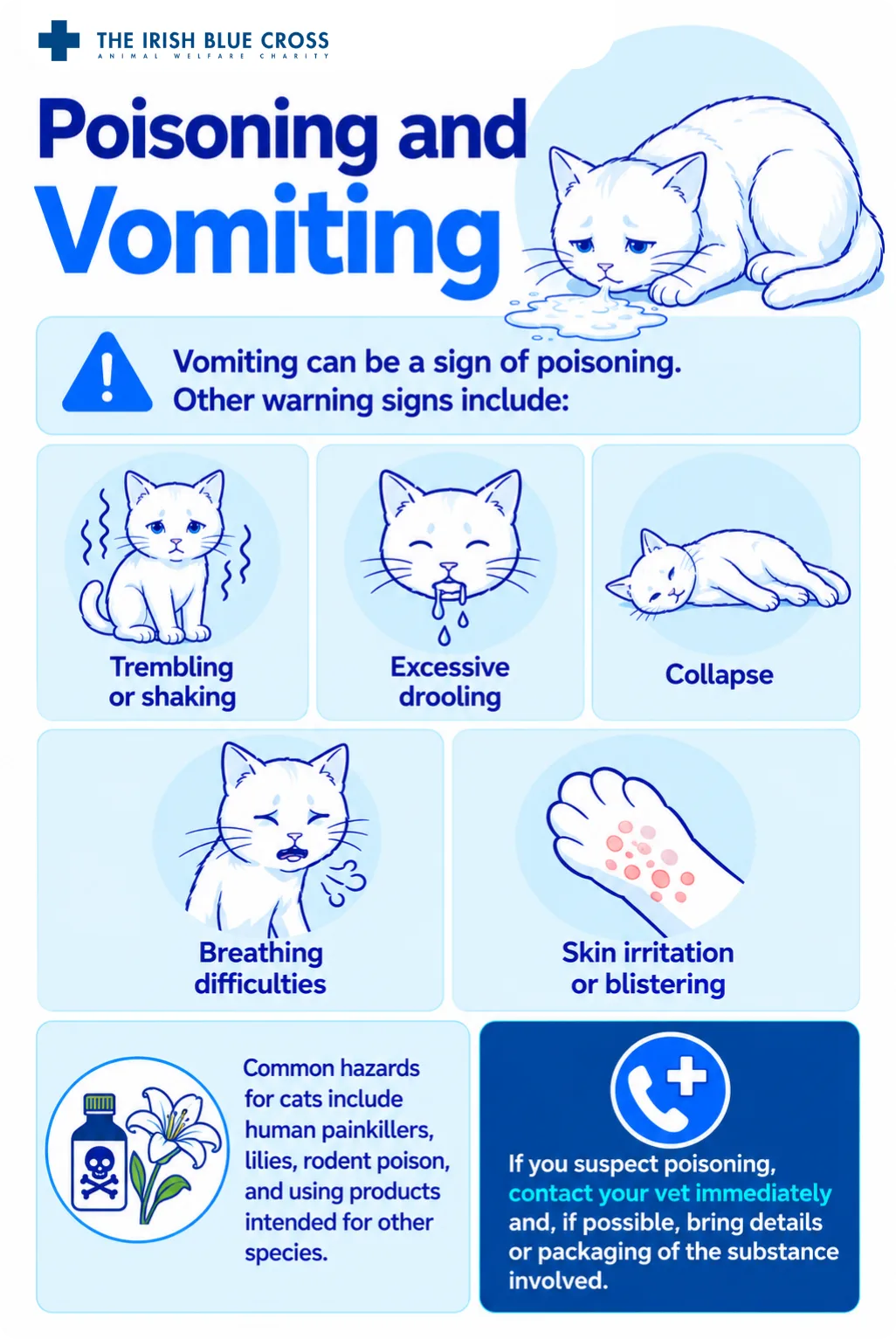
  • Exposure to toxins or poisons

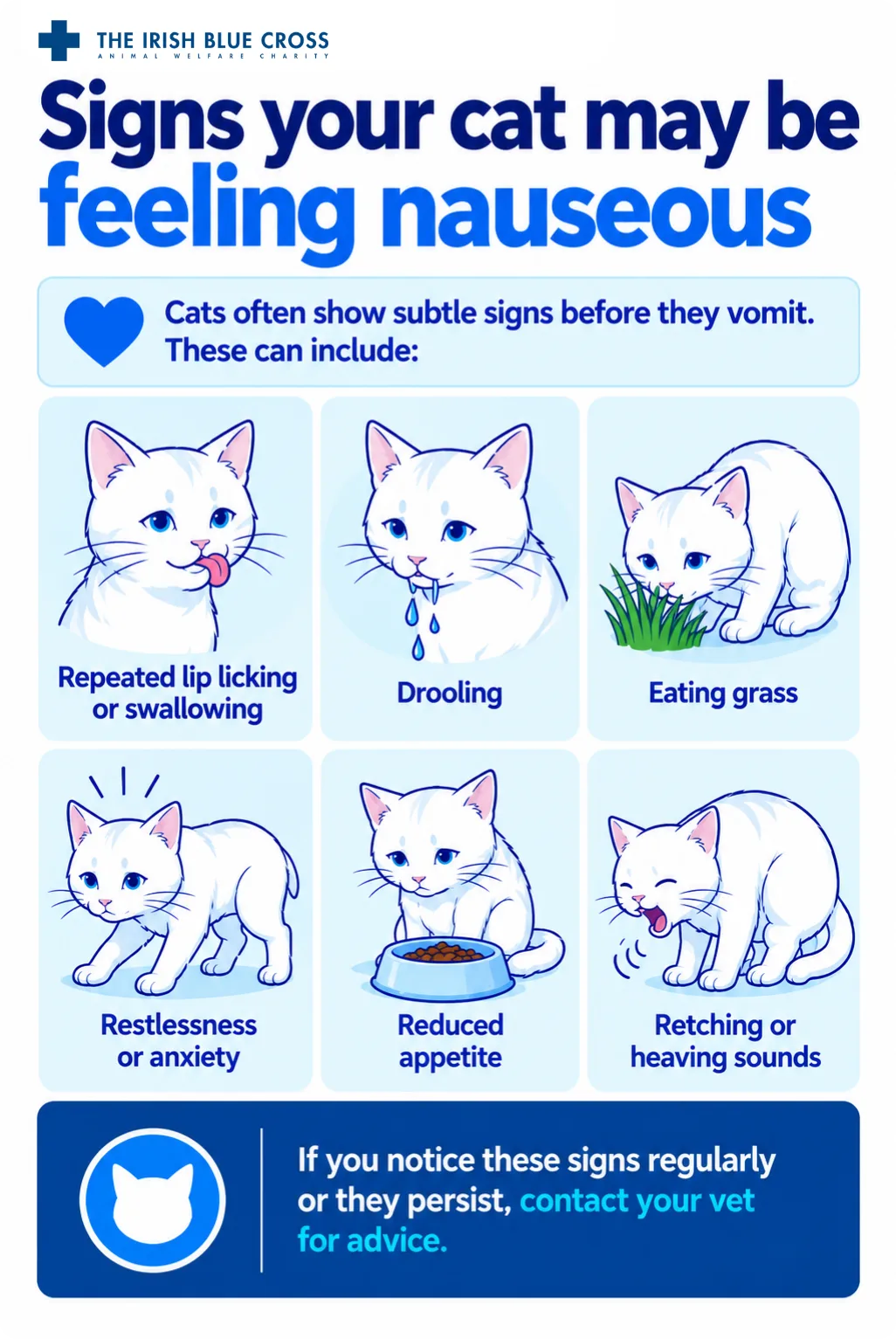
Signs Your Cat May be Feeling Nauseous Cats often show subtle signs before they vomit. These can include: • Repeated lip licking or swallowing • Drooling • Eating grass • Restlessness or anxiety • Reduced appetite • Retching or heaving sounds

Vomiting, Regurgitation or Coughing?

Vomiting usually follows nausea and involves active retching. The material may be partially digested and can contain bile.

Regurgitation is passive, happens suddenly, and typically involves undigested food without retching.

Coughing can look similar, but cats usually crouch with their neck stretched forward when coughing.

If you are unsure which you are seeing, your vet can help clarify.

Diarrhoea and Vomiting Together

Vomiting and diarrhoea often occur together and may indicate irritation or inflammation of the digestive system. Mild cases may resolve on their own, but prolonged or severe symptoms can quickly lead to dehydration, especially in kittens and older cats.

Signs of diarrhoea include:
  • Loose or watery stools
  • Soiling around the back end
  • Excessive grooming of the bottom
  • Lethargy
  • Bloating or gurgling stomach sounds

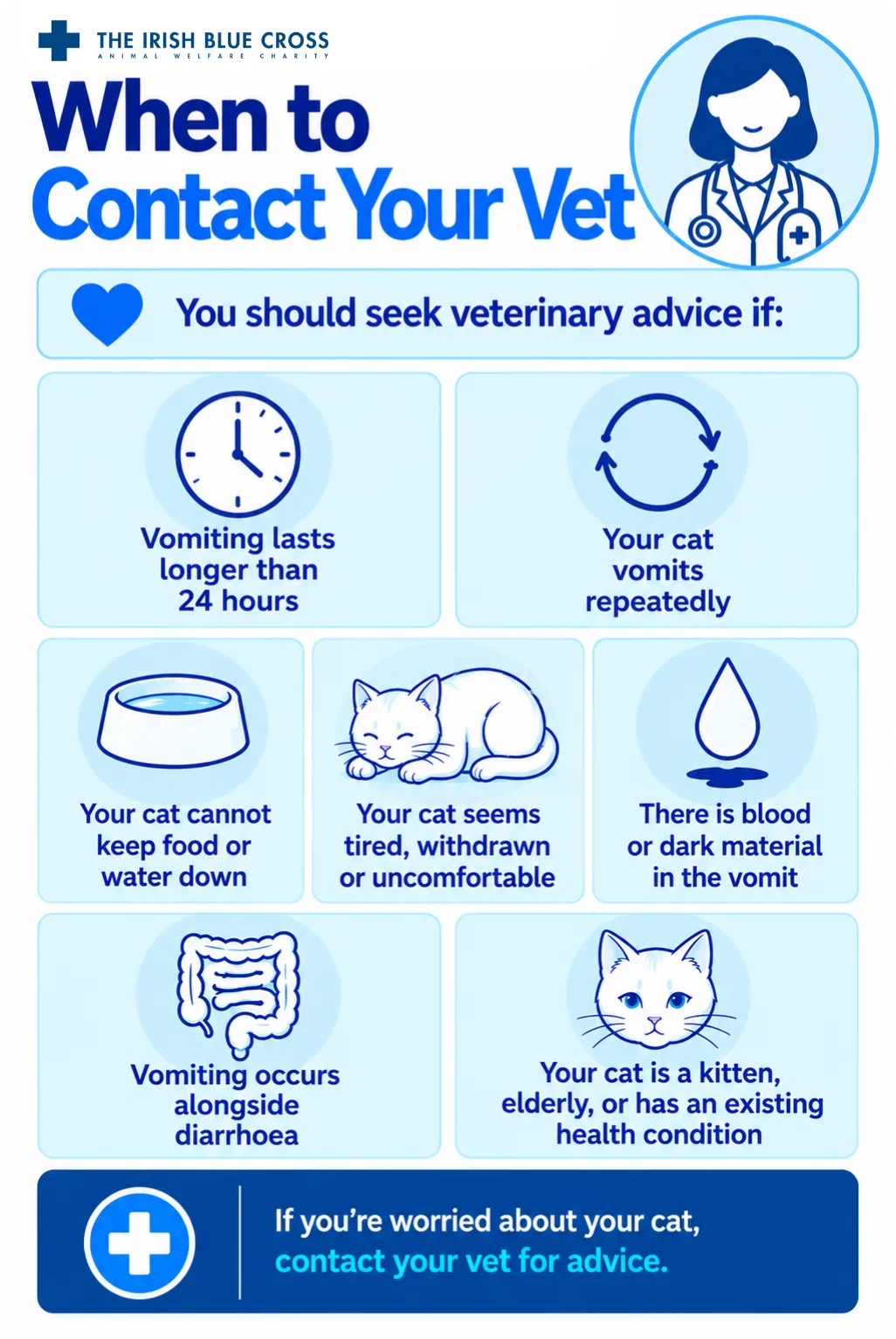
When to contact your vet You should seek veterinary advice if: • Vomiting lasts longer than 24 hours • Your cat vomits repeatedly • Your cat cannot keep food or water down • Your cat seems tired, withdrawn or uncomfortable • There is blood or dark material in the vomit • Vomiting occurs alongside diarrhoea • Your cat is a kitten, elderly, or has an existing health condition

Seek Urgent Veterinary Care if Your Cat:

  • Is very lethargic or weak
  • Has pale gums
  • Has a painful or swollen abdomen
  • Is drinking or urinating much more than usual
  • May have eaten something toxic

Caring For a Cat Who Has Vomited

If your cat has vomited once but is otherwise bright and alert:

  • Ensure constant access to fresh water
  • Miss one meal, then offer small amounts of bland food
  • Gradually return to their normal diet over 24–48 hours

Kittens should not skip meals; if a kitten is vomiting, contact your vet promptly.

Always monitor your cat closely and seek veterinary advice if vomiting continues or worsens.

Veterinary Assessment and Treatment

If your cat needs to see a vet, they may:

  • Take a full history
  • Perform a physical examination
  • Recommend tests such as blood work, stool analysis, X-rays or ultrasound

Treatment depends on the underlying cause and may include:

  • Anti-sickness medication
  • Pain relief
  • Fluids to prevent dehydration
  • A specific diet or probiotics

Summary

Vomiting is common in cats but should never be ignored if it persists or is accompanied by other signs of illness. Early veterinary advice can help prevent complications and ensure your cat gets the care they need.

If you are ever unsure, it is always best to contact your vet for guidance.


Share

Share: