
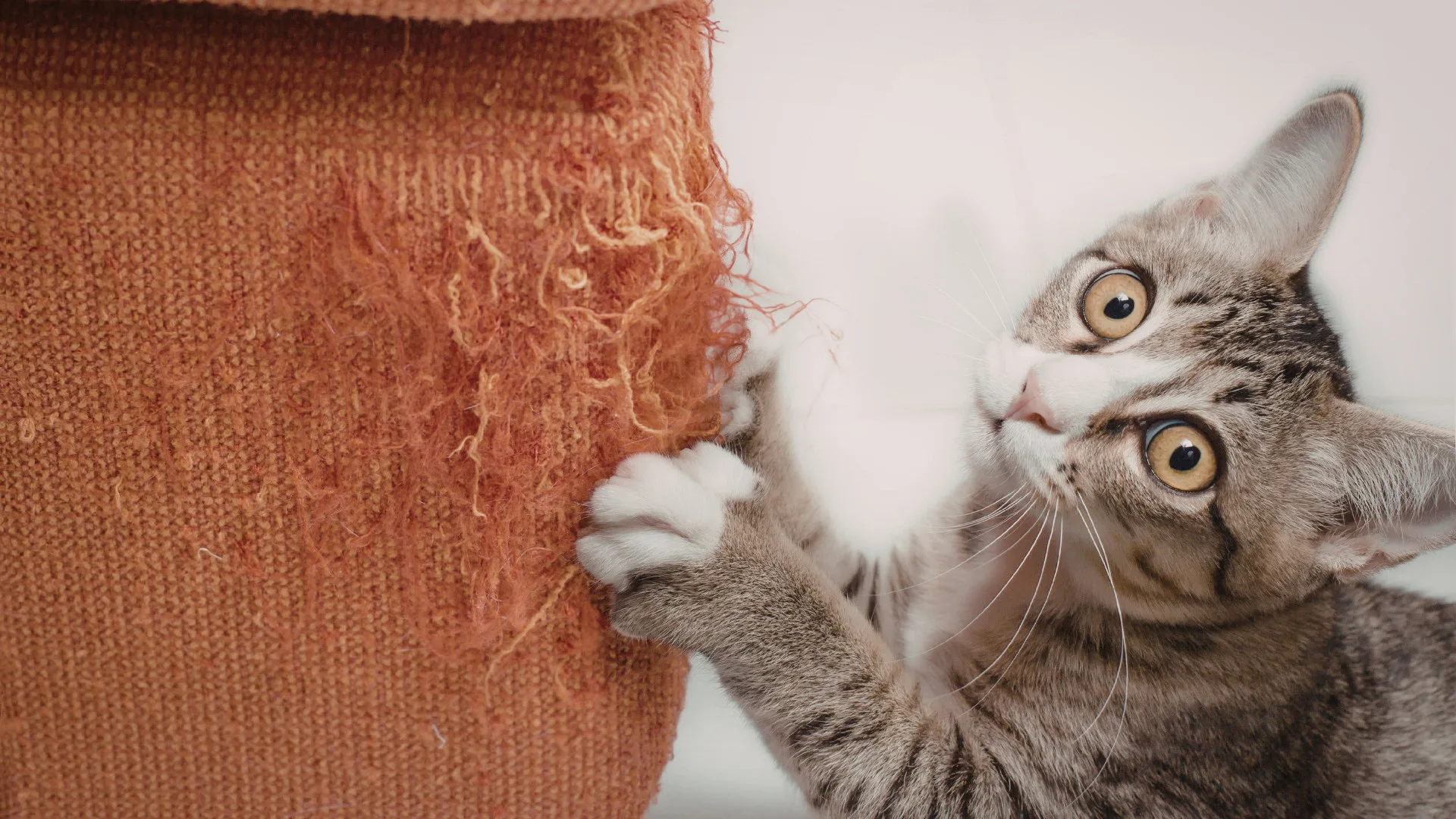
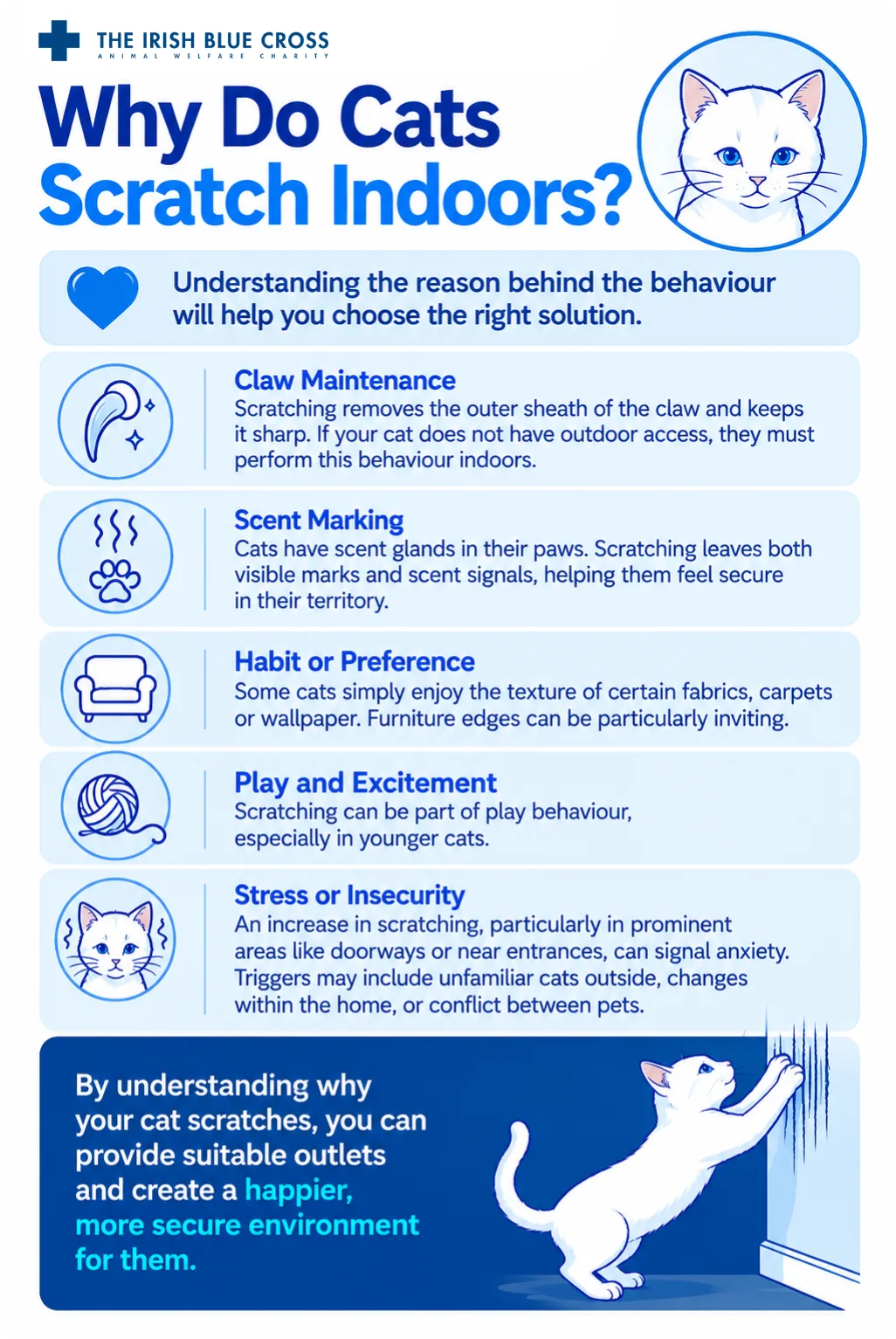
Most cat owners will be familiar with the sound of claws running down a sofa or chair. While this can be frustrating, scratching is completely natural behaviour. It keeps claws healthy, stretches the body, relieves stress and allows cats to leave scent marks.
The goal is not to stop your cat from scratching; it is to guide them towards appropriate places to do it.
Every cat needs appropriate scratching outlets.
• Choose sturdy posts that do not wobble.
• Ensure they are tall enough for your cat to stretch fully.
• Offer different textures (sisal, cardboard, carpet).
• Replace posts when they become worn.
Place scratching posts near areas your cat already uses, especially beside furniture they are targeting. You can encourage use by placing a favourite toy on the post or using catnip if your cat responds to it.
In multi-level homes, provide more than one scratching option.
If your cat repeatedly scratches a specific piece of furniture, place a scratching post directly in front of that area. Once the cat is consistently using the post, it can gradually be moved to a more convenient location.
Never shout at or punish your cat. Scratching is instinctive behaviour, not deliberate destruction. Punishment can increase anxiety and may worsen the problem.
Your cat should view you as a source of safety and reassurance.
New furniture can be particularly tempting, as it lacks your cat’s scent. Temporary protective coverings, such as throws or cardboard panels, can reduce damage while your cat adjusts.
If the surface is washable, cleaning scratched areas with a mild solution can help reduce lingering scent that draws your cat back to the same spot. Always test cleaning products on a small area first.
Regular interactive play helps channel energy appropriately.
Short, frequent play sessions using wand toys or chase toys can reduce boredom and decrease the likelihood of furniture scratching. Cats are often most active before meals, so scheduling play before feeding times can be especially effective.
Environmental enrichment, such as puzzle feeders and climbing structures, also supports natural behaviour.
If scratching appears to increase suddenly, consider whether something has changed in your cat’s environment:
• Are unfamiliar cats entering the garden?
• Has furniture been moved or replaced?
• Has there been a new pet, visitor or baby in the home?
Microchip-operated cat flaps can prevent unfamiliar cats from entering the house. In multi-cat households, ensure each cat has access to separate resources and elevated resting areas.
Synthetic pheromone diffusers may help some cats feel more secure. If signs of stress persist, consult your veterinary practice for advice.
If your cat’s scratching behaviour changes suddenly, is accompanied by other behavioural changes, or seems linked to anxiety, consult your vet. Underlying health issues, pain or stress-related conditions can contribute to behavioural changes and should always be ruled out first.
Scratching is a healthy and necessary behaviour. With the right setup, appropriate posts, enrichment and a low-stress environment, most cats can learn to direct their scratching away from furniture and onto suitable alternatives.
If you are struggling with persistent scratching, your veterinary team can provide tailored advice and, where appropriate, refer you to a qualified behaviour professional.