
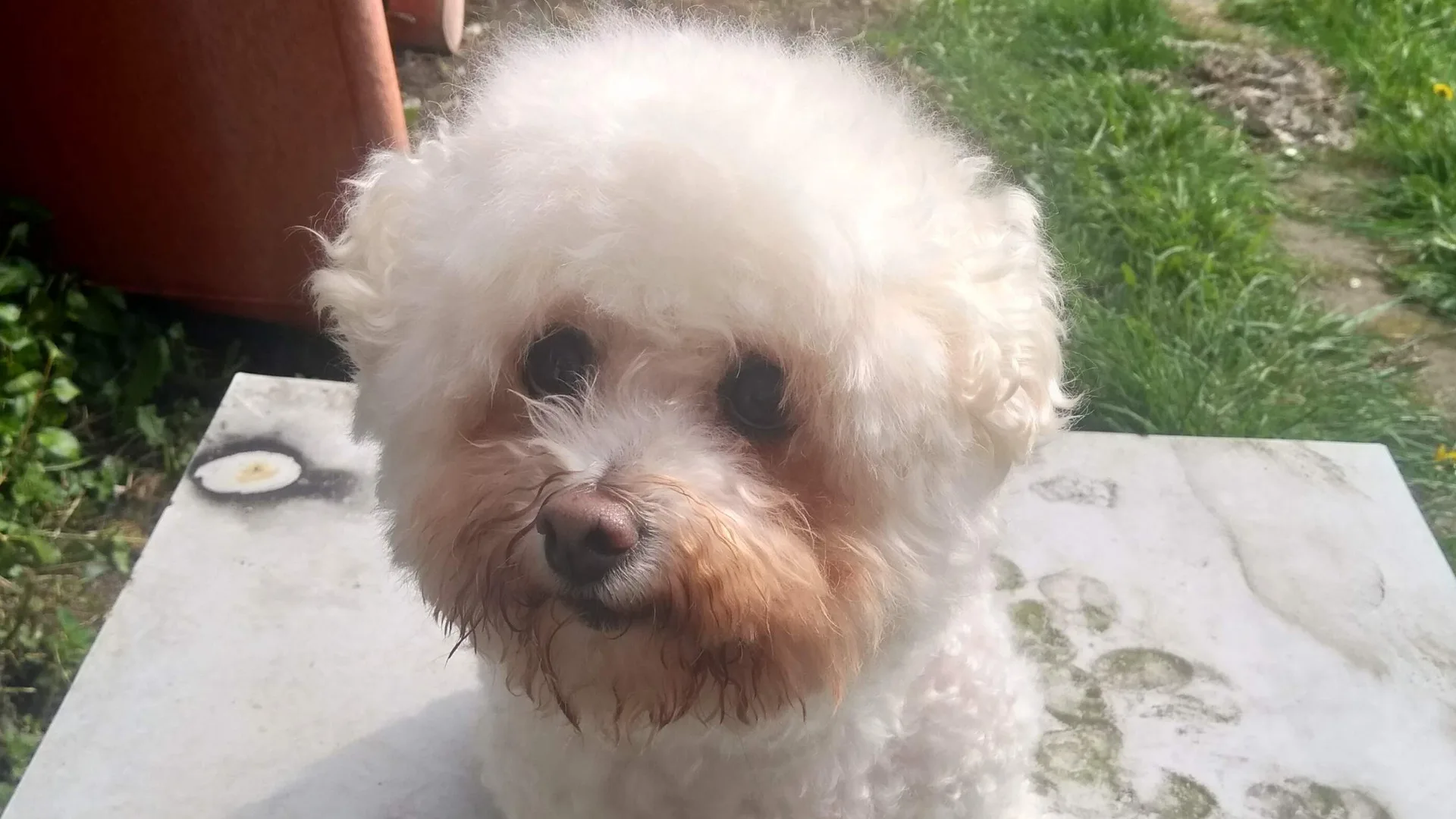
Tear staining is a common cosmetic issue in some dogs. It appears as reddish-brown marks under the eyes and is especially noticeable in light-coloured dogs.
It is particularly common in:
Tear staining is usually harmless and is not the same as a weepy or sore eye.
If your dog develops:
Please contact your vet immediately, as this may indicate an eye problem that needs treatment.
Reddish-brown staining seen around dogs’ eyes is caused by a pigment called porphyrin, which contains iron and is naturally present in tears. Porphyrin is produced when the body breaks down red blood cells and is then eliminated through various bodily fluids, including tears, saliva, urine and faeces.
Tears normally drain away through small ducts at the corner of the eye. If tears overflow onto the face, hair rubs and irritates the eye, or tear ducts are narrow or blocked, moisture builds up on the fur. Over time, this can cause staining and sometimes mild skin irritation.
Wind, dust and grooming habits can make the problem worse.
Long hair around the eyes can rub against the surface of the eye and increase tear production.
To help:
Regular grooming is especially important for fluffy breeds.
Keeping the area clean can reduce staining and prevent skin irritation.
Never use human wipes, baby wipes, or products not designed for use around dogs’ eyes.
Contact your vet if you notice:
Sometimes tear staining can be linked to blocked tear ducts, allergies, or underlying eye irritation that requires treatment.
Tear staining is usually a cosmetic issue rather than a medical emergency. Regular grooming and gentle cleaning can make a big difference.
However, because eyes are delicate, it’s always safest to have new or worsening symptoms checked by your veterinary team.