
Have you noticed your dog suddenly skipping or hopping on one back leg for a few steps, then carrying on as normal? This could be a sign of patella luxation.
Patella (kneecap) luxation (dislocation) occurs when the kneecap slips out of its normal position.
Although any dog can be affected, it is seen most often in toy and small breeds. Some dogs have very mild cases that need little or no treatment. Others may require physiotherapy or surgery. The condition can affect one or both back legs and, over time, may lead to arthritis.
In a healthy knee, the kneecap glides smoothly within a groove at the end of the thigh bone when the leg bends and straightens and it should remain securely in that groove.
With patella luxation, the kneecap moves out of place. When this happens, the knee cannot bend properly and the dog may limp or hop. Repeated slipping causes irritation inside the joint and can lead to pain and long-term joint damage.
Patella luxation is graded according to severity:
Grade 1
These cases often cause little trouble. The kneecap sits in the correct position but can be manually pushed out by a vet, however it returns to place straight away.
Grade 2
The kneecap occasionally slips out during normal movement but usually goes back by itself. Signs range from mild to moderate.
Grade 3
The kneecap is usually out of place; it can be repositioned manually but slips out again easily.
Grade 4
The kneecap is permanently out of place and cannot be returned to the groove.
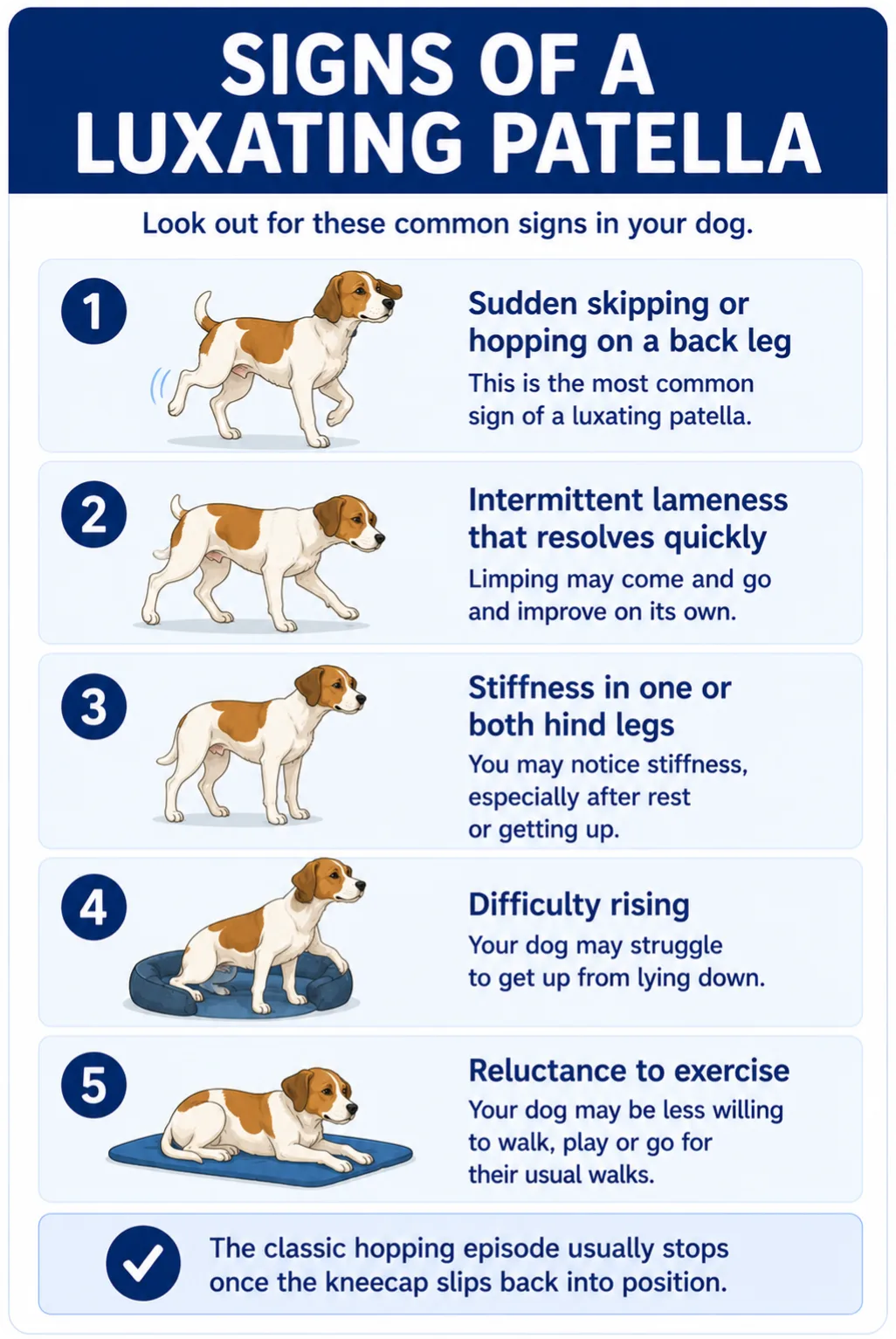
If you notice repeated hopping, limping or stiffness, arrange a veterinary check. Early assessment can improve long term comfort and reduce the risk of arthritis.
It can be very helpful to record a short video of your dog during a limping episode to show your vet.
Your vet will gently examine your dog’s knees and assess how easily the kneecap moves. They will also check the cruciate ligaments, as ligament injuries are more common in dogs with patella luxation.
In some cases, sedation or a general anaesthetic is needed for a full assessment. X rays may be recommended, particularly if the joint is painful or surgery is being considered.
Treatment depends on the grade of luxation and how much discomfort your dog is experiencing.
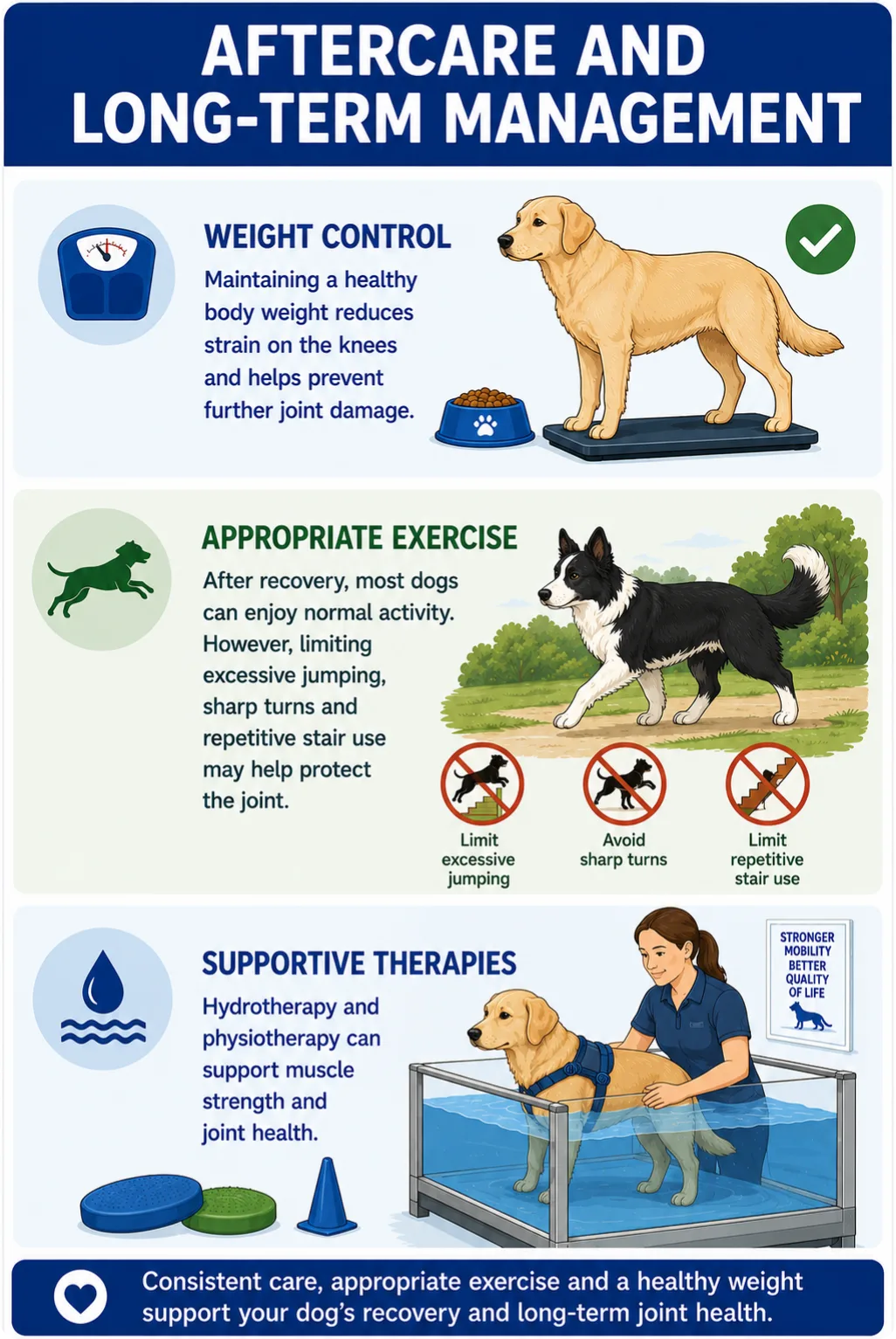
Many dogs with grade 1 or mild grade 2 luxation can be managed without surgery, and your vet might recommend hydrotherapy or physiotherapy to help strengthen the muscles around the knee, improving joint stability.
Weight management is especially important in these cases.
Surgery is often recommended for grade 3 and 4 luxations, and for dogs with persistent pain or frequent lameness. The procedure aims to realign the kneecap and improve the depth or alignment of the groove it sits in.
Some surgical techniques are more complex and may require referral to an orthopaedic specialist.
Most dogs with patella luxation experience discomfort at some stage. Your vet may prescribe anti-inflammatory medication to manage pain, either short term or long-term depending on severity.
After surgery, your dog will need careful management at home.
A detailed rehabilitation plan, including physiotherapy exercises, may be provided. Following this plan closely is essential for a successful outcome.
Dogs with grade 1 luxation often live comfortably with minimal intervention, although monitoring is advised.
Many dogs with grade 2 luxation do very well with appropriate management.
Dogs with grade 3 or 4 luxation usually benefit greatly from corrective surgery. Without surgery, more severe cases often experience ongoing pain and mobility issues.
Even with treatment, many dogs develop arthritis in the affected knee later in life but early and appropriate care can reduce its impact.
Patella luxation is more common in toy and small breeds, including:
Responsible breeding is important.
Dogs that have experienced kneecap problems should not be bred from.
If you are considering getting a puppy, research the breed carefully and choose a reputable breeder who prioritises health over appearance.
Costs vary depending on severity. Mild cases managed conservatively are generally less expensive. Complex surgical procedures, particularly those performed by specialists, can be costly.
If you’re able to, consider pet insurance while your dog is young and healthy to help with unexpected illness or injury. If your dog becomes unwell, talk openly with your vet about the options, the likely costs, and what feels manageable for you. Together, you can tailor a plan that’s right for your dog and your situation.
If you suspect your dog may have patella luxation, contact your veterinary practice for advice. Early care can make a significant difference to long term joint health.