
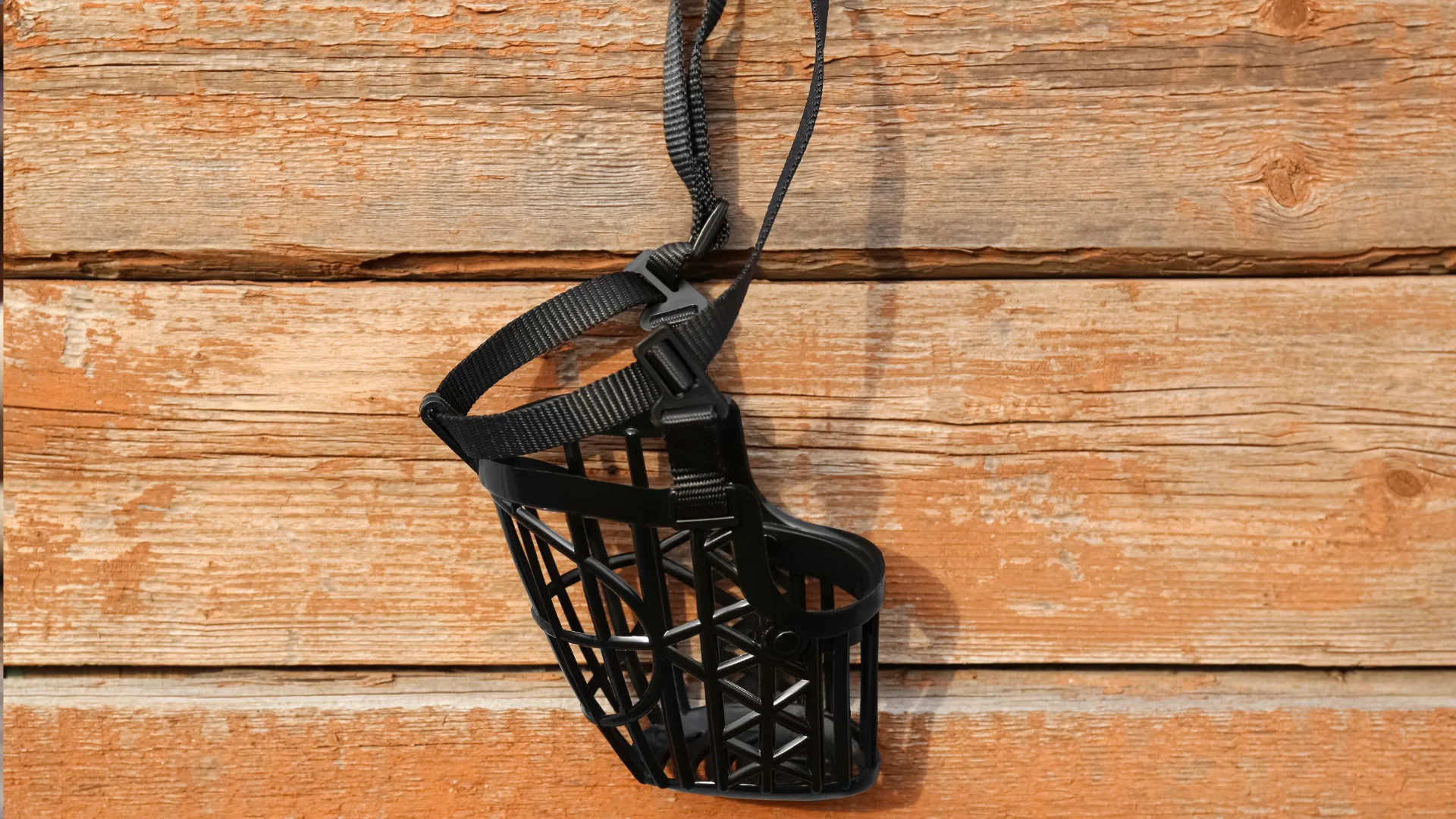
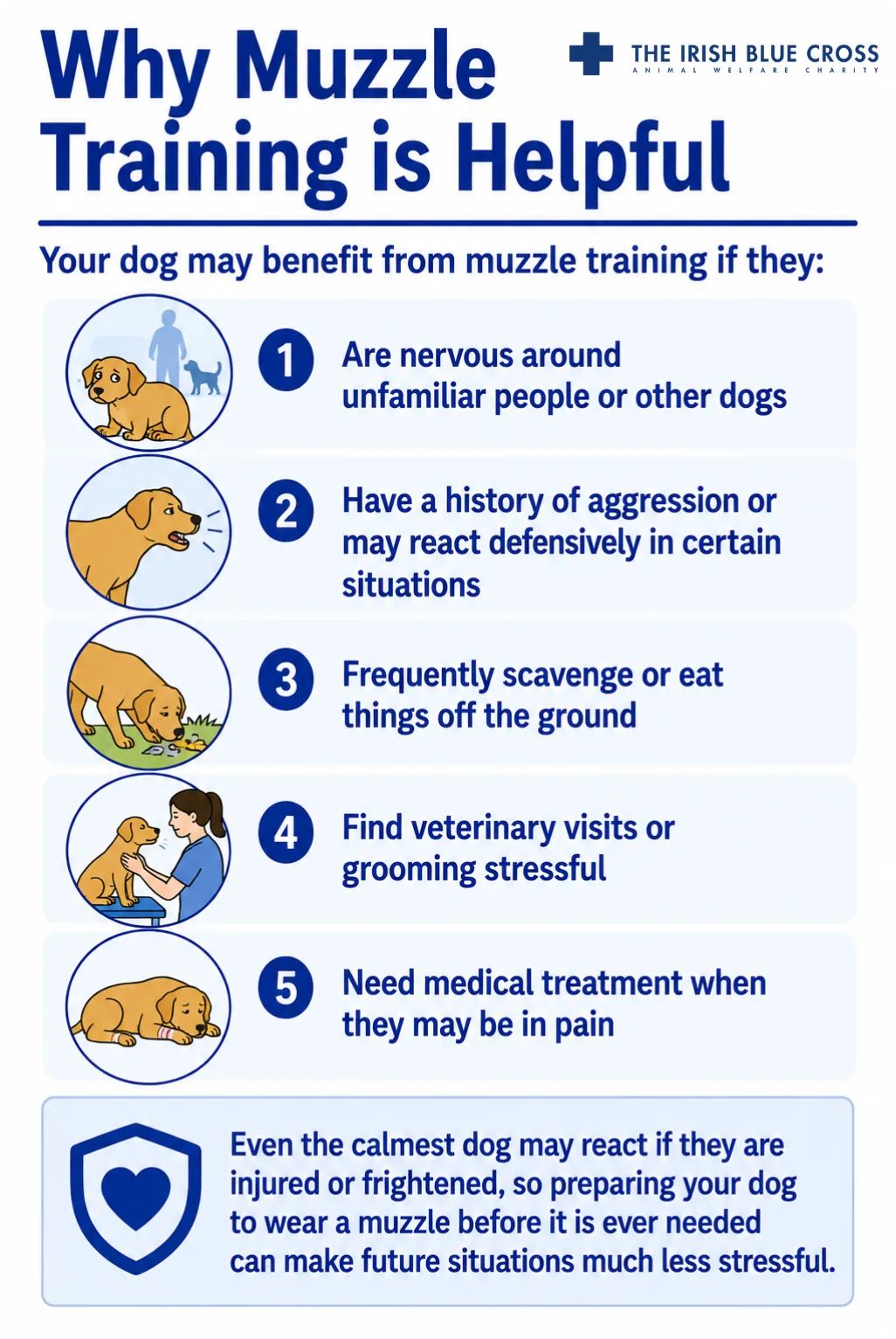
Training your dog to wear a muzzle is a useful life skill, even if you never expect to use one regularly. When introduced properly, a muzzle can be worn comfortably and safely in certain situations.
Muzzle training should always be done gradually using positive, reward-based methods. Your dog should learn that wearing a muzzle predicts good things such as treats, praise and fun activities.
A muzzle should never be used as punishment.
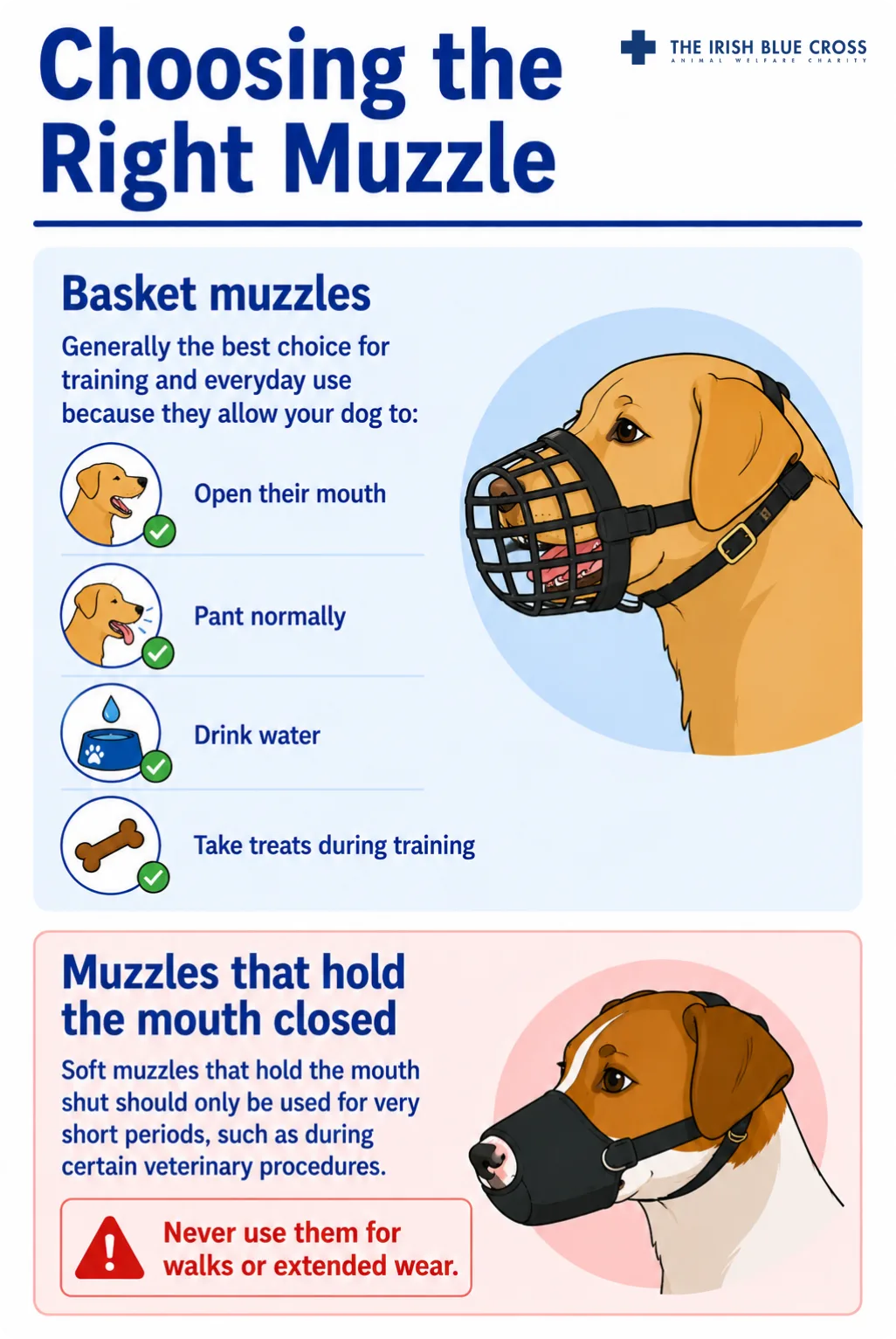
A well-fitting muzzle should be comfortable and secure.
When fitting a muzzle, check that:
If you are unsure about sizing, your veterinary practice or a qualified behaviour professional can help.
Muzzle training should be carried out over multiple short sessions, allowing your dog to progress at their own pace.
Begin by placing the muzzle on the floor and allowing your dog to investigate it.
You can place small treats inside or around the muzzle so your dog begins to associate it with positive experiences.
Avoid moving the muzzle toward your dog. Instead, let your dog approach it willingly.
Once your dog is comfortable around the muzzle, encourage them to place their nose inside it by offering treats through the openings.
At first, offer treats near the entrance. Gradually place treats deeper inside so your dog willingly places their nose fully inside the muzzle.
Repeat this over several sessions until your dog happily puts their nose into the muzzle whenever it appears.
When your dog is comfortable holding their nose inside the muzzle, gently hold the straps behind their head without fastening them. Reward your dog with treats while doing this.
Gradually increase the amount of time the straps are held in place.
If your dog pulls away, simply go back a step and progress more slowly.
Once your dog is comfortable with the straps being held, you can briefly fasten the muzzle.
Offer a treat immediately after fastening it, then remove the muzzle again.
Over time, slowly increase the length of time your dog wears the muzzle while continuing to reward calm behaviour.
When your dog is comfortable wearing the muzzle indoors, begin incorporating normal activities.
You might:
Continuing to reward your dog during these activities helps maintain a positive association.
Successful muzzle training depends on patience and consistency.
Remember to:
To ensure muzzle training remains a positive experience:
If your dog already has a negative association with a muzzle, it may take longer to build confidence. In these cases, working with a qualified behaviour professional can be helpful.
Flat-faced (brachycephalic) breeds such as Pugs, French Bulldogs and Pekingese can have breathing difficulties, so finding a suitable muzzle can be challenging and may require specialist designs.
If you need a muzzle for a flat-faced dog, speak to your veterinary practice for advice before purchasing one.
Even if your dog only needs to wear a muzzle occasionally, practising regularly helps maintain their comfort and confidence.
By taking the time to introduce a muzzle gradually and positively, you can ensure your dog remains relaxed and cooperative should they ever need to wear one.