
Pet Loss Support Helpline – call 1800 83 99 54 for support and guidance, or find out more.

Lungworm in Dogs

Lungworm is a serious parasite that is being diagnosed more often in dogs across Ireland. Dogs become infected when they accidentally eat slugs, snails or frogs, or encounter their slime. As lungworm can affect several organs and may be fatal if left untreated, awareness and prevention are very important.

The good news is that lungworm is usually preventable and, when caught early, most dogs respond well to treatment.

What is lungworm?

Lungworm is caused by a parasitic worm (Angiostrongylus vasorum). Despite its name, it doesn’t just affect the lungs. Once inside a dog’s body, the parasite can travel through blood vessels and settle in the heart, lungs and other organs, where it can cause inflammation, bleeding problems and breathing difficulties.
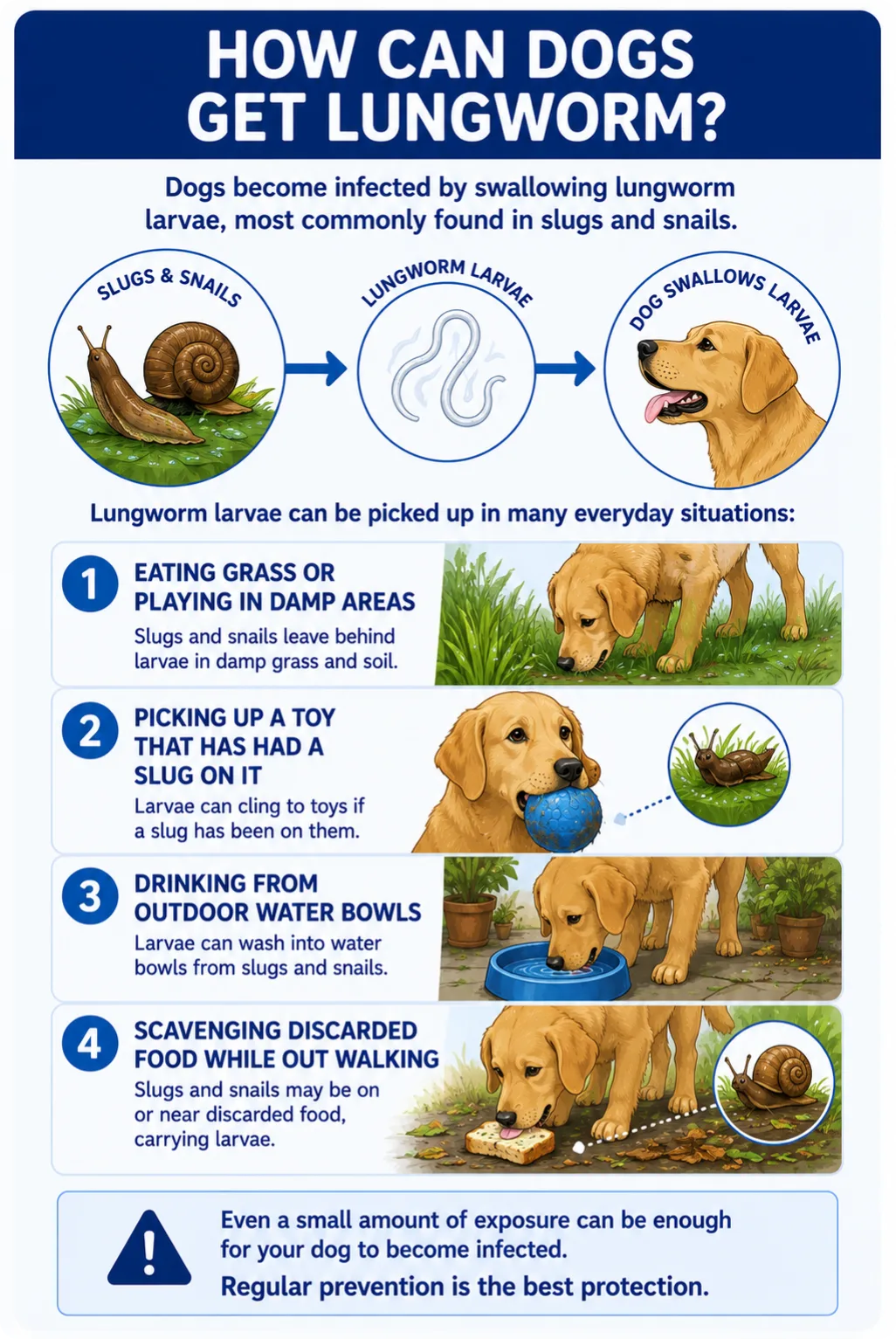
How do dogs get lungworm? Dogs become infected by swallowing lungworm larvae, most commonly found in slugs and snails when they: eats grass or play in damp areas pick up a toy that has had a slug on it drink from outdoor water bowls scavenge discarded food while out walking Once ingested, the larvae mature inside the dog. Adult worms then move through the body and begin producing more larvae, which are passed out in the dog’s faeces. These larvae can infect more slugs and snails, allowing the cycle to continue. Dogs cannot pass lungworm directly to other dogs, but the infection can spread quickly through the environment.

Signs and Symptoms of Lungworm

Lungworm can be difficult to recognise because symptoms vary widely and may develop gradually. Some dogs show only mild signs at first, while others become very unwell.

Common symptoms can include:

  • Coughing or breathing difficulties
  • Tiring easily or reluctance to exercise
  • Weight loss or reduced appetite
  • Vomiting or diarrhoea
  • Nosebleeds or unexplained bruising
  • Cuts or wounds bleeding more than expected
  • Wobbliness, seizures or other neurological signs

In severe cases, lungworm can cause internal bleeding, collapse, pneumonia or organ failure.

If you notice any of these signs, contact your vet straight away.

How is Lungworm Diagnosed?

Your vet will usually assess your dog’s symptoms and may recommend a combination of tests, such as:

  • Blood tests
  • Examining faecal (poo) samples
  • X-rays, particularly if lung damage is suspected

Treatment for Lungworm

Treatment depends on how severely affected your dog is. Most dogs recover well if lungworm is diagnosed early.

Treatment may involve:

  • Prescription medication to kill the parasites
  • Close monitoring, as killing large numbers of worms can sometimes cause complications
  • Additional supportive care if your dog is very unwell

Dogs with severe infections may need hospital treatment, which can include oxygen therapy, intravenous fluids, blood transfusions or medication to control seizures or inflammation.

If left untreated, lungworm can cause lasting damage or, sadly, be fatal, which is why prevention is so important.

Recovery and Long-Term Outlook

Many dogs make a full recovery, especially when treatment is started early. However, dogs that have had severe lungworm infections may have ongoing issues such as breathing difficulties or neurological problems and will need careful monitoring going forward.
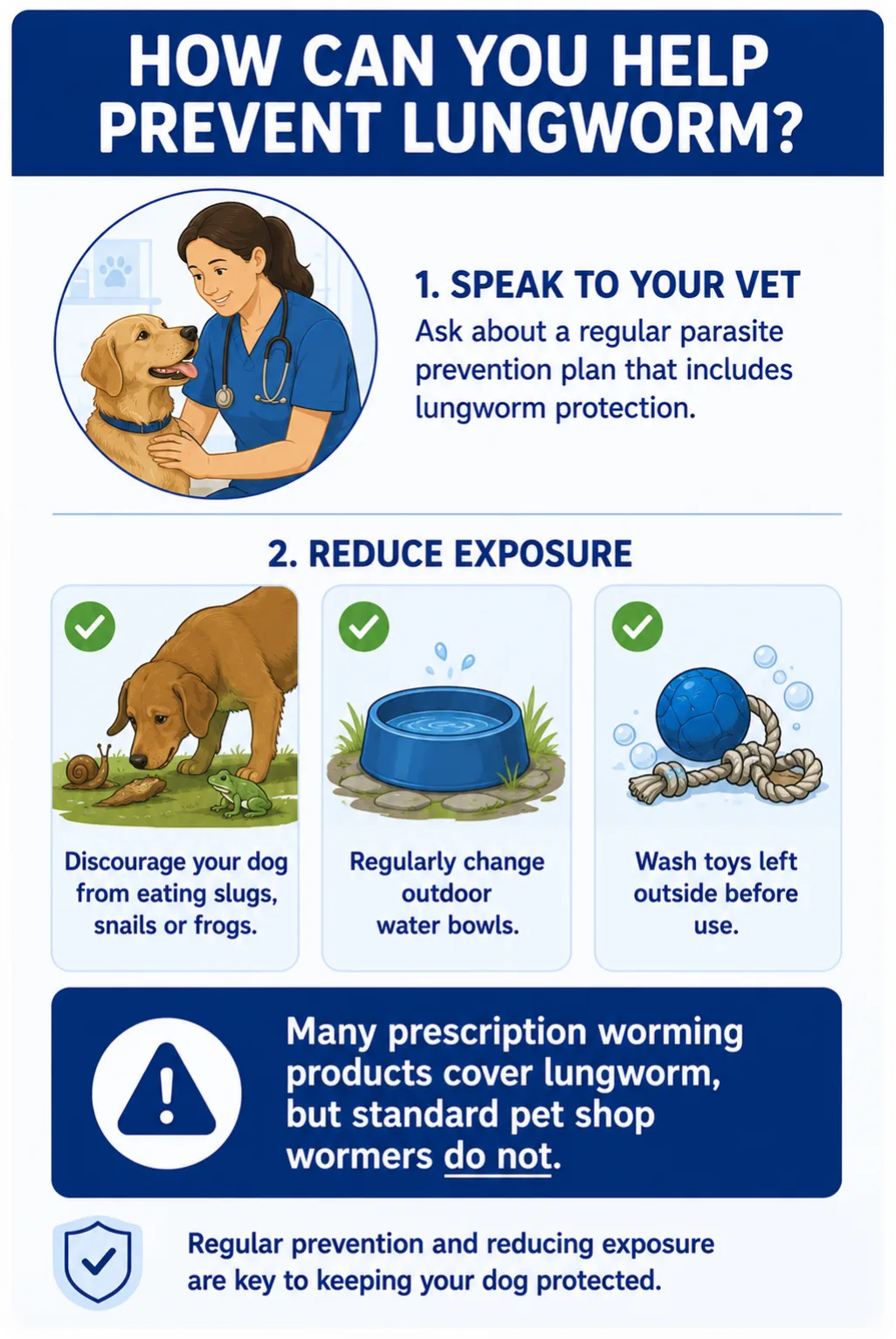
Preventing Lungworm Preventing lungworm is far easier and safer than treating it. Speak to your vet about a regular parasite prevention plan that includes lungworm protection. Many prescription worming products cover lungworm, but standard pet shop wormers do not. You can also reduce risk by: discouraging your dog from eating slugs, snails or frogs regularly changing outdoor water bowls washing toys left outside before use

Can Humans Get Lungworm?

No — lungworm is not known to infect humans.

Share

Share: