
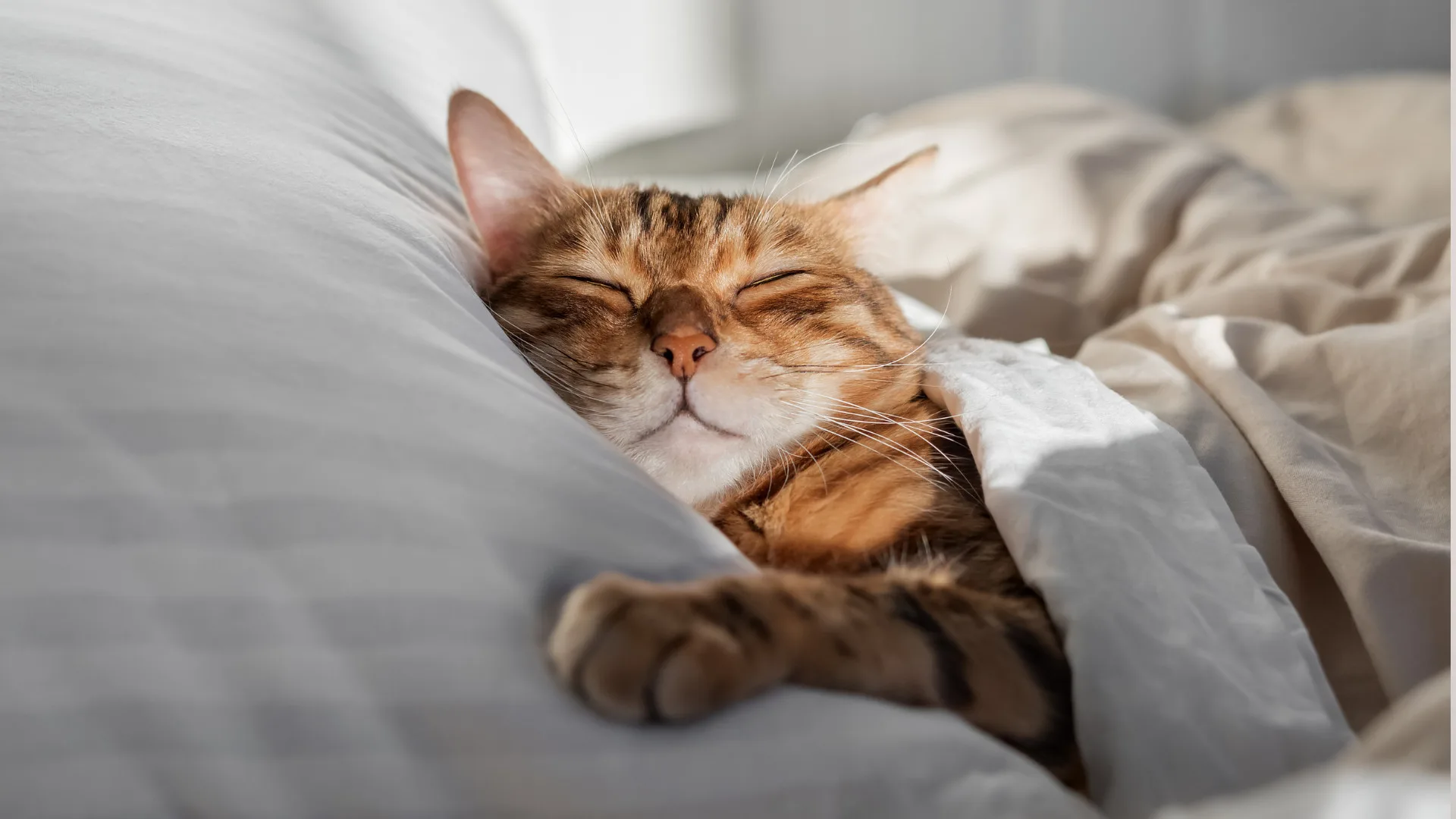
If you share your home with a cat, you may have wondered why they seem to spend most of the day asleep. In reality, long periods of rest are entirely normal for cats and form an important part of their natural behaviour.
On average, cats sleep for around 15 hours each day, and some may rest for up to 20 hours in a 24-hour period.
Domestic cats are descended from wild predators and even though pet cats no longer need to hunt for survival, the instinct remains.
Hunting requires intense bursts of energy stalking, chasing and pouncing are physically demanding activities.
To conserve energy for these short periods of activity, cats are biologically programmed to rest for much of the day.
Cats are also crepuscular, meaning they are most active at dawn and dusk. Their eyes are well adapted to low light, making these times ideal for hunting in the wild. This natural rhythm explains why your cat may seem more lively early in the morning or later in the evening.
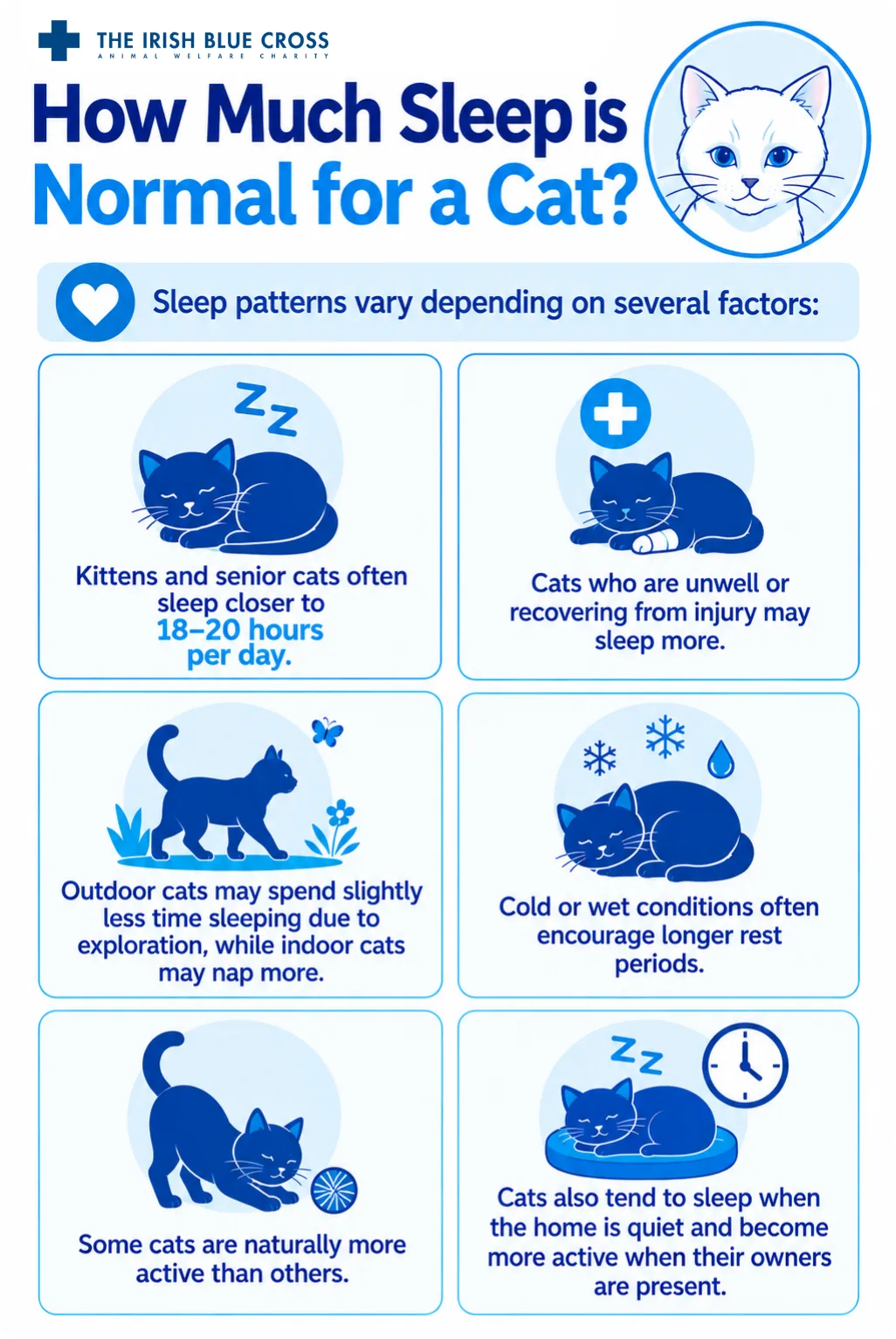
Cats choose sleeping spots where they feel safe and secure, and often prefer:
Providing several resting options around your home allows your cat to rotate between preferred spots. In multi-cat households, ensure there are enough sleeping areas to prevent competition.
Sleep is essential for both physical and mental health. However, sudden changes in sleeping patterns can sometimes indicate a problem.
You should contact your veterinary practice if:
Certain medical conditions, including arthritis, kidney disease and other chronic illnesses, can affect energy levels. A veterinary examination can rule out underlying causes.
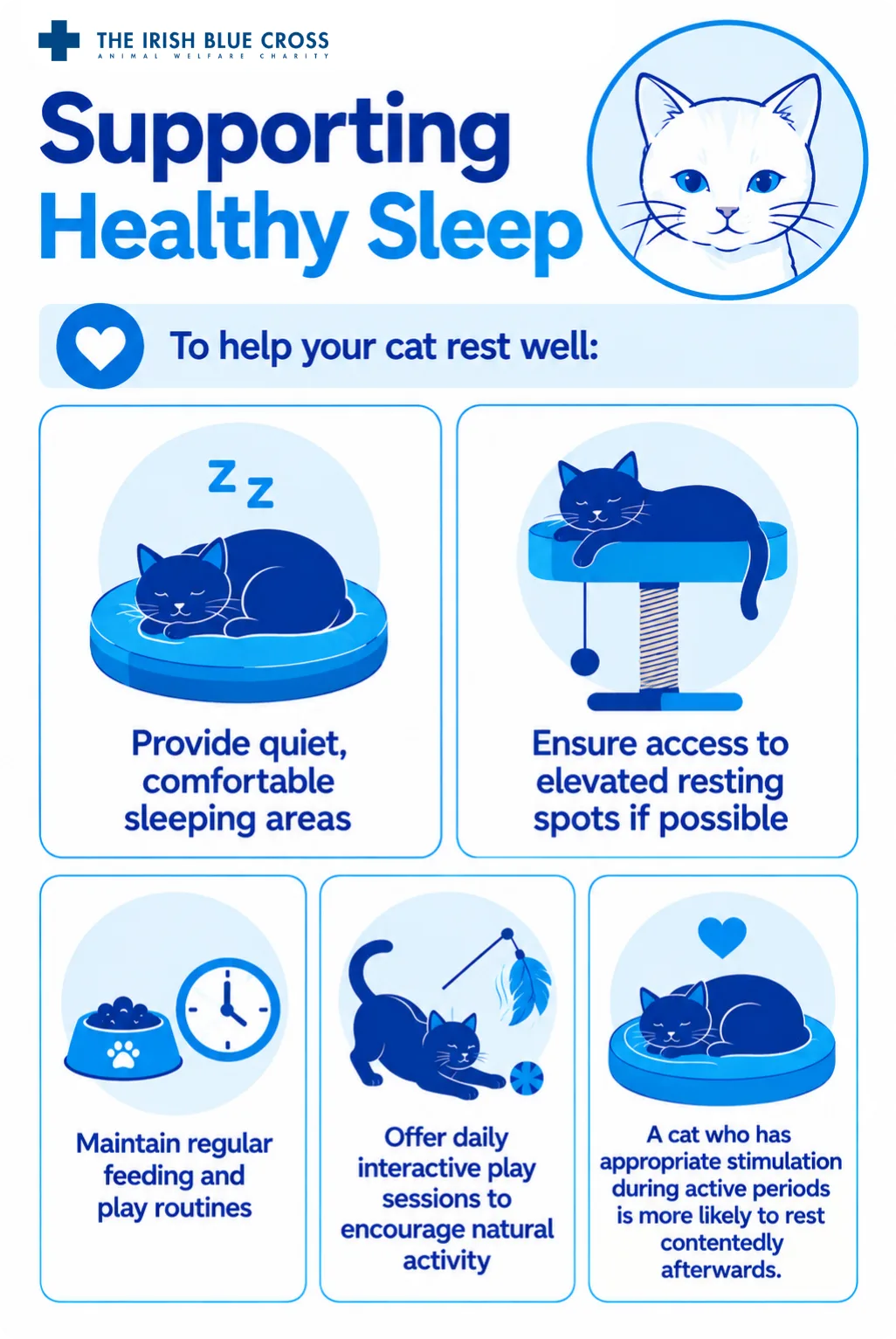
In most cases, a sleeping cat is simply following their natural rhythm. Long hours of rest are a normal and healthy part of feline life, but if you ever notice a marked change, your veterinary team is always the best source of advice.