
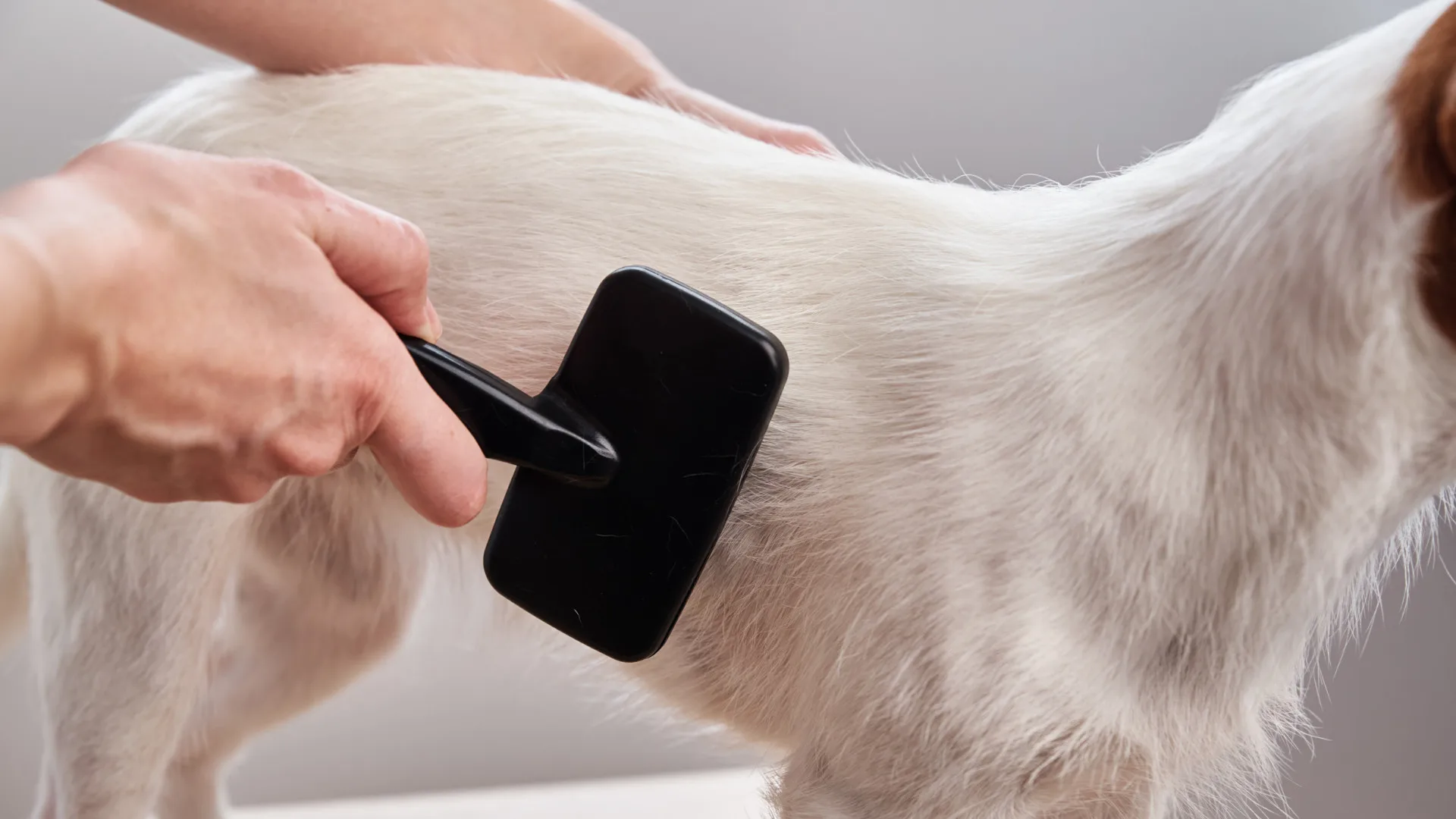
Regular grooming is an important part of keeping your dog happy, healthy and comfortable. While it helps keep their coat clean and tidy, grooming is also a valuable opportunity to spot early signs of skin problems, parasites or changes in your dog’s body that may need veterinary attention.
Every dog is different, so grooming routines will vary depending on breed, coat type and lifestyle. With the right approach, grooming can become a calm, positive experience for both you and your dog.
It’s best to introduce grooming when your dog is young, so they grow up feeling relaxed about being brushed, handled and checked over. That said, older dogs can still learn to enjoy grooming, just take things slowly and keep sessions short and positive.
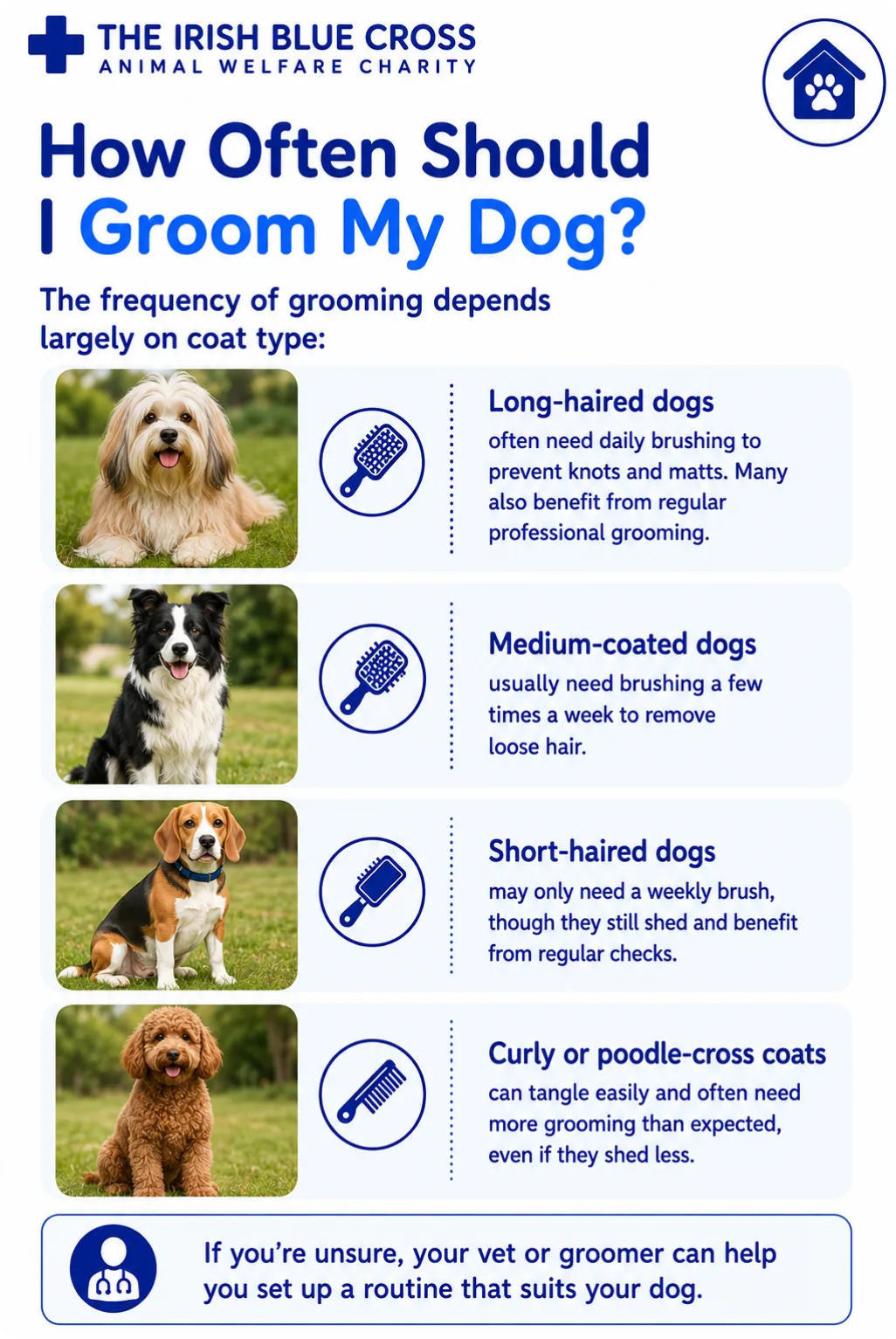
Before you begin, it’s worth doing a little research into your dog’s breed and coat type. Some coats need daily attention, while others only need occasional brushing. Using the right tools for your dog’s coat makes all the difference, and your vet or a reputable groomer can help you choose what’s best.
Always work at your dog’s pace. If they seem worried or uncomfortable, stop and try again another time. Praise, reassurance and a few tasty treats can go a long way in building positive associations.
Grooming isn’t just about appearance, it helps you to:
Seasonal moulting is normal, especially in spring and autumn, so many dogs will need extra brushing at these times.
Using dog-specific equipment is important as human products can cause discomfort or injury.
Most dogs will benefit from:
Treats or enrichment toys, such as a stuffables or licking mats, can help keep your dog relaxed and distracted during grooming.
Dogs don’t usually need frequent baths, unless they’re dirty or have a skin condition as washing too often can strip the coat of natural oils.
If you do bathe your dog:
During grooming sessions, take a moment to check areas that are easy to miss:
Ears should be clean and comfortable, without strong smells or excessive wax
Skin and coat should be free from bald patches, redness or irritation
Nails may need trimming if they’re clicking on hard floors or starting to curl
Never try to deal with painful ears, severe matting or skin problems at home, your vet can advise on the safest next steps.
Some dogs find grooming stressful, especially if they’ve had uncomfortable experiences in the past. In these cases, take things right back to basics. Let your dog get used to seeing grooming tools without using them, and gradually reintroduce brushing in very short sessions, always rewarding calm behaviour.
If your dog remains fearful or grooming is becoming a struggle, speak to your vet or vet nurse for advice.
Many owners choose to use a professional groomer, especially for more complex coats. Look for someone experienced, calm and reputable. Groomers who are members of recognised trade bodies and who are happy to answer questions about qualifications, hygiene and safety are usually a good choice.
Your vet may also be able to recommend a trusted groomer locally.
Contact your vet if you notice:
Regular grooming, done gently and thoughtfully, plays a big role in your dog’s overall wellbeing. With patience, consistency and the right support, it can become a bonding experience that keeps your dog feeling their very best.