
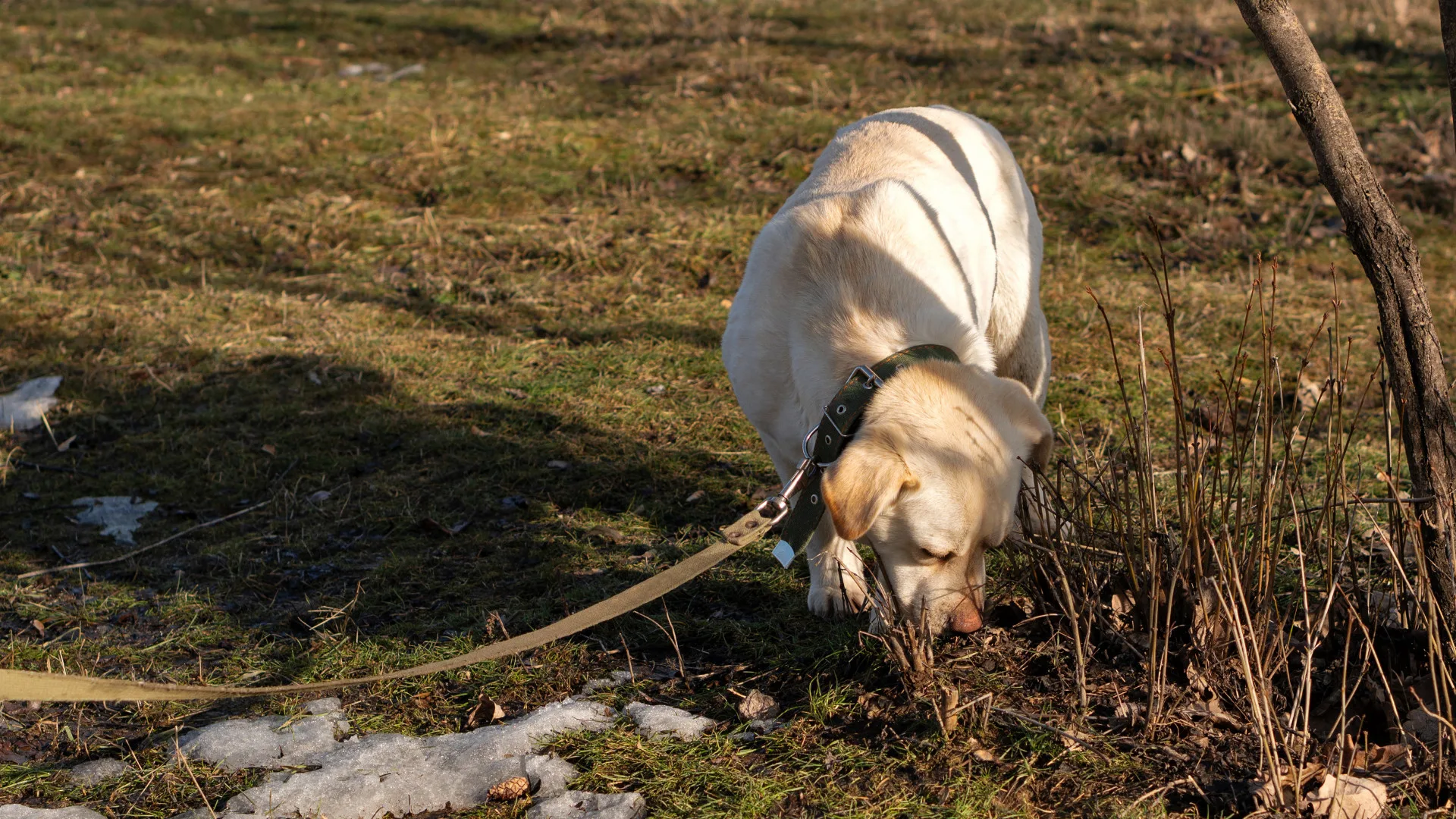
Not all dogs can safely walk off the lead. There are many reasons why owners may choose or need to keep their dog on a lead while outdoors.
For example, a dog might:
In Ireland, certain breeds are subject to additional legal requirements under the Control of Dogs Regulations 1998 and XL Bully Regulations 2024. These dogs must be kept on a strong lead in public places and wear a muzzle and their lead must be held by a person over the age of 16 who can control the dog.
If you own a dog from one of these breed types, it is important to be aware of these legal responsibilities when out in public.
You might feel upset or frustrated that your dog cannot be let off the lead, however, with the right approach, lead walks can still be enjoyable, enriching and rewarding for both you and your dog.
Where you walk your dog can make a big difference to how relaxed and enjoyable the experience is.
Try to choose routes that suit your dog’s personality and comfort level. If your dog becomes anxious or overly excited in busy places, quieter walking areas may be a better choice.
For example, if your dog struggles around other dogs, visiting a crowded park during busy times may increase their stress. Walking during quieter times of day or choosing less busy routes can help create a more positive experience.
The aim is to help your dog feel comfortable and relaxed during their walks.
If your dog previously walked off the lead, adjusting to being on a lead more often may take time.
Dogs who are used to greater freedom may initially feel frustrated when their movement is restricted. During this adjustment period, it may help to walk in places your dog does not strongly associate with running freely.
This can reduce confusion and allow your dog to gradually adapt to their new routine.
Even when dogs remain on the lead, walks can still provide valuable mental stimulation and enrichment.
Trying new walking routes can help keep walks interesting for both you and your dog. Local woodland paths, quiet neighbourhood streets, greenways or coastal paths can all offer new experiences.
Many natural areas and farmland access routes in Ireland require dogs to remain on a lead to protect livestock and wildlife, so lead walking is often the safest and most responsible option.
Dogs experience the world largely through scent so allowing them time to sniff and explore their surroundings can make walks much more satisfying.
Even short walks can be mentally enriching when dogs are allowed to investigate different smells along the way.
You can also include simple scent games during walks, such as scattering a few treats in grass for your dog to find or hiding a toy for them to locate.
Being on a lead does not mean training has to stop. Walks are a great opportunity to practise skills such as loose lead walking, focus and recall training in a controlled environment.
Short training exercises during walks help keep your dog mentally engaged and strengthen the bond between you and your dog.