
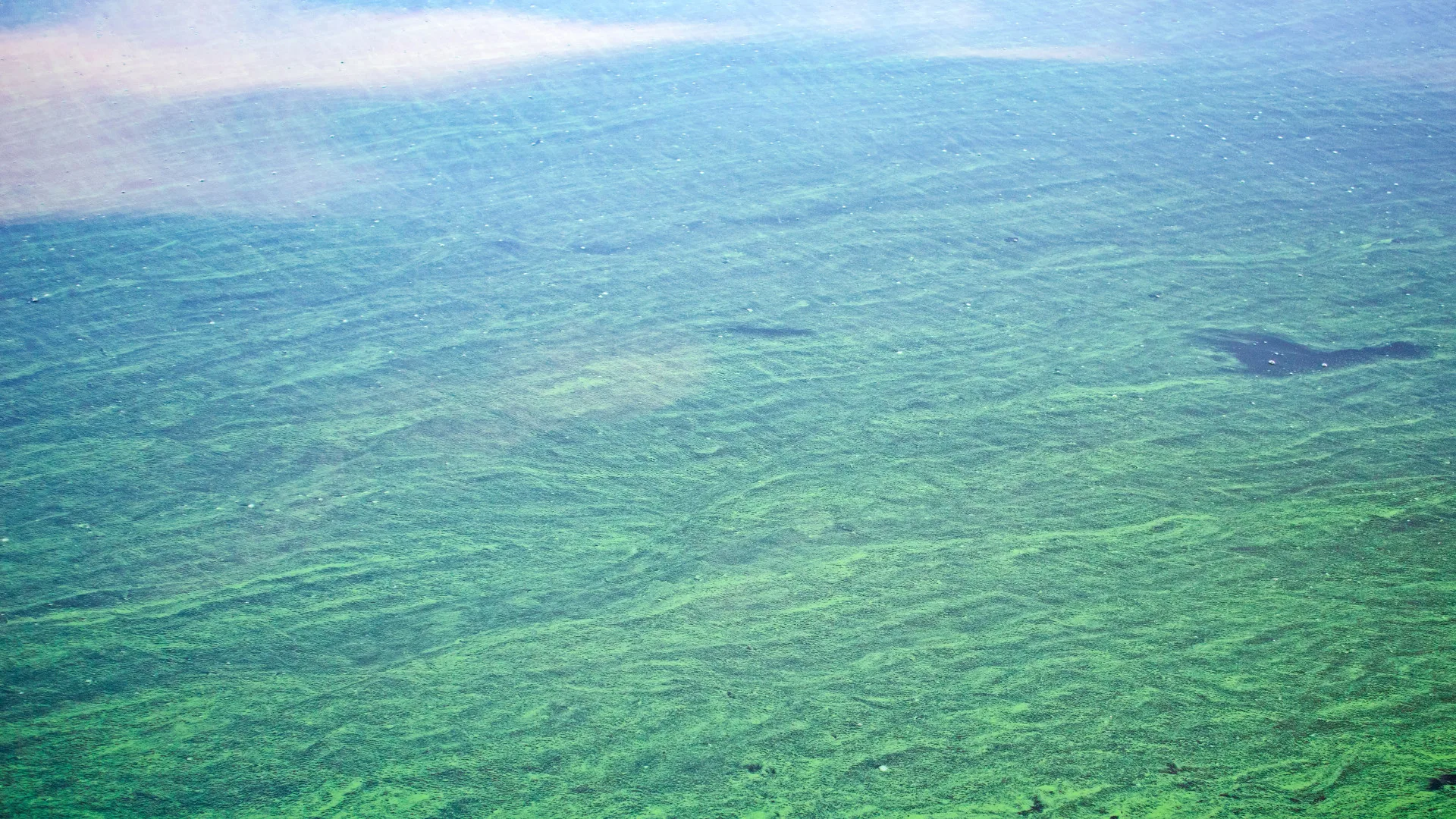
Despite its name, blue-green algae are not actually algae at all. It’s a type of bacteria called cyanobacteria that lives in fresh water. When conditions are right, these bacteria multiply quickly and form what’s known as a ‘bloom’, which often looks like algae floating on the surface.
Blooms are most common in still or slow-moving water such as lakes, ponds, canals and rivers. Warm weather can encourage growth, but blue-green algae can appear at other times of year too.
Some types of cyanobacteria produce powerful toxins. These toxins are invisible, can’t be smelled, and may cause severe illness or death if swallowed, even in very small amounts.
If you think your dog has been exposed to blue-green algae, contact your vet immediately. Acting quickly gives them the best possible chance.
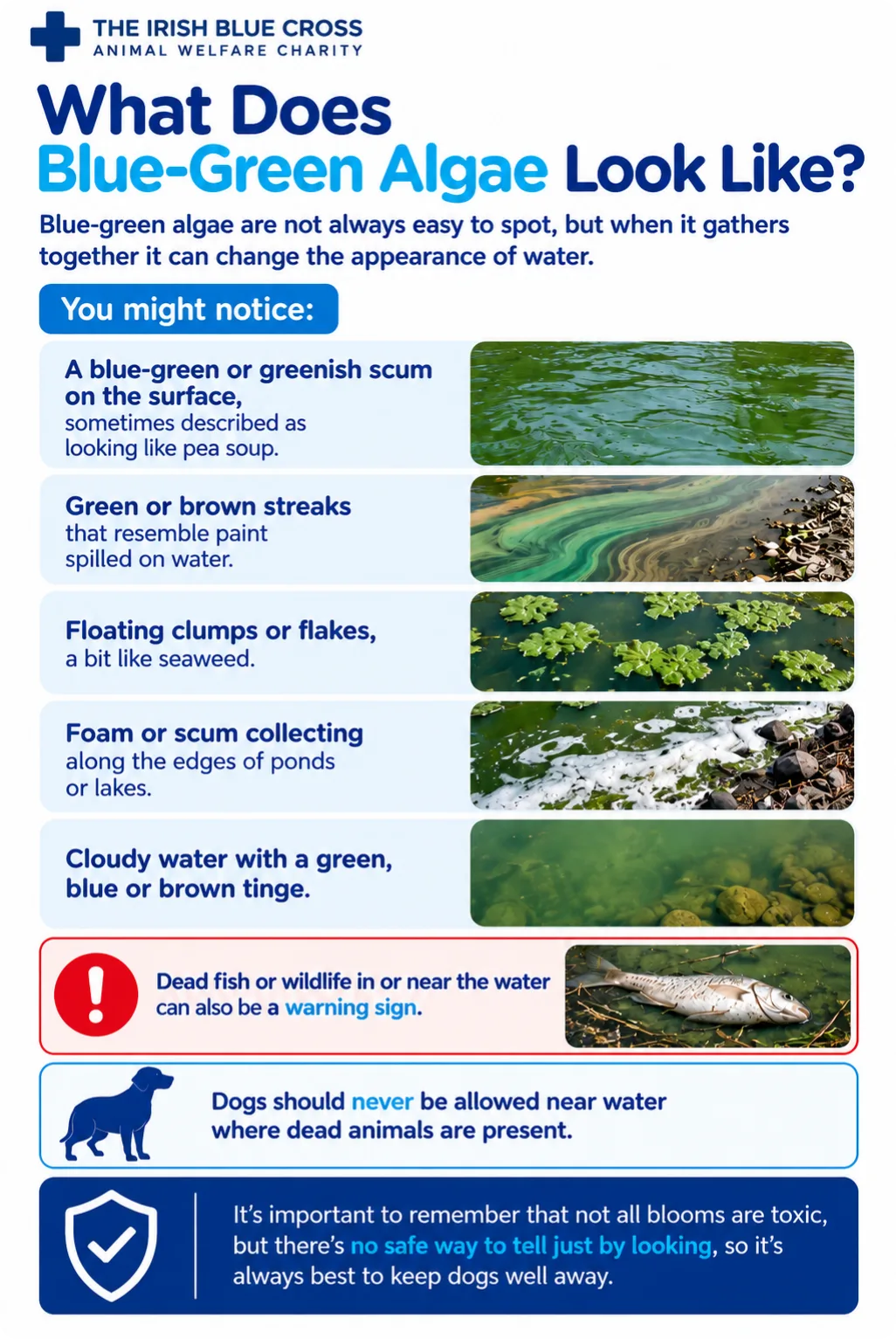
Dogs are most at risk if they drink contaminated water, swim or paddle in it, or lick algae from their coat after being in the water. Once swallowed, the toxins can interfere with the liver and other vital organs.
Sadly, blue-green algae poisoning can happen very quickly and is often fatal. Dogs that survive may be left with long-term health problems. As toxin levels can change rapidly, even water that looked safe yesterday may be dangerous today.
Symptoms can develop within 15 minutes to a few hours after exposure, although in some cases they may take longer to appear.
Contact your vet straight away if your dog shows any of the following after being near water:
These signs can occur with other illnesses too, but if blue-green algae is a possibility, it should always be treated as an emergency.
As there is no antidote for blue-green algae toxins, treatment focuses on reducing how much toxin is absorbed and supporting the body while it tries to recover.
If caught early, your vet may:
Despite prompt treatment, outcomes can be poor, which is why prevention is so important.
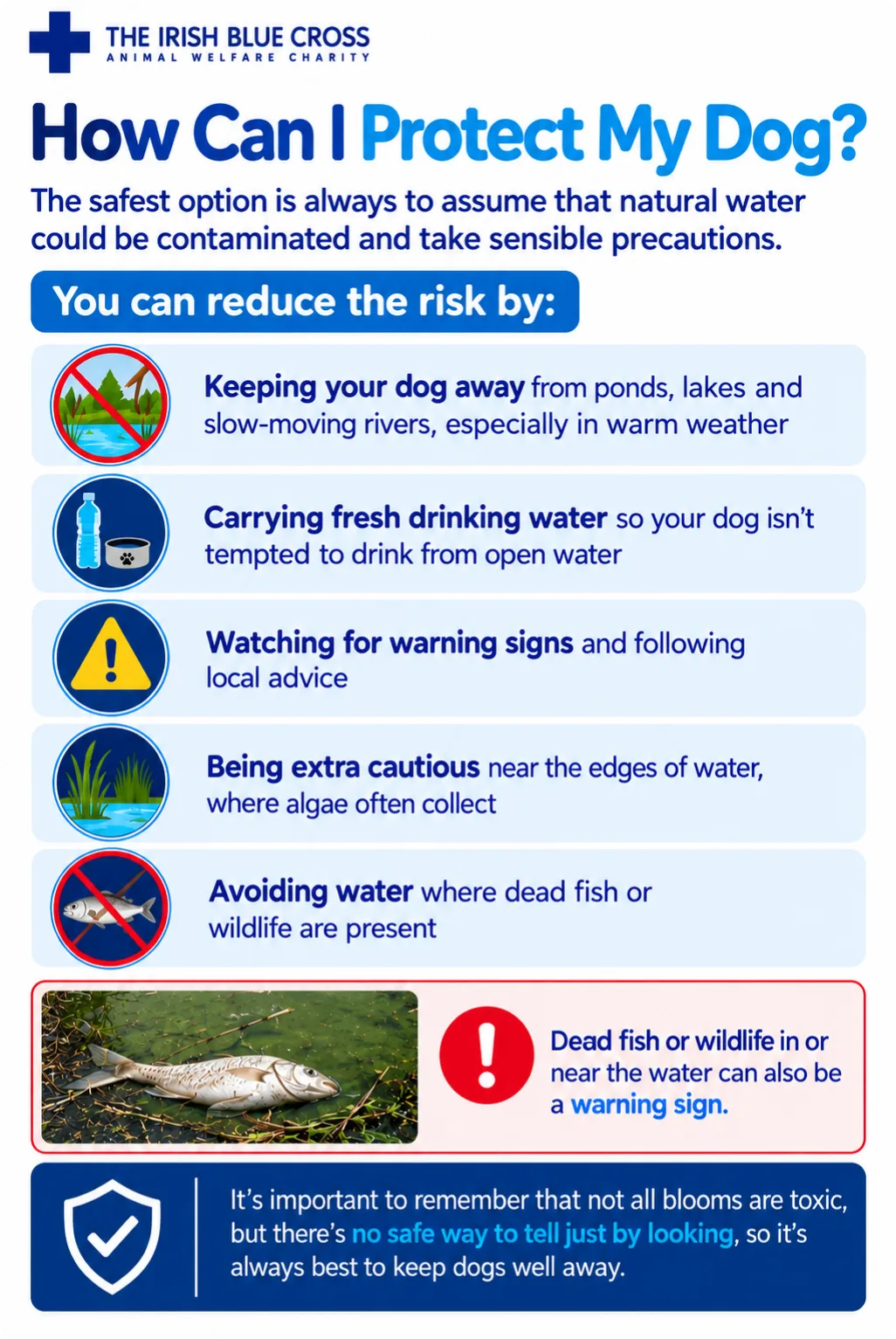
If you think you’ve spotted blue-green algae and there are no warning signs in place, you can report it here so it can be investigated.
Yes. Cats can also be poisoned if they drink contaminated water, and veterinary advice should be sought immediately if exposure is suspected.
People can become unwell through contact too, particularly children.