
Colitis is a condition where the large intestine (also known as the colon) becomes inflamed. When this happens, it can upset your dog’s digestion and lead to diarrhoea that often contains blood or mucus, which can be alarming to see.
The good news is that colitis is usually short-lived and many dogs recover within a few days with the right care. Some dogs, however, experience repeat flare-ups throughout their lives and may need ongoing management.
If you’re worried your dog may have colitis, it’s best to book an appointment with your vet. Bringing a fresh poo sample, or even a clear photo, can be very helpful.
Colitis mainly affects your dog’s bowel movements, but it can also make them feel uncomfortable or unwell.
Common signs include:
Symptoms often come on quite suddenly and may look dramatic, even if your dog is otherwise fairly bright.
You should contact your vet if your dog has any of the symptoms listed above, or if you’re concerned about changes in their poo. While mild colitis may settle quickly, ongoing symptoms or signs of pain need veterinary advice.
Your vet may ask you to bring in a stool sample, as this can help rule out infections or parasites and guide treatment.
If your vet asks for a sample, collect a small amount of fresh poo using a clean bag or container. Try to keep it cool and bring it to the clinic as soon as possible. If collecting a sample isn’t practical, a clear photograph of your dog’s poo can still be useful.
Treatment depends on how severe your dog’s symptoms are and how often they occur. Many dogs improve quickly with simple measures, which may include:
It’s important to note that standard anti-inflammatory pain relief (such as NSAIDs) is not safe for colitis and should never be given unless prescribed by your vet.
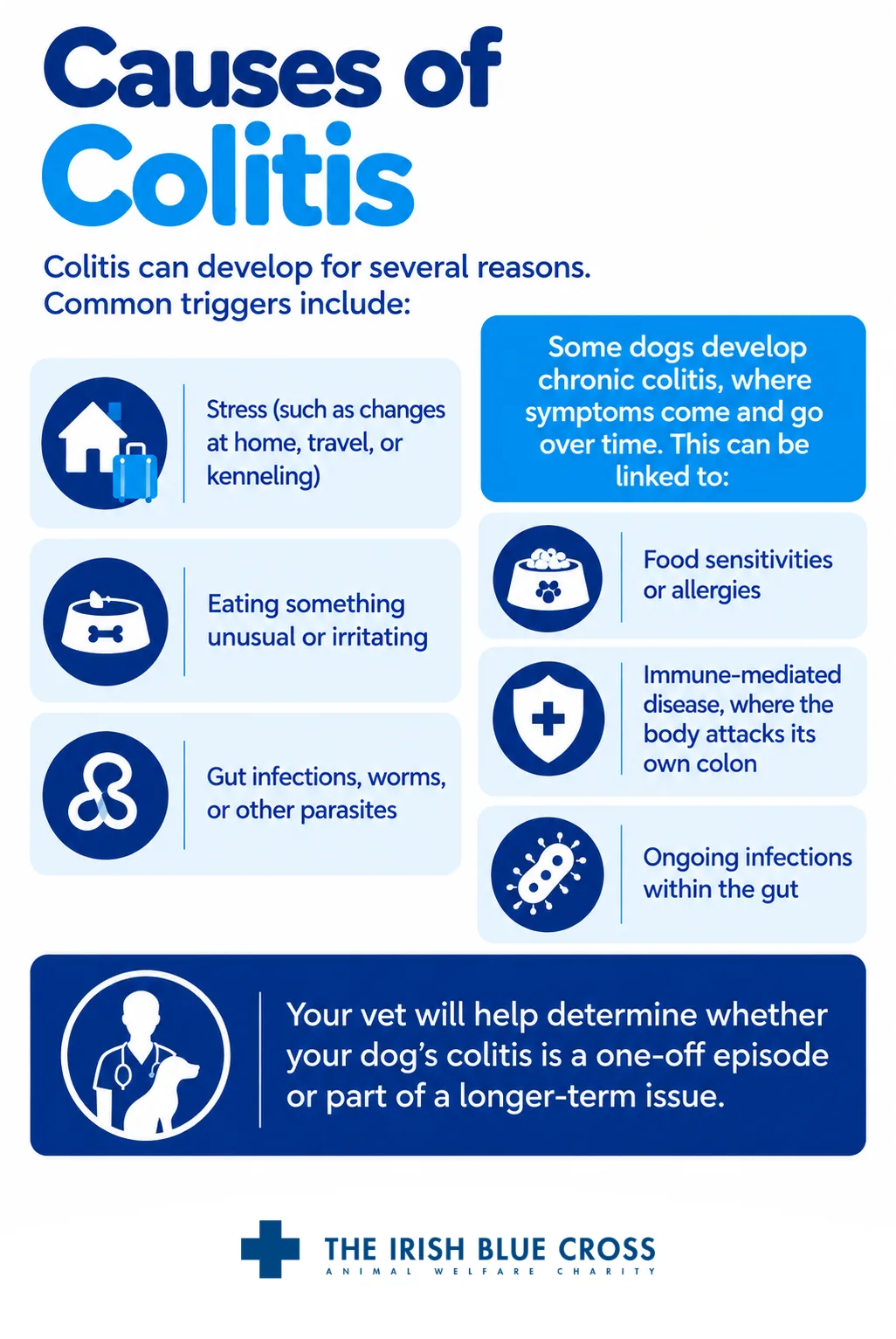
If your dog hasn’t improved within a few days of treatment, or if colitis keeps returning, your vet may recommend further tests. These could include blood tests, imaging, food trials, or in some cases, samples taken from the colon.
Dogs with chronic colitis often do very well once a long-term plan is in place. This may involve a carefully controlled diet, avoiding treats, preventing scavenging, regular worming, and extra treatment during flare-ups.
Most cases of colitis are short-term and resolve within a few days with appropriate care. Dogs with chronic colitis may take longer to stabilise, but with the right treatment plan, many enjoy a good quality of life.
The cost of treating colitis varies depending on whether it’s a single episode or an ongoing condition that needs further tests and long-term care.
If you’re able to, consider pet insurance while your dog is young and healthy to help with unexpected illness or injury. If your dog becomes unwell, talk openly with your vet about the options, the likely costs, and what feels manageable for you. Together, you can tailor a plan that’s right for your dog and your situation.