
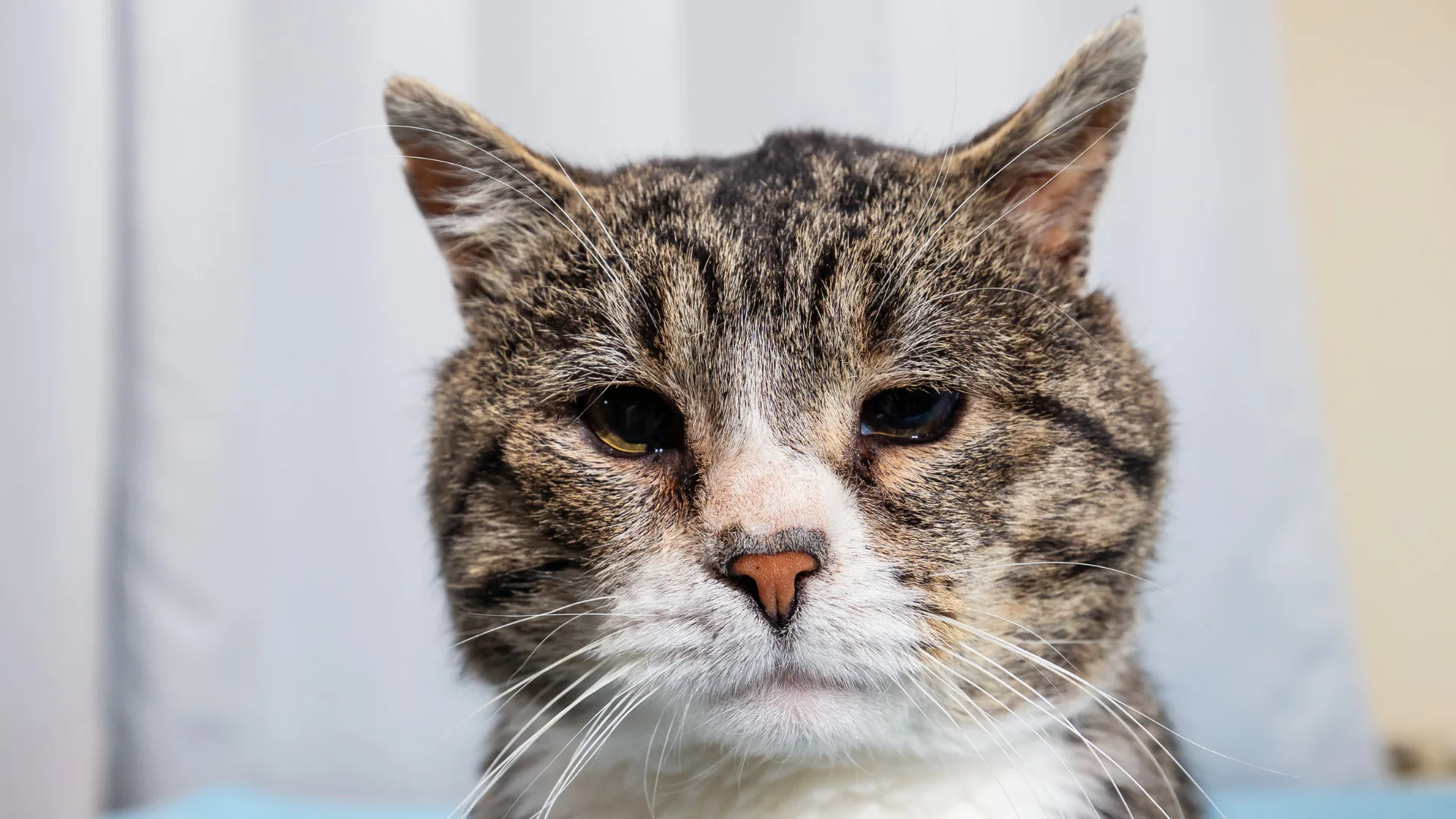
The kidneys play a vital role in keeping your cat healthy. They regulate fluid balance, help control blood pressure and filter waste products from their blood. These waste products are normally passed out of the body in their urine.
Chronic kidney disease (CKD), a common condition in cats, particularly in later life, occurs when the kidneys gradually lose their ability to function properly over a long period of time, usually months or years. As kidney function declines, waste products build up in the bloodstream, which can make your cat feel unwell.
While CKD cannot be cured, early diagnosis and ongoing care can help slow its progression and improve your cat’s comfort and quality of life. Many cats live happily for months or even years with the right support.
In most cases, the exact cause of CKD is never identified. It is most often linked to age-related changes, but sometimes it can be associated with:
CKD is different from acute kidney injury, which happens suddenly, often due to poisons like antifreeze or lilies and causes rapid, severe illness.
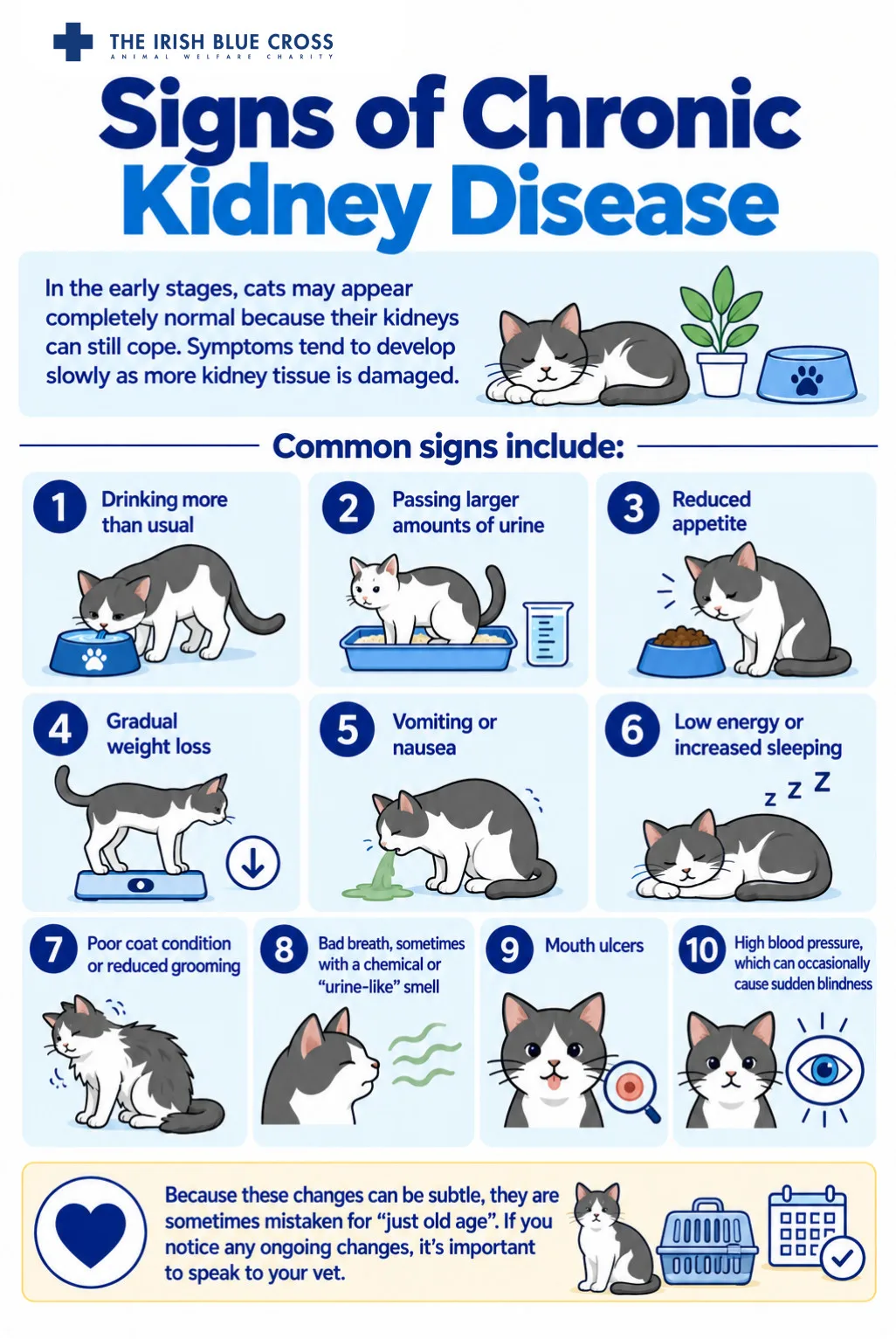
CKD is usually diagnosed using a combination of blood tests and urine tests, which measure how well the kidneys are working and whether waste products are building up in the body.
Your vet may also:
Based on the results, your vet may grade your cat’s kidney disease. This helps guide treatment and monitoring, but every cat is managed as an individual.
Although damaged kidney tissue cannot be repaired, treatment aims to slow disease progression, manage symptoms and support quality of life.
If your cat is unwell at diagnosis, they may need short-term treatments such as:
Once stable, ongoing care may include:
Prescription kidney diets
Specially formulated kidney diets are one of the most effective ways to manage CKD. These diets reduce the workload on the kidneys and help control levels of phosphorus and protein waste. Wet food is often encouraged, as it also helps increase fluid intake.

Encouraging fluid intake
Cats with CKD lose more water in their urine and are prone to dehydration. Offering multiple water bowls, refreshing water frequently, and using water fountains can help encourage drinking.
Phosphate control
If blood phosphorus levels remain high despite dietary changes, your vet may recommend adding a phosphate-binding supplement to your cat’s food.
Monitoring and check-ups
Regular veterinary visits are important to track kidney function, blood pressure and overall wellbeing. Monitoring allows treatment to be adjusted, as your cat’s needs change.
Additional support
Some cats benefit from vitamin supplementation or treatment for complications such as anaemia. Your vet will advise if these are appropriate.
Many cats with CKD live comfortably for a long time with appropriate care and monitoring. However, CKD is a progressive condition, meaning it will worsen over time.
Your vet will work with you to regularly assess your cat’s comfort and quality of life. When treatment is no longer effective and your cat’s wellbeing is significantly affected, it may be kinder to consider euthanasia. This is always a difficult decision, and your veterinary team will support you throughout.
You should contact your vet if:
Managing CKD often involves ongoing treatment and regular monitoring, which can become costly over time. It’s important to have open conversations with your vet about finances and available options as treatment plans can often be adapted to suit your circumstances.
If you’re able to, consider pet insurance while your cat is young and healthy to help with unexpected illness or injury. If your cat becomes unwell, talk openly with your vet about the options, the likely costs, and what feels manageable for you. Together, you can tailor a plan that’s right for your cat and your situation.