
As cats grow older, it’s natural to notice changes in their behaviour and routines. Senior cats often sleep more, play less, and may prefer spending extra time with their people. While some changes are a normal part of ageing, shifts in personality, habits or activity levels can also signal pain or illness, so it’s important to stay observant.
Most cats are classed as middle-aged from around seven years of age. Thanks to good nutrition and veterinary care, many cats now live well into their teens, with an average lifespan of around 12–13 years. Some cats live to 20 years or more.
Many veterinary practices offer senior health programmes for older cats. Regular check-ups can help detect age-related conditions early, allowing treatment to begin sooner and helping your cat stay comfortable and well for longer.
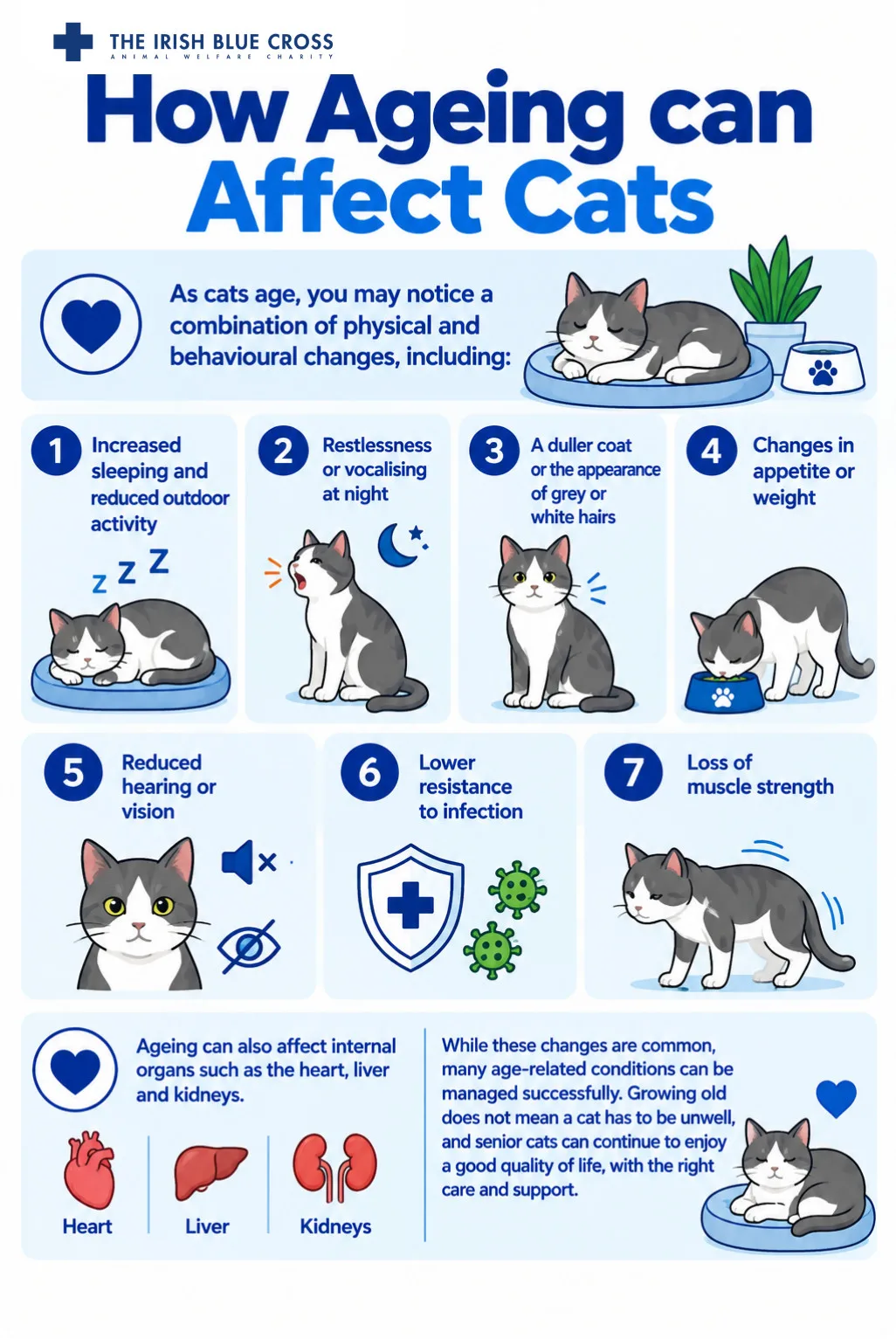
Weight changes are common in older cats and should always be taken seriously.
Your vet may recommend a specially formulated senior diet. Some older cats prefer softer foods, or meals that are gently warmed to enhance aroma. If your cat is not on a prescription diet, adding a small amount of tinned fish (in spring water) may encourage eating.
Avoid putting your cat on a sudden or restrictive diet. Weight management should always be done under veterinary guidance to ensure nutritional needs are met.
Regular weighing is one of the best ways to spot early health issues. Weighing your cat every one to two months can help identify gradual weight loss or gain that might otherwise go unnoticed.
A healthy cat should have a visible waist when viewed from above, and you should be able to feel their ribs with your fingertips with gentle pressure.

Older cats may struggle to groom themselves properly, leading to matted or unkempt coats. This can be linked to joint pain or dental disease, so please consult your vet if you notice changes like these.
Claws can also overgrow as activity levels decrease. If claws are not worn down naturally, they may curl and cause discomfort or injury. Your vet can advise on safe trimming, if needed.
Regular veterinary check-ups are essential for senior cats. Contact your vet if you notice behavioural changes, signs of pain or any of the symptoms listed below. Never give human pain relief to cats, as many medications are highly toxic.
Arthritis causes painful inflammation of the joints and is extremely common in older cats. It often affects their hips, elbows, knees and ankles.
Signs may include stiffness, reluctance to jump, reduced activity or limping. Many cats hide pain well, meaning arthritis can go unnoticed without veterinary assessment.
While arthritis cannot be cured, it can often be managed with medication, weight control and environmental adaptations.
Chronic kidney disease develops gradually over time and is common in senior cats. Signs may include increased thirst, weight loss and lethargy.
Although the condition cannot be reversed, treatment and dietary management can slow progression and help maintain quality of life.
An overactive thyroid is frequently seen in older cats and causes their body to work too quickly. Common signs include weight loss, despite a good or increased appetite, increased thirst, increased activity or restlessness and a poor coat.
Diagnosis is made using blood tests, and treatment is often very effective, when started early.
Dental problems become more common with age due to long-term wear and plaque build-up.
Signs include:
If your cat shows signs of mouth pain, please contact your vet for advice.
Cognitive dysfunction is like dementia in people and can affect older cats as brain function declines.
You may notice:
Although the condition cannot be cured, supportive care, sticking to a routine and medication, may help manage symptoms. Your vet will rule out other causes before making a diagnosis.
Vision and hearing can decline with age or because of medical conditions. Signs include cloudiness of the eyes, increased caution, or being easily startled.
To support cats with sensory loss:
Diabetes is more common in older or overweight cats and occurs when the body cannot regulate blood sugar properly.
Signs include increased thirst, frequent urination, weight loss and increased appetite. With veterinary diagnosis and treatment, diabetes can often be well managed.
The risk of cancer increases with age. It can affect many parts of the body, and symptoms vary widely.
Warning signs include:
Not all lumps are cancerous, but any new or changing signs should be checked by a vet.
Many age-related conditions can be managed successfully for months or years. However, there may come a time when treatment is no longer effective, or your cat’s comfort cannot be maintained.
Regular discussions with your vet about your cat’s quality of life can help guide difficult decisions. If you are worried your cat is suffering, your vet can offer compassionate advice and support during this time.