

Breast cancer, also known as mammary cancer, is one of the more common tumours seen in female dogs. It usually appears as one or more lumps in the mammary glands, which are found along your dog’s underside around the nipples. Some lumps are harmless, while others can be cancerous and may spread to other parts of the body if left untreated.
Mammary tumours are most often diagnosed in older dogs, typically from around seven years of age. Dogs that are not spayed, or that are spayed later in life, are at a higher risk. While breast cancer is far more common in female dogs, it can occasionally affect males too.
Hormones are thought to play a key role in the development of mammary tumours. This is why unspayed dogs are more likely to develop breast problems over time. However, not all mammary lumps are cancerous, and only a vet can determine whether a lump is benign or malignant.
The signs of breast cancer can vary, depending on how early the condition is detected. In the early stages, dogs often seem well apart from a lump.
You may notice:
If the cancer is more advanced, symptoms can include:
These signs don’t always mean cancer, but any changes to your dog’s mammary glands should be checked by your vet as soon as possible.
Some unspayed dogs develop swollen mammary glands after their season due to a false pregnancy. Your vet can help tell the difference and advise on next steps.
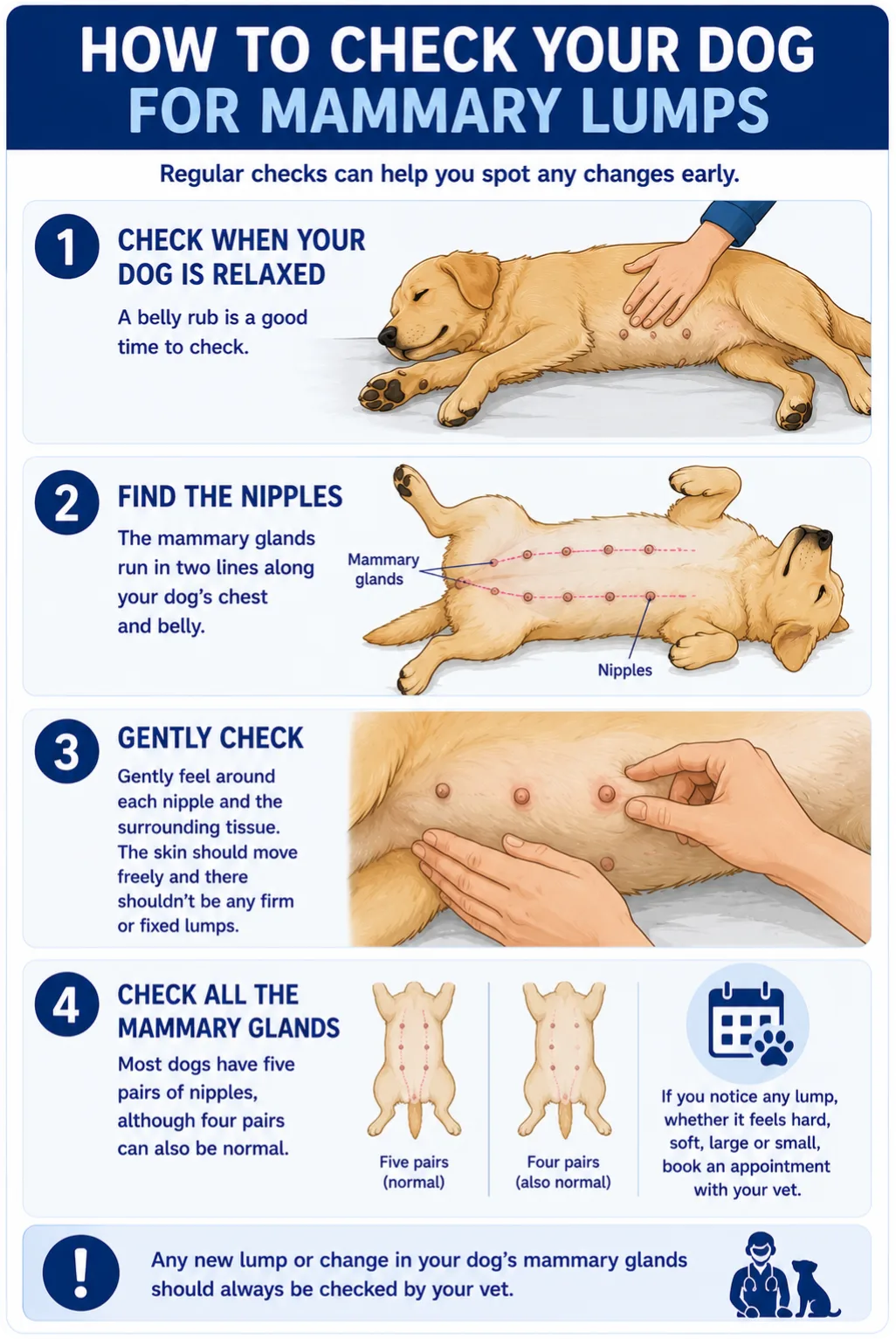
If your vet finds a lump, they’ll assess its size, texture and whether it can be moved under the skin. They’ll also look for signs such as swelling, skin changes or ulcers.
Further tests may be needed, such as:
Surgery is usually recommended to remove the lump or affected mammary glands. Sadly, if cancer has already spread extensively, surgery may not be possible.
Benign tumours, which are non-cancerous and do not spread
Malignant tumours, which are cancerous and can grow quickly or spread to other parts of the body
Surgery is the most common treatment for mammary cancer in dogs. The earlier a tumour is removed, the better the outcome is likely to be.
Depending on the situation, surgery may involve removing:
Your vet will talk you through what’s involved and whether surgery is in your dog’s best interests. If the cancer has already spread, or if surgery would be too invasive, other options may be discussed.
Most dogs recover well after surgery and can often go home the same day, though some may need to stay overnight. Mild bruising or swelling around the wound is common.
Your vet will guide you on aftercare, which usually includes:
Never give your dog human painkillers unless your vet has specifically advised it, as some can be dangerous for pets.
While canine breast cancer can’t always be prevented, neutering female dogs significantly reduces the risk. Spaying before the first season (heat) offers the greatest protection, but neutering later in life can still reduce the likelihood of mammary disease and other serious conditions.
Contact your vet if you notice:
You know your dog best, if something doesn’t seem right, it’s always worth getting it checked.