
Hip dysplasia is a painful condition that affects the hip joints, most often developing while a dog is still growing. Although it begins early in life, the signs aren’t always obvious straight away and may not appear until a dog is older.
The condition causes the hip joint to form incorrectly, leading to stiffness, discomfort and, over time, arthritis. While hip dysplasia can’t be cured, many dogs can live happy, comfortable lives with the right care and support.
A healthy hip works like a well-fitted ball and socket, allowing smooth and pain-free movement. In dogs with hip dysplasia, this joint doesn’t fit together properly. Instead of moving easily, the joint becomes loose and unstable.
This poor fit causes increased wear on the joint surfaces, leading to inflammation, pain and gradual damage. Over time, this usually results in arthritis, which can worsen as your dog gets older.
Hip dysplasia is primarily a genetic condition, meaning it is passed down from parents to puppies. However, how severely a dog is affected can also be influenced by other factors as they grow.
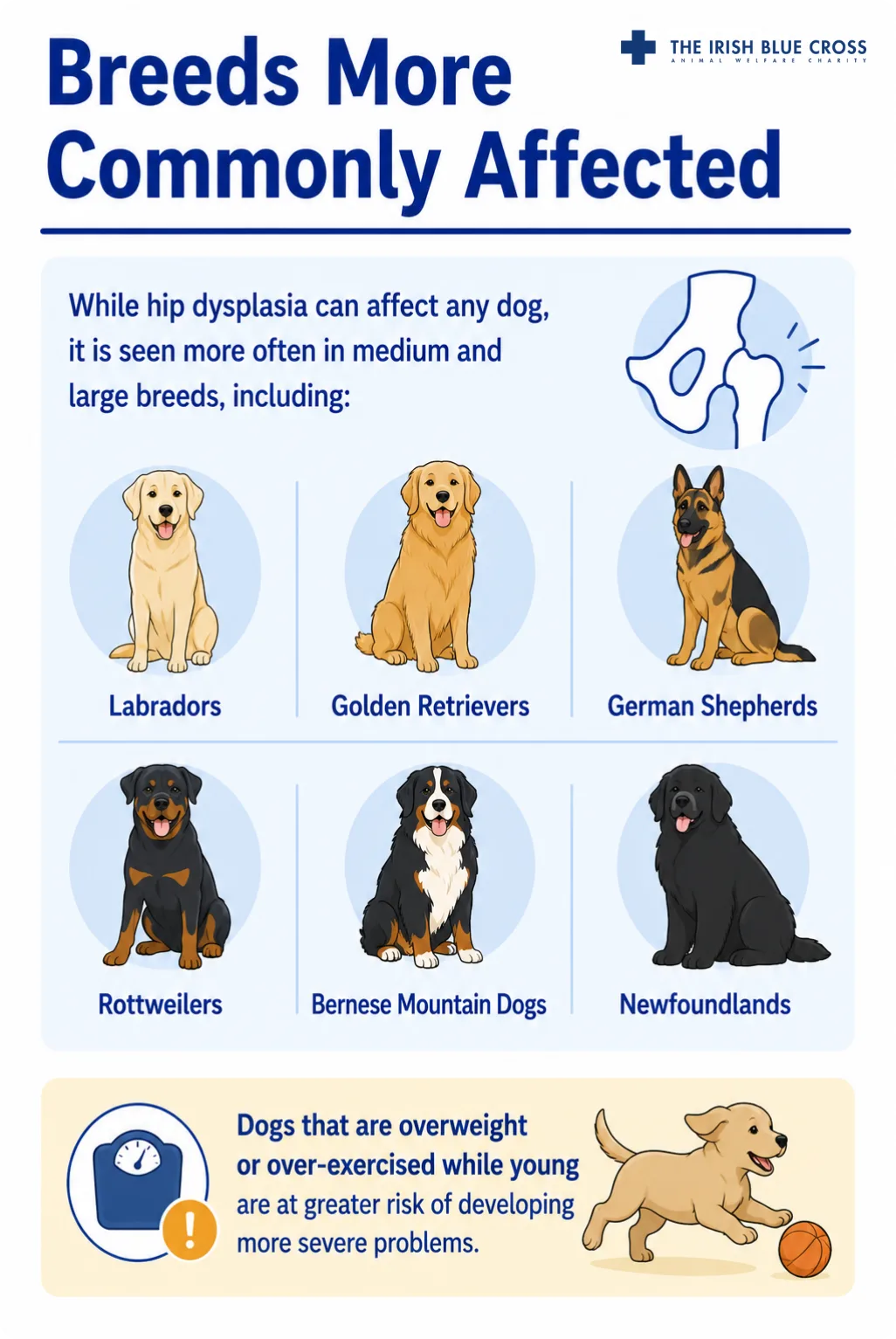
Things such as rapid growth, being overweight, unsuitable exercise during puppyhood and poor nutrition can all place extra strain on developing joints and make symptoms worse. While hip dysplasia can affect any dog, it is more common in medium to large breeds.
Symptoms can range from mild stiffness to significant pain and mobility problems. Some dogs show signs when they are still puppies, while others may not struggle until later in life.
Common signs include:
As many dogs are very good at hiding pain, it’s important to check with your vet if you notice any changes in movement or behaviour.
Treatment focuses on keeping your dog comfortable and slowing the progression of joint damage.
This may include pain relief and anti-inflammatory medication prescribed by your vet, careful weight management, controlled low-impact exercise, and therapies such as physiotherapy or hydrotherapy. Some dogs may also benefit from joint supplements, but these should always be discussed with your vet first.
If pain cannot be controlled with ongoing management, surgery may be recommended. There are several surgical options available, all designed to improve comfort and mobility. Your vet will talk you through the choices and help you decide what’s best for your dog.
Most surgical procedures require referral to a specialist veterinary centre.
Hip dysplasia is a painful, lifelong condition so, maintaining a healthy weight, sticking to appropriate exercise, and attending regular veterinary check-ups are key to keeping your dog comfortable.
Most dogs with hip dysplasia will develop arthritis as they age. Your vet can help adjust pain relief and treatment plans as your dog’s needs change over time.
If your dog’s pain becomes severe and can no longer be managed, you will need to have a discussion with your vet about whether letting them go is the kindest option.
The only true way to prevent hip dysplasia is through responsible breeding.
Screening schemes are available to assess hip health before dogs are bred, helping to reduce the number of puppies affected by this painful condition.
If you are thinking about buying a puppy, choose a breeder who screens their dogs and is open about hip scores.
Contact your vet if your dog shows signs of pain, stiffness, limping or difficulty moving, or if their behaviour changes. You know your dog best so, if something doesn’t seem right, it’s always worth getting veterinary advice.
The cost of managing hip dysplasia can build up over a dog’s lifetime, especially if surgery is needed.
If you’re able to, consider pet insurance while your dog is young and healthy to help with unexpected illness or injury. If your dog becomes unwell, talk openly with your vet about the options, the likely costs, and what feels manageable for you. Together, you can tailor a plan that’s right for your dog and your situation.