
Pet Loss Support Helpline – call 1800 83 99 54 for support and guidance, or find out more.

Skin Cancer in Cats

Skin cancer occurs when cells within the skin begin to grow in an uncontrolled way, forming a mass or lesion. Cats can develop several different types of skin cancer, some of which are linked to sun exposure, while others arise for reasons that are not fully understood.

Skin cancers can vary widely in how they look, how quickly they grow, and how serious they are. Regularly checking your cat’s skin and seeking veterinary advice early gives the best chance of successful treatment.
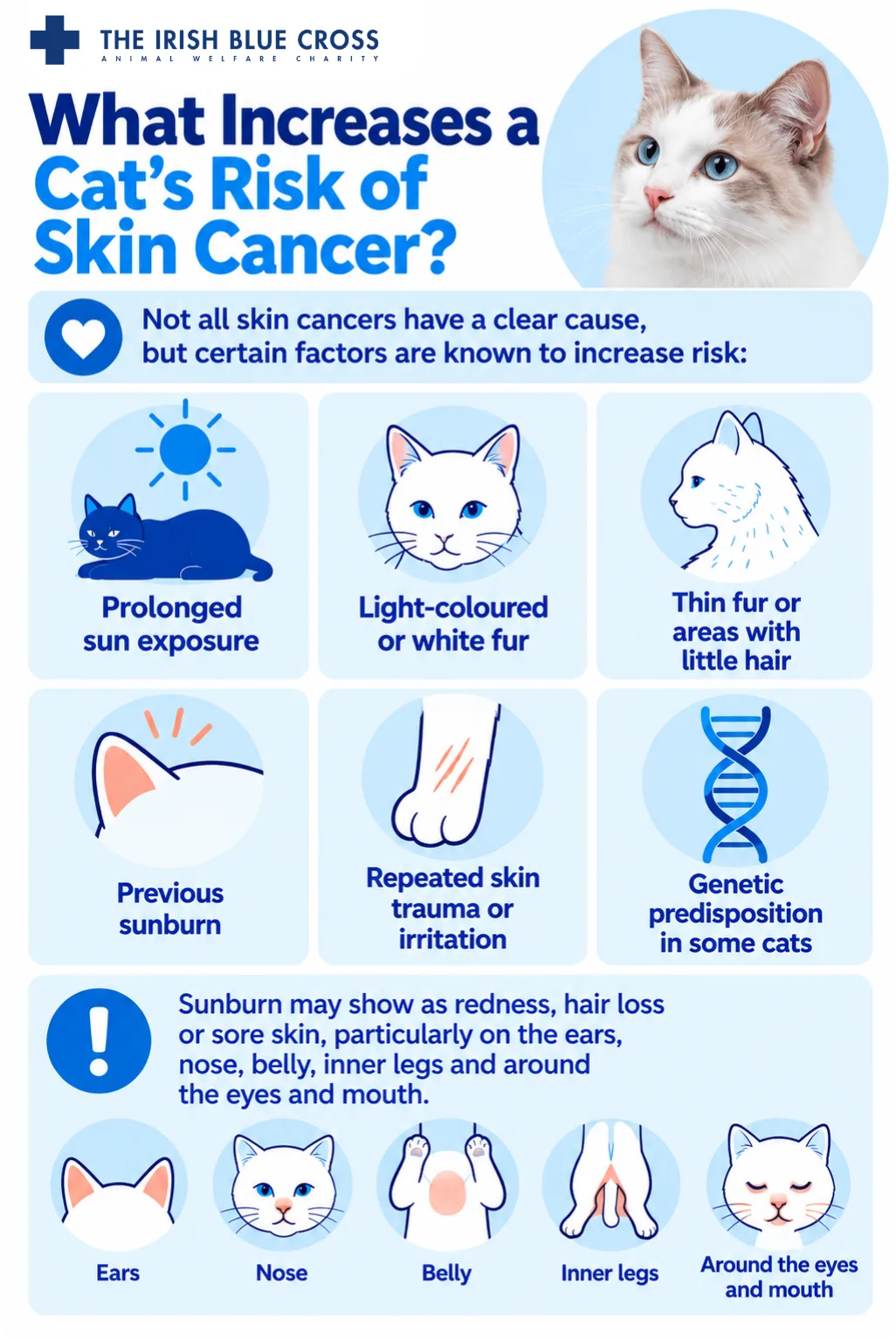
What Increases a Cat’s Risk of Skin Cancer? Not all skin cancers have a clear cause, but certain factors are known to increase risk: Prolonged sun exposure Light-coloured or white fur Thin fur or areas with little hair Previous sunburn Repeated skin trauma or irritation Genetic predisposition in some cats Sunburn may show as redness, hair loss or sore skin, particularly on the ears, nose, belly, inner legs and around the eyes and mouth.

Protecting Your Cat from Sun Damage

Reducing UV exposure is one of the most effective ways to lower the risk of sun-related skin cancer.

  • Keep your cat indoors during peak sunlight hours, usually late morning to mid-afternoon
  • Ensure shaded areas are available outdoors
  • Apply a pet-safe sunscreen to exposed areas such as ear tips and noses

If a veterinary sunscreen is not available, a sunscreen suitable for babies may be used only if advised by your vet. It should be fragrance-free, non-toxic if licked, and have an SPF of at least 30.

Many adult human sunscreens contain zinc or other ingredients that are toxic to cats. Never use standard adult sunscreen on your cat.

Signs of Skin Cancer in Cats

Skin cancer can look very different from one cat to another. Signs to watch out for include:

  • New lumps or bumps
  • Wounds or sores that do not heal
  • Scabs or crusted areas
  • Ulcers
  • Raised or wart-like growths
  • Changes in skin colour

Lesions may be pink, red, black, brown or grey. Growths on the nose may cause nosebleeds, discharge or breathing difficulties.

Most skin lumps in cats are not cancerous, but any new or changing lesion should be checked by a vet as soon as possible.

How Skin Cancer is Diagnosed

A visual examination alone is rarely enough to identify the type of skin tumour, so your vet may recommend:

  • A fine needle sample of the lump
  • A biopsy under sedation or anaesthetic
  • Surgical removal of the entire mass for testing

In some cases, lymph node samples or imaging such as X-rays, ultrasound or CT scans may be advised to check whether the cancer has spread.

Treatment Options

Treatment depends on the type of cancer, its size and location, whether it has spread, and your cat’s overall health.

Surgery

Removing the tumour is often the preferred option if it can be done safely. For Squamous Cell Carcinoma affecting the ear tips, removal of part or all of the ear may be recommended. While this can be difficult to consider, cats usually adapt very well, and their hearing is not affected.

Other Therapies

Radiotherapy or chemotherapy may be recommended in certain cases, particularly if surgery is not possible or if the cancer is aggressive. These treatments usually require referral to a specialist.

Supportive Care

Pain relief and anti-inflammatory medication may be used to keep your cat comfortable, especially if curative treatment is not an option.

Outlook

The outlook for cats with skin cancer varies greatly. When cancer is detected early and fully removed, many cats go on to live normal, comfortable lives. In other cases, tumours may return or spread, making management more challenging.

If the cancer cannot be cured, your vet may focus on palliative care, keeping your cat comfortable and maintaining their quality of life for as long as possible. If your cat’s wellbeing declines, your veterinary team will help you make kind and compassionate decisions.

When to Contact Your Vet

Contact your vet promptly if you notice:

  • Any new or unusual skin changes
  • Lumps that are growing, bleeding or not healing
  • Signs of discomfort or pain around a lesion

You know your cat best — if something doesn’t feel right, it’s always worth seeking advice.

Cost Considerations

Treatment for skin cancer can involve surgery, tests and follow-up care, which may become expensive.

If you’re able to, consider pet insurance while your cat is young and healthy to help with unexpected illness or injury. If your cat becomes unwell, talk openly with your vet about the options, the likely costs, and what feels manageable for you. Together, you can tailor a plan that’s right for your cat and your situation.

Types of Skin Cancer Seen in Cats

Squamous Cell Carcinoma (SCC)

Squamous cell carcinoma is one of the most common skin cancers in cats and is strongly associated with damage from ultraviolet (UV) light. It most often affects cats areas with little, white or no fur, such as the tips of the ears, the nose, eyelids and lips.

SCC often begins as sun-damaged skin (sometimes called solar dermatitis), which may appear red, scaly or crusty. These patches can seem to heal and then return and may be mistaken for minor injuries. Over time, the damaged skin can develop into a cancerous lesion that does not heal and may ulcerate.

SCC usually spreads slowly to other parts of the body, but it can be locally aggressive and difficult to manage, especially when it affects the nose or eyelids. Early treatment offers the best outcome.

Mast Cell Tumours

Mast cell tumours arise from mast cells, which are part of the immune system. On the skin, they often appear as single lumps that may be raised, hairless, red or itchy. Some can become sore or ulcerated.

The exact cause is unclear, but genetics, chronic inflammation and skin irritation may play a role. Many mast cell tumours remain confined to the skin, though some can spread to other organs. These tumours are most commonly found on the head and neck, but they can also occur internally, such as in the spleen or intestines.

Melanoma

Melanoma develops from pigment-producing cells in the skin. In cats, it is most often seen on the head or ears but can occasionally appear on haired skin or in other parts of the body.

Melanomas can grow quickly and may spread to lymph nodes and internal organs. Unlike in people, the role of sunlight in causing melanoma in cats is not well understood.

Fibrosarcomas

Fibrosarcomas are tumours arising from connective tissue. They can appear anywhere on the body but are often found on the head, legs or flanks. These tumours usually grow slowly at first but can become large and invasive over time.

Share

Share: