
Ringworm is a common skin condition in cats that can be worrying for owners, especially as it can spread to other animals and people. Although the name sounds alarming, ringworm is not caused by worms. It is a fungal infection of the skin, like athlete’s foot in humans.
With prompt veterinary treatment and good hygiene at home, most cats make a full recovery. This page explains what ringworm is, how to recognise it, how it is treated, and how to protect your household.
Ringworm is a contagious fungal skin infection that feeds on the outer layers of the skin, hair and claws. It often causes patches of hair loss and irritated skin, sometimes forming a circular or ‘ring-like’ shape, although this is not always the case.
Ringworm does not only affect cats. It can spread between cats, dogs, small animals, livestock and humans. The fungus is very resilient and can survive in the environment, such as on bedding, furniture and grooming equipment, for many months or even years.
While mild cases may occasionally resolve on their own, most cats need treatment, particularly kittens, elderly cats, long-haired breeds and cats with weakened immune systems.
Cats usually catch ringworm through:
Ringworm spores are shed in infected hair and skin flakes, making it easy for the infection to spread, especially in multi-cat households, rescue environments or catteries.
Intact healthy skin is quite resistant to infection, but any graze or break to the skin allows infection to develop more quickly.
Young cats (under one year old) are more vulnerable because their immune systems are still developing. Long-haired cats are also at higher risk, as spores can become trapped in their coats.
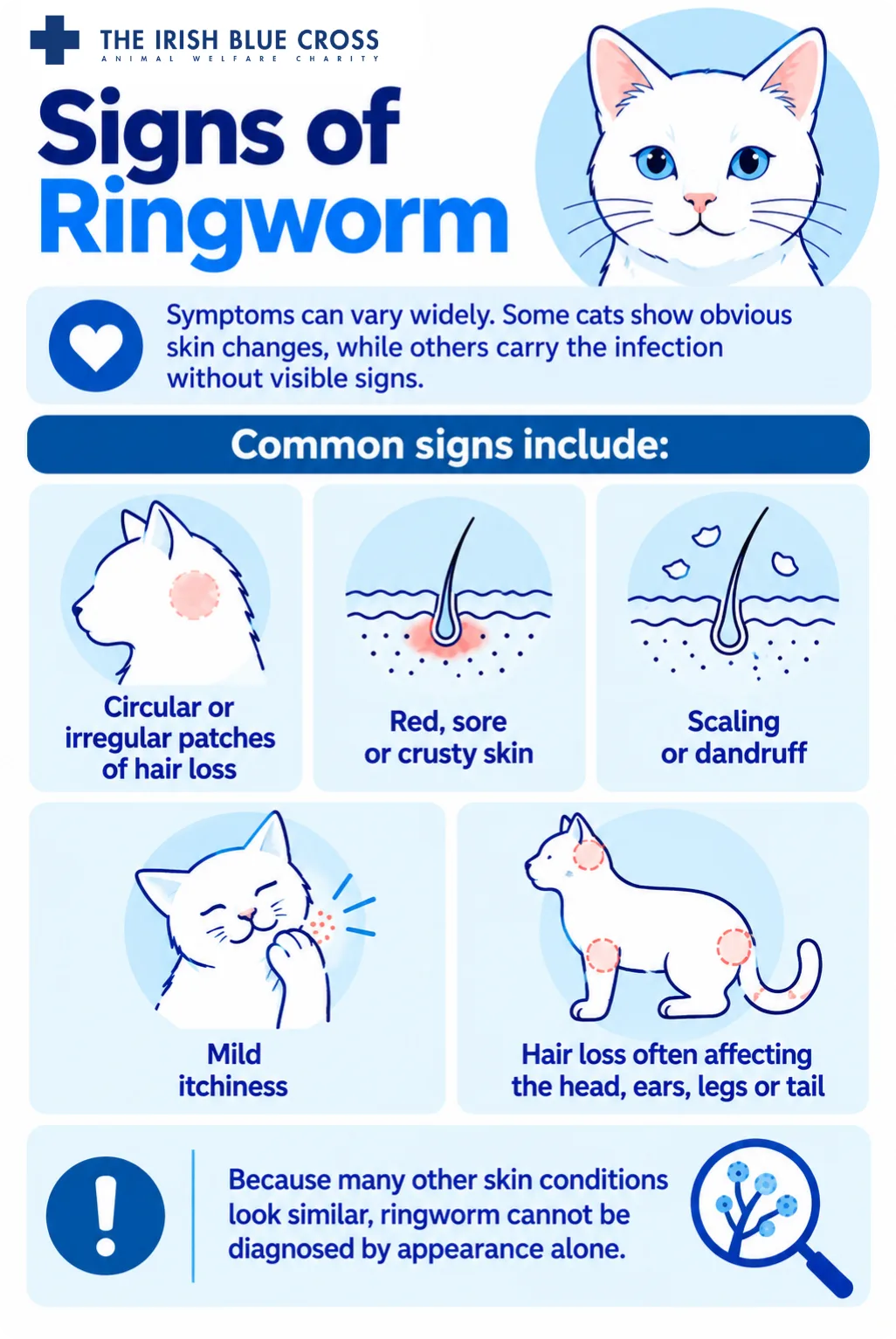
Contact your vet if:
Early diagnosis helps limit spread and shortens treatment time.
Your vet may use several methods to confirm ringworm, including:
Fungal culture is the most reliable test, but it can take up to two weeks for results.
Ringworm spores are very hardy. To prevent reinfection and protect people and other pets:
Good hygiene is essential until treatment is complete.
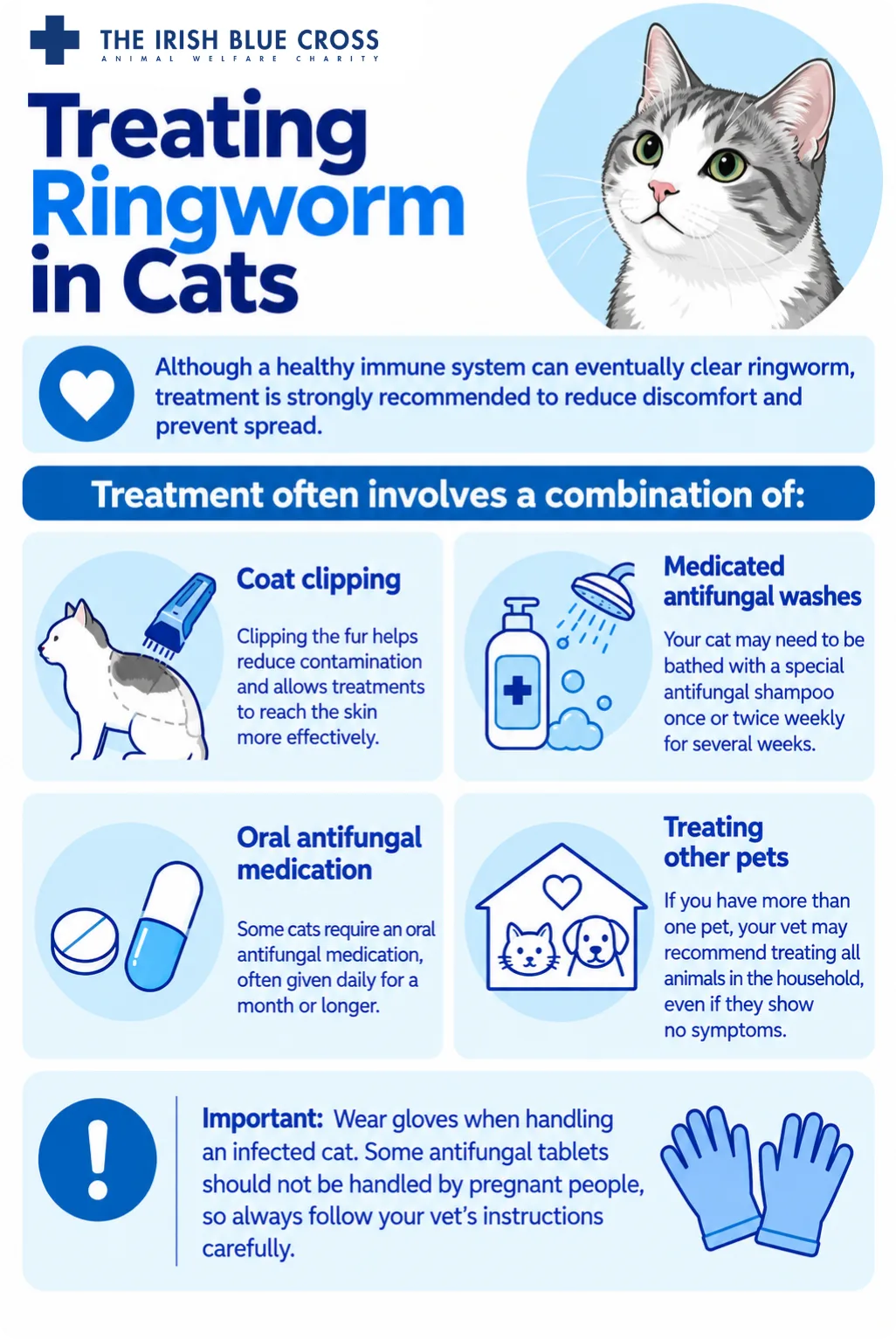
If one cat is diagnosed with ringworm, it’s safest to assume all cats have been exposed. Treating every cat at the same time helps eliminate the infection more quickly and reduces the risk of ongoing spread.
Ringworm can take several weeks to fully resolve, but treatment is effective in the vast majority of cases. Some cats may experience recurrence, particularly if they are stressed or unwell for other reasons.
If recovery is slow, your vet may recommend further tests to check for underlying health problems.
Yes. Ringworm can spread from cats to people through direct contact or contaminated surfaces. In humans, it often appears as a red, circular rash on the skin.
People with broken skin, eczema, weakened immune systems, young children and elderly individuals are more at risk. If your cat has ringworm, it’s best to:
If you think you may have ringworm, contact your GP for advice.
Treating ringworm can be costly because it often involves:
Speak openly with your vet about costs and options. There are often different approaches available, and they can help you choose what’s best for your cat and circumstances.