
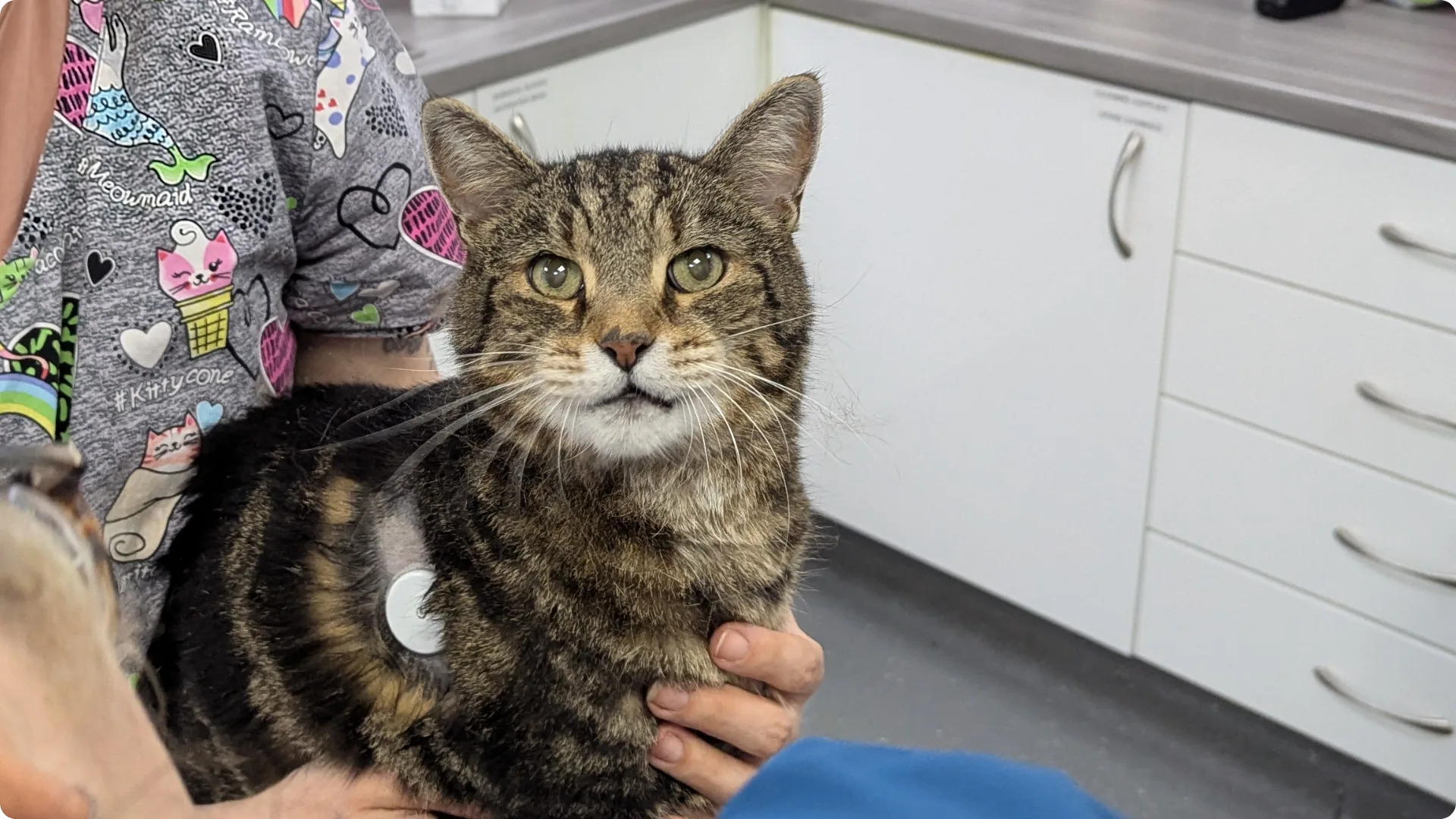
Feline diabetes is a long-term condition where a cat is unable to properly regulate the level of glucose (sugar) in their blood.
After a cat eats, glucose from food enters the bloodstream. A hormone called insulin, produced by the pancreas, allows this glucose to move into the body’s cells, where it is used for energy.
In diabetic cats, this process does not work properly. Either the pancreas does not produce enough insulin, or the body’s cells do not respond to insulin as they should. As a result, glucose builds up in the bloodstream (a condition known as hyperglycaemia) while the body’s cells are effectively starved of energy.
While a diagnosis can feel overwhelming, diabetes is manageable, and many cats go on to live happy, comfortable lives with the right treatment and support.
Most cats develop a form of diabetes like type 2 diabetes in humans. In this type, insulin is still produced initially, but the body becomes resistant to it. Over time, the pancreas becomes exhausted and insulin production may drop.
Type 1 diabetes, where no insulin is produced at all, is very rare in cats.
Unlike people with type 2 diabetes, most diabetic cats still need insulin injections to control their condition.
Diabetes can affect any cat, but risk is higher in cats who are:
Other risk factors include:

If diabetes becomes poorly controlled, cats may develop diabetic ketoacidosis (DKA), a life-threatening condition.
Signs of Diabetic Ketoacidosis include:
These signs require urgent veterinary attention.
Diagnosis involves a combination of:
Because stress can temporarily raise blood sugar levels in cats, your vet may repeat tests or run additional investigations to confirm the diagnosis and rule out other illnesses.
Treatment aims to stabilise blood sugar levels, control symptoms and maintain a good quality of life. This usually involves diet management and insulin therapy.
Diet plays a vital role in managing diabetes:
Consistency is key – avoid treats and sudden dietary changes.
Most diabetic cats require insulin injections, usually twice daily.
If you miss a dose, give the wrong amount, or your cat refuses food or vomits, contact your vet for advice.
Some cats, particularly those diagnosed early and managed well, may go into diabetic remission. This means they regain the ability to control their blood sugar without insulin injections.
Not all cats achieve remission, and those that do may relapse later, so ongoing monitoring and dietary control remain important.
Hypoglycaemia is a medical emergency and can occur if:
Signs of hypoglycaemia include:
If you suspect your cat has low blood sugar:
Regular vet visits are essential, especially after diagnosis. These may include:
Owners play a crucial role by:
Some owners may be able to monitor blood glucose at home using a glucometer or continuous glucose monitor, but this should always be done in partnership with your vet.
Many diabetic cats do very well with treatment and can live long, comfortable lives. The outlook is best when:
Cats with additional health problems may be harder to stabilise, and in severe or complicated cases, quality of life discussions may be necessary.
Untreated diabetes will eventually lead to severe illness and can be fatal.
Not all cases can be prevented, but you can reduce risk by:
Contact your vet if:
Early diagnosis and prompt treatment make diabetes much easier to manage.
Caring for a diabetic cat requires commitment and ongoing costs for medication, food, monitoring and vet visits. You are not alone, your veterinary team will support you with training, advice and regular reviews.
If you’re worried about finances or managing treatment, speak openly with your vet. Together you can explore options that are best for both you and your cat.
If you’re able to, consider pet insurance while your cat is young and healthy to help with unexpected illness or injury. If your cat becomes unwell, talk openly with your vet about the options, the likely costs, and what feels manageable for you. Together, you can tailor a plan that’s right for your cat and your situation.