
Feline Leukaemia Virus (FeLV) is a serious viral disease that affects cats. The virus interferes with the cat’s immune system and can lead to a variety of long-term health complications.
FeLV targets the bone marrow, where blood cells are produced. As a result, infected cats are less able to fight infections and may become unwell from illnesses that would normally be mild.
Cats with FeLV have a higher chance of developing cancers such as lymphoma and leukaemia.
FeLV can also cause:
The virus is present in bodily fluids such as saliva, blood, urine, faeces, milk, and nasal secretions. It is most commonly passed between cats that have frequent, close contact, including:
Kittens may become infected before birth or through their mother’s milk. Young, unvaccinated, unneutered (entire) cats that roam outdoors are at the highest risk, as they are more likely to encounter and interact with other cats.
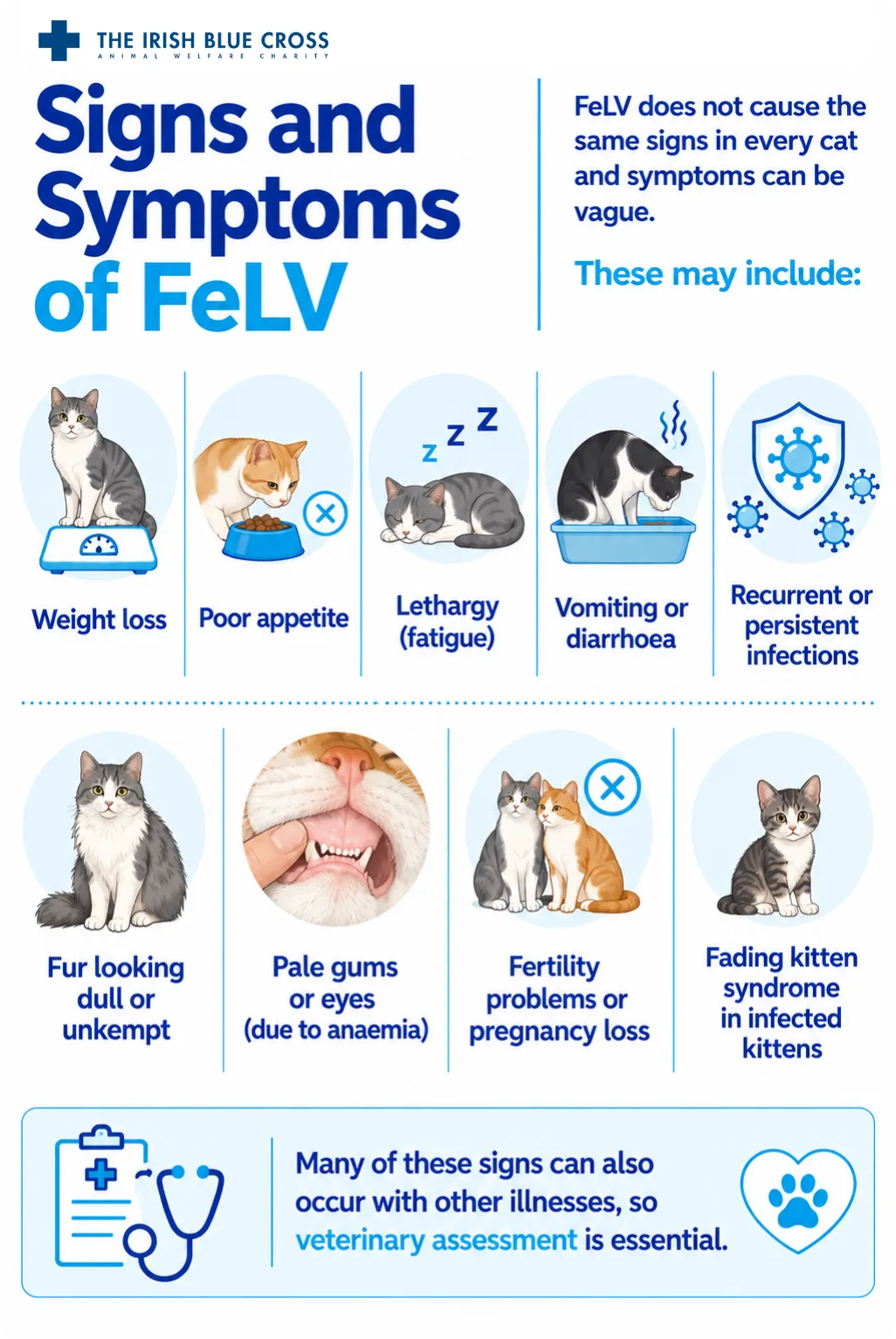
FeLV is diagnosed via a blood test. In some cases, your vet may recommend repeating the test after a few weeks, or sending a sample to an external laboratory to confirm the result.
Any cat that tests positive should be kept separate from other cats while further testing is carried out.
There is currently no cure for FeLV. Treatment focuses on supportive care, to maintain comfort and quality of life for as long as possible.
Cats with FeLV should live indoors permanently. This reduces the risk of spreading the virus to other cats and protects them from infections they may struggle to fight. If an indoor lifestyle causes significant distress, your vet can help you weigh up welfare considerations.
Because their immune system is compromised, FeLV-positive cats should be examined by a vet as soon as any signs of illness appear.
Regular vaccinations, flea and worm control, and routine health checks (usually every 6–12 months) are very important.
A high-quality, complete cat food should be fed. Raw diets are not recommended, as they may contain bacteria that pose a risk to immunocompromised cats.
It’s best for FeLV-positive cats to be the only cat in the home, given the risk of spreading the virus or picking up infections from other cats.
Around one third of cats exposed to FeLV develop a persistent infection. Sadly, this is often life-limiting, and many affected cats deteriorate within a few years of diagnosis. In some cases, euthanasia may be the kindest option to prevent suffering.
Vaccination is the most effective way to reduce the risk of FeLV. Kittens usually receive their initial vaccines from around 8–9 weeks of age, followed by a second dose and ongoing boosters throughout life. Vaccination is especially important for cats that go outdoors and for indoor cats who share a home with cats who go outdoors.
Vaccination greatly reduces risk but does not provide a 100% guarantee. Preventing direct contact with infected cats remains essential.
FeLV cannot be passed to humans.
You know your cat best—if in doubt, always seek veterinary advice.
Thankfully FeLV does not survive for long in the environment. With thorough cleaning of bowls, bedding, and litter trays, it is generally safe to introduce a new cat, when you feel ready. If you have other cats, your vet may recommend FeLV testing before bringing a new cat into the household.