

It is normal for dogs to experience stress occasionally. However, frequent or long-term stress can lead to behavioural problems, including anxiety, fearfulness or defensive behaviour. In some cases, chronic stress can also affect a dog’s physical health.
Dogs may become stressed for many different reasons, including loud noises, unfamiliar environments, changes in routine or lack of mental stimulation.
Learning to recognise the early signs of stress can help owners respond quickly and prevent problems from developing.
Dogs communicate how they feel through their body language. It is important to look at the dog’s overall behaviour and the situation, rather than focusing on a single signal.
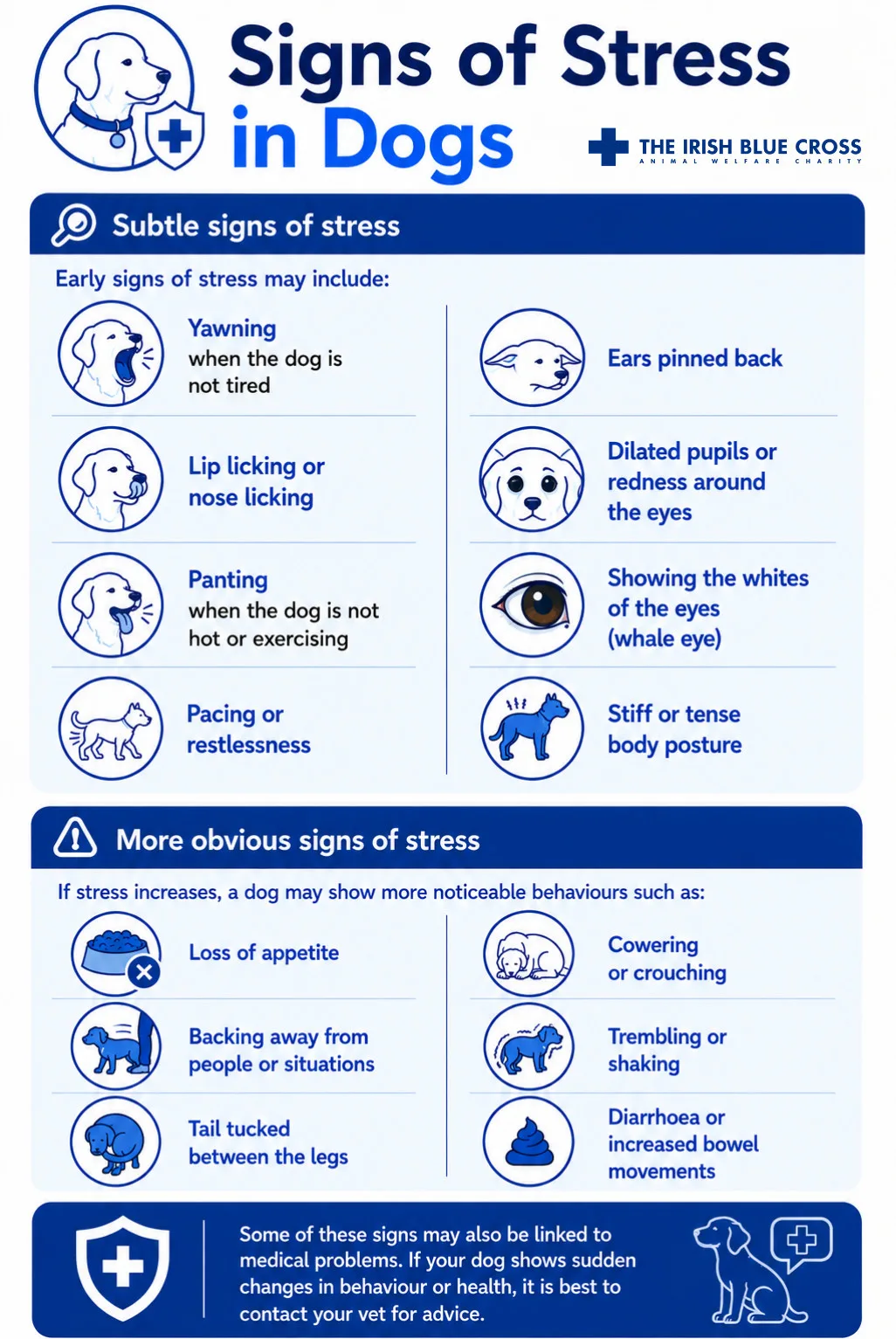
Stress can be triggered by many different factors. Common causes include:
Fear – loud noises such as fireworks or thunderstorms
Changes in routine – different feeding, walking or sleeping times
New environments – unfamiliar places or busy areas
Frustration or boredom – lack of exercise or mental stimulation
Social stress – uncomfortable interactions with people or other animals
Dogs can also be affected by the emotions of the people around them. If household members are stressed or anxious, dogs may pick up on these changes.
If a dog feels threatened or overwhelmed, they may display defensive behaviours to try to stop something from happening or to create distance.
These behaviours may include:
In most cases, dogs will have shown earlier signs of stress before reaching this stage. Recognising those early signals can help prevent situations from escalating.
Once you recognise the signs of stress, there are several ways to help your dog feel calmer and more comfortable.
If possible, move your dog away from the situation that is causing distress. This may mean leaving a busy environment or providing a quiet space at home.
Dogs benefit from having a quiet area where they can relax without being disturbed, such as a comfortable bed or crate. This space should always be respected by other household members.
Regular exercise is important for both physical and mental wellbeing. Walks provide opportunities for dogs to explore, sniff and engage with their environment.
Interactive toys, puzzle feeders and training exercises can help keep a dog’s mind engaged and reduce boredom-related stress.
Dogs are very sensitive to human emotions, so remaining calm and speaking in a relaxed tone, can help reassure your dog during stressful situations.
Punishing a stressed dog can make their anxiety worse. Instead, focus on reward-based training and calm management of situations that trigger stress.
If your dog frequently shows signs of stress, anxiety or aggression, it is important to seek professional advice.
Speak to your vet first to rule out any medical causes. They may recommend working with a qualified dog behaviourist or trainer to help identify triggers and develop a plan to improve your dog’s wellbeing.
Early intervention can help prevent stress from developing into more serious behavioural problems.