

Reverse sneezing happens when a dog rapidly draws air in through their nose, producing a loud snorting or honking sound. It can look dramatic and worrying, but in most cases it is harmless.
Episodes are usually short lived and do not require treatment. However, if reverse sneezing begins suddenly, happens very frequently, or seems to affect your dog’s wellbeing, please speak to your vet.
During an episode, your dog will:
It can appear as though they are choking or struggling to breathe, but most dogs remain bright and aware. Episodes typically last between 30 to 60 seconds and stop on their own.
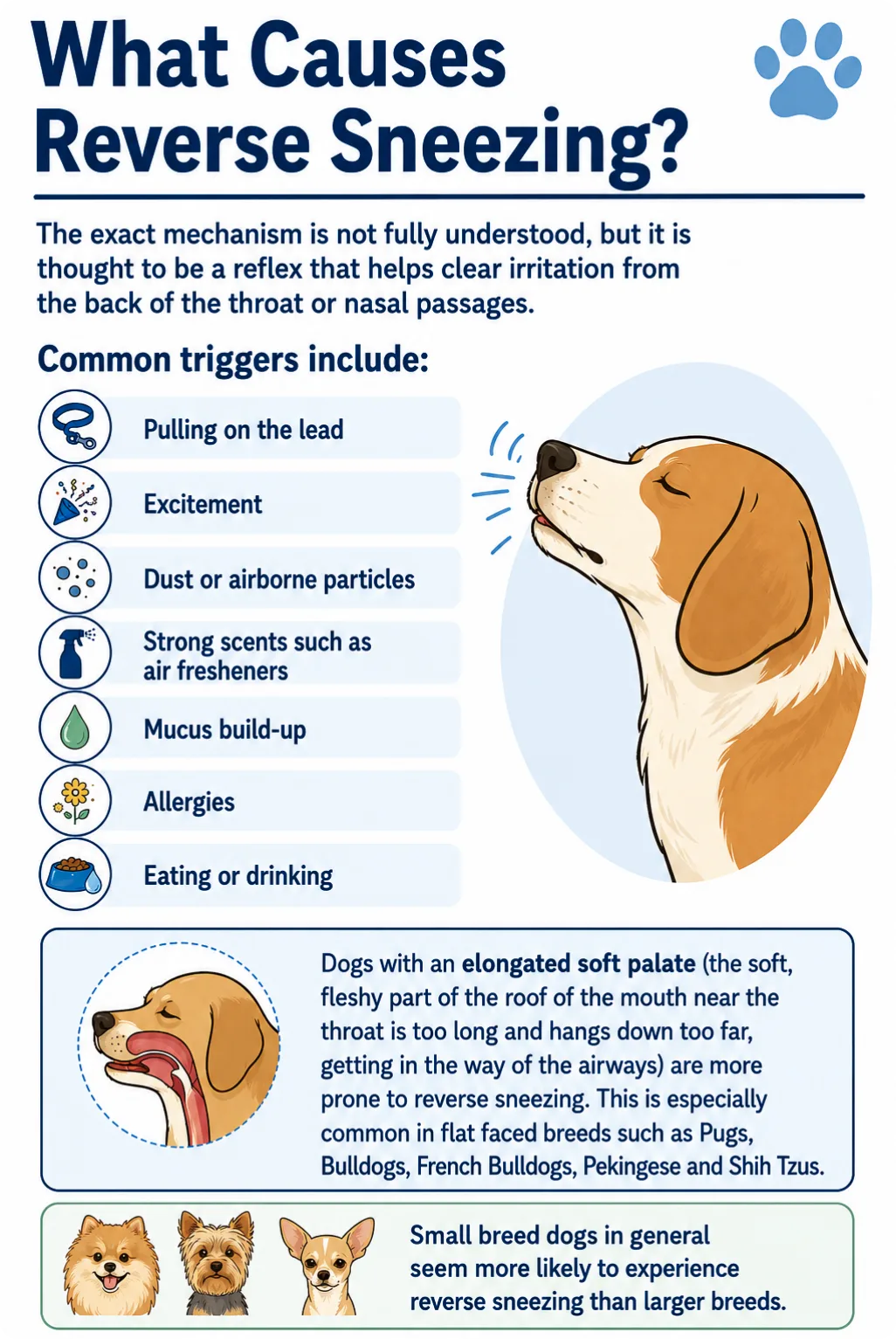
Most episodes resolve without intervention, so:
Some owners find that briefly covering one nostril encourages the dog to swallow, which may help stop the episode. If you attempt this, do so gently and without causing distress.
If reverse sneezing happens only occasionally and your dog is otherwise well, no treatment is usually required.
You should contact your vet if:
Your vet may examine your dog’s nose and throat. In persistent or severe cases, further investigation under anaesthetic may be advised. This can include imaging or a procedure called rhinoscopy, where a small camera is used to examine the nasal passages.
Because reverse sneezing rarely occurs during a consultation, so recording a short video at home can be very helpful for your vet.