
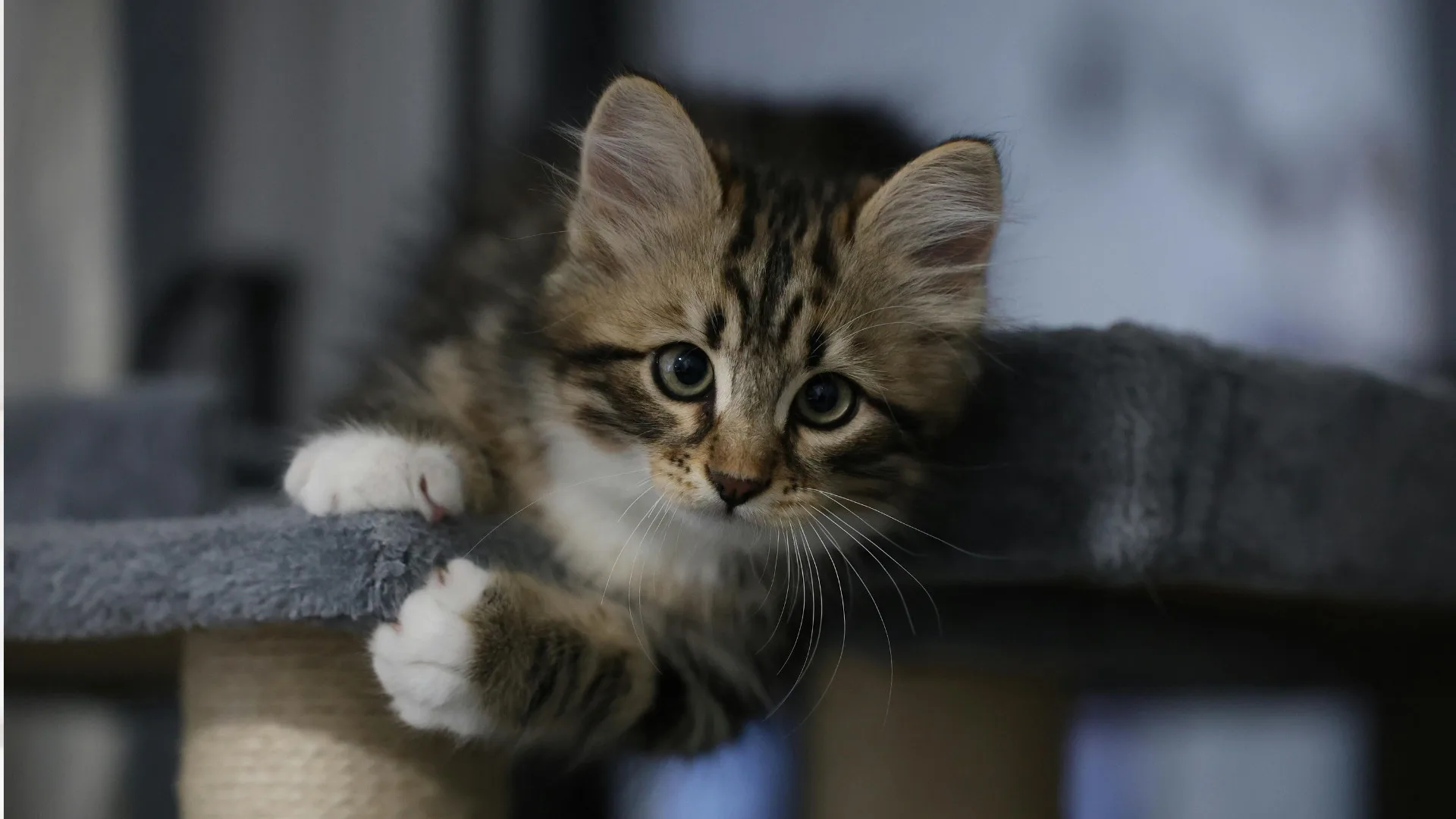
Kittens are naturally energetic and curious and daily play and exercise are essential for their physical development, coordination and emotional wellbeing. Building good habits early on helps ensure your cat remains active and healthy into adulthood.
In the early weeks, before your kitten is fully vaccinated, microchipped and neutered, they should stay indoors. During this time, interactive play is especially important.
Play is not just entertainment; it supports normal feline development.
Through play, kittens:
Without sufficient stimulation, kittens may become bored, frustrated or more likely to develop unwanted behaviours.
Aim for several short play sessions each day, ideally lasting 10–15 minutes. Kittens are most receptive when they are naturally alert and active.
Keep sessions positive and varied. Allow your kitten to rest when they lose interest as young cats need plenty of sleep to recharge.
Always use toys rather than your hands or feet as this prevents your kitten from learning that human skin is an acceptable target for biting or scratching.
Helpful play techniques include:
Never force your kitten to play. The goal is to encourage natural behaviour in a safe and controlled way.
Before coming to their new home, kittens play with their littermates and mother. This rough-and-tumble play teaches important boundaries, including:
Once in a new home, kittens may redirect this behaviour towards people. Consistently using toys helps reinforce appropriate play.
From around 10 weeks of age, kittens focus more on object play, like stalking, batting, grasping and biting toys that mimic prey.
If your kitten targets hands or feet:
Avoid punishment, as this can cause confusion or fear. Consistency and redirection are far more effective.
It may seem harmless to let a small kitten play with fingers, but this can lead to problems as they grow into stronger adult cats.
Scratching is natural and helps maintain claw health.
Provide sturdy scratching posts from an early age, even if your kitten will eventually have outdoor access. Position posts in areas your kitten uses regularly to encourage appropriate use.
Some kittens may attempt to play with resident cats or dogs.
Helping manage these early interactions encourages positive relationships within the household.
After active play, your kitten will need a quiet, comfortable place to sleep. Provide a warm bed in a calm area of your home where they can rest undisturbed.
Regular play is one of the simplest and most effective ways to support your kitten’s wellbeing. Short, frequent sessions that mimic natural hunting behaviours will help your kitten grow into a confident, active and well-adjusted adult cat.
If you have concerns about your kitten’s behaviour, energy levels or development, your veterinary team can offer advice.